1 (1) (1)
1 M

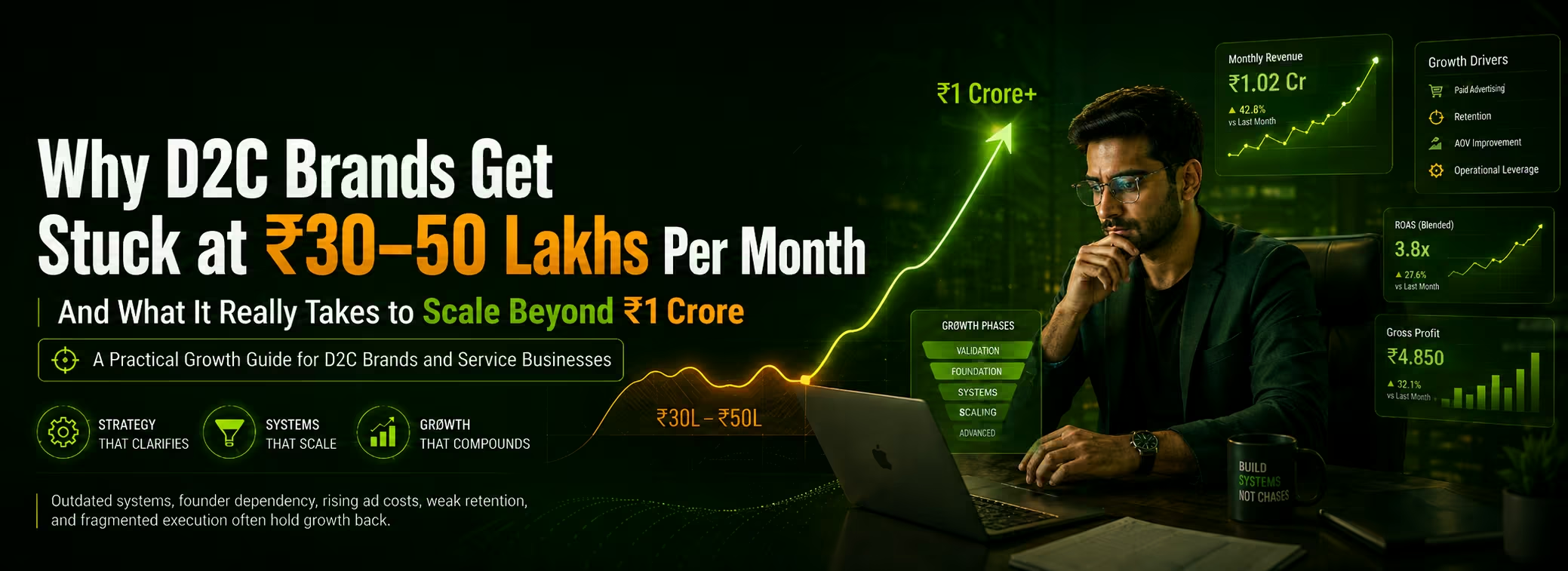
Why D2C Brands Get Stuck at ₹30–50 Lakhs Per Month (And What It Really Takes to Scale Beyond ₹1 Crore)

A Practical Growth Guide for D2C Brands and Service Businesses

Introduction

If you are asking why D2C brands get stuck at ₹30–50 lakhs per month, the short answer is this:

Most businesses do not fail because demand disappears. They get stuck because the systems that helped them reach ₹30 lakhs are not strong enough to take them to ₹1 crore and beyond.

Growing an online business to ₹30–50 lakhs in monthly revenue is a real achievement.

Whether you sell through your own website, Amazon, Flipkart, marketplaces, or provide services online, reaching this stage means you have already done many things right. You have validated your offer, acquired customers, built a team, and created a business that generates consistent revenue.

But this is also the stage where many founders notice a pattern:

If this sounds familiar, you are not alone.

Thousands of D2C brands and online service businesses in India face the same challenge every year.

The good news is that this problem is usually not caused by a lack of market demand. In most cases, the business is still in a good market. The real issue is that the company is still using a system built for an earlier stage of growth

This article explains why that happens and what founders need to change to build a business that scales predictably, profitably, and sustainably.

Key Takeaways

If your D2C brand or online service business is generating ₹30–50 lakhs in monthly revenue but struggling to reach ₹1 crore per month, the problem is usually not a lack of demand. More often, it is a combination of outdated systems, operational bottlenecks, and fragmented execution.

Here are the most important insights from this guide:

2
2 M

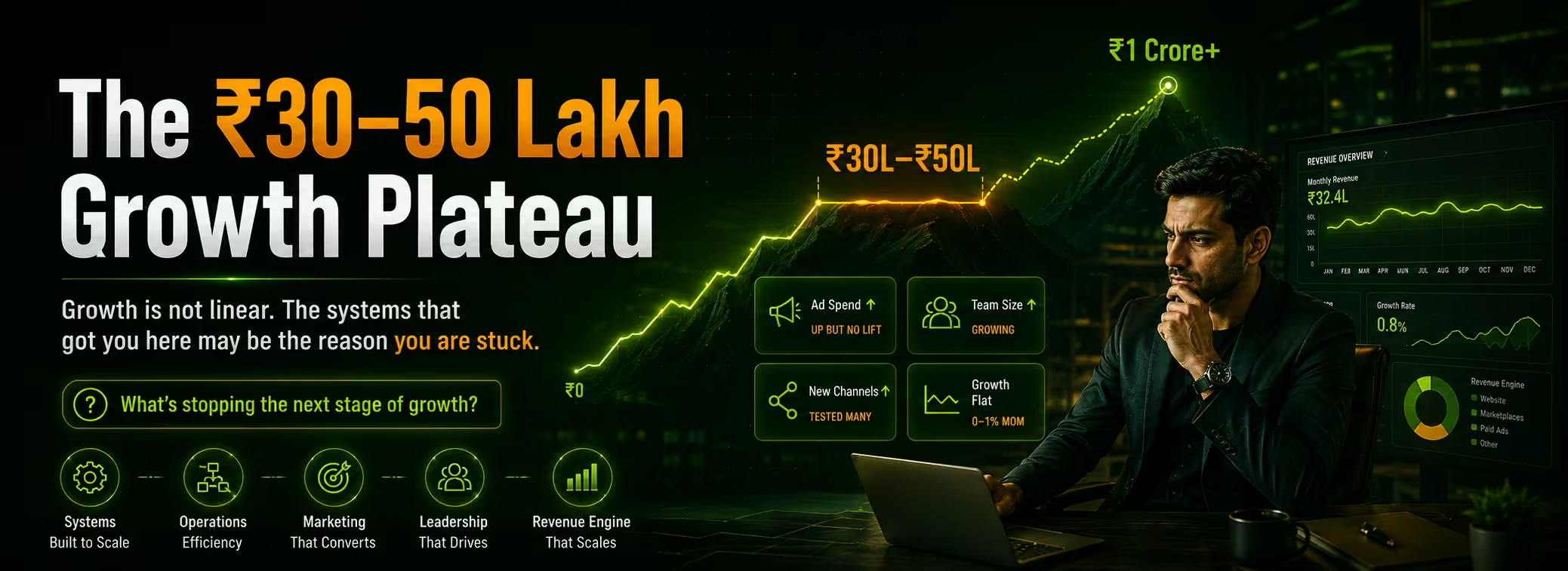
The ₹30–50 Lakh Growth Plateau

Why most D2C brands stop growing—and what it actually takes to scale from ₹30–50 lakhs to ₹1 crore per month through better systems, leadership, and business strategy.

10

Growth Challenges

₹1Cr

Scaling Goal

90 Days

Improvement Framework

D2C

Business Growth Guide

📖 In This Guide

  • The ₹30–50 Lakh Growth Plateau
  • Why Scaling Requires a Different Operating Model
  • The Biggest Reasons Businesses Stop Growing
  • Founder Dependency
  • Fragmented Teams
  • Revenue vs Profitability
  • Customer Retention
  • Scaling Systems

The ₹30–50 Lakh Growth Plateau

Most founders assume growth is linear. They believe that if they keep doing more of what worked before, revenue will continue rising automatically.

In reality, business growth rarely follows a straight line. Scaling is more like climbing a mountain—the tools, pace, and strategy that help you reach one stage are often insufficient for the next.

Business works the same way. The strategy that helps a brand reach ₹10 lakhs per month is different from the strategy needed to reach ₹50 lakhs. And the systems that support ₹50 lakhs often become the reason growth slows before ₹1 crore. This is called a growth plateau.

Growth Plateau

A business plateau occurs when revenue remains stable, customers continue buying, marketing still generates leads, yet overall growth becomes increasingly difficult.

At This Stage

  • Revenue stays relatively stable
  • The business continues operating normally
  • Customers still purchase products
  • Marketing still generates orders
  • Growth becomes difficult to accelerate

How Founders Usually Respond

  • Increase advertising budgets
  • Hire additional employees
  • Launch more campaigns
  • Explore new marketing channels
Important Insight

Without fixing the underlying business system, every new marketing effort simply pushes against the same ceiling.

"The better question isn't 'How do I get more sales?' It's 'What is preventing my business from reaching the next stage of growth?'"

Why Scaling Requires a Different Operating Model

Many founders unknowingly run a ₹50 lakh business using the operating model of a startup. That works during the early stage because the founder personally makes almost every important decision. As revenue grows, complexity grows much faster than sales.

Business Complexity Increases

  • More products
  • More customers
  • More employees
  • More marketing channels
  • More vendors
  • More inventory decisions
  • More approvals
  • More daily operational decisions
Businesses do not scale because founders work harder.

Businesses scale because founders build systems that continue working without constant founder involvement.

The founder eventually becomes the biggest bottleneck, not because they lack capability, but because no single person can efficiently manage every business function forever.

The shift from ₹30 Lakhs to ₹1 Crore is less about working harder and more about building scalable systems.
4
4 M

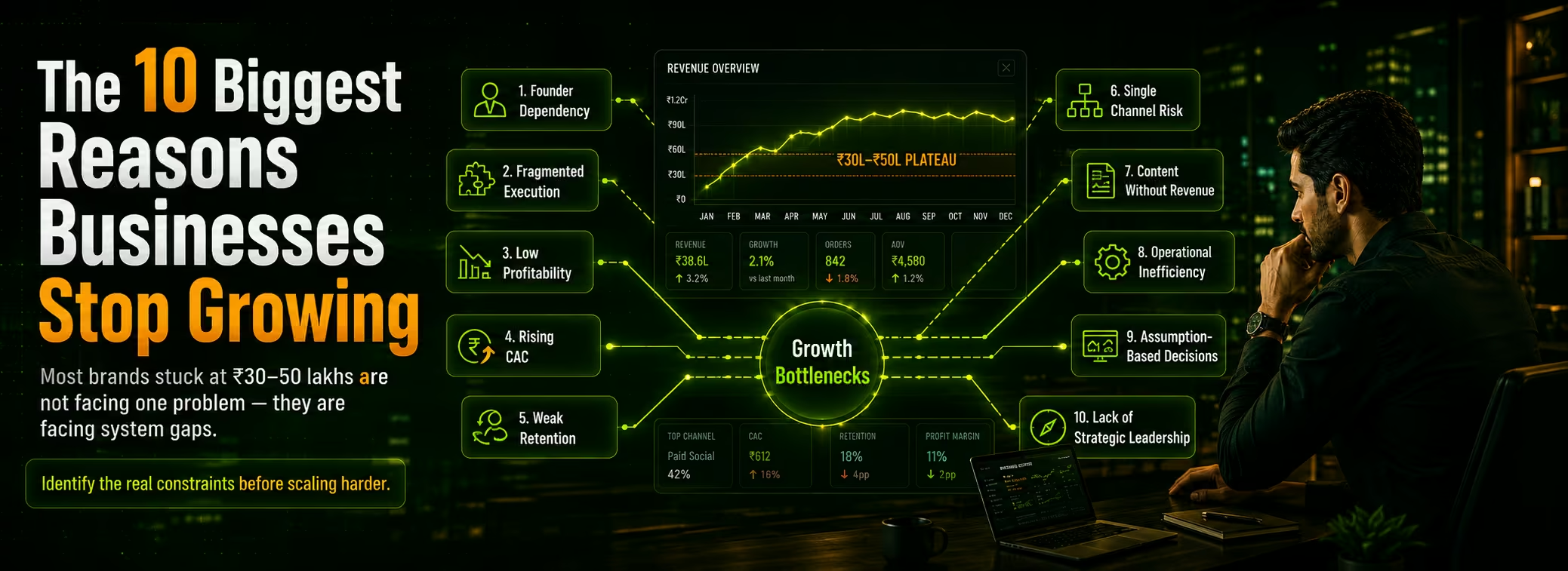
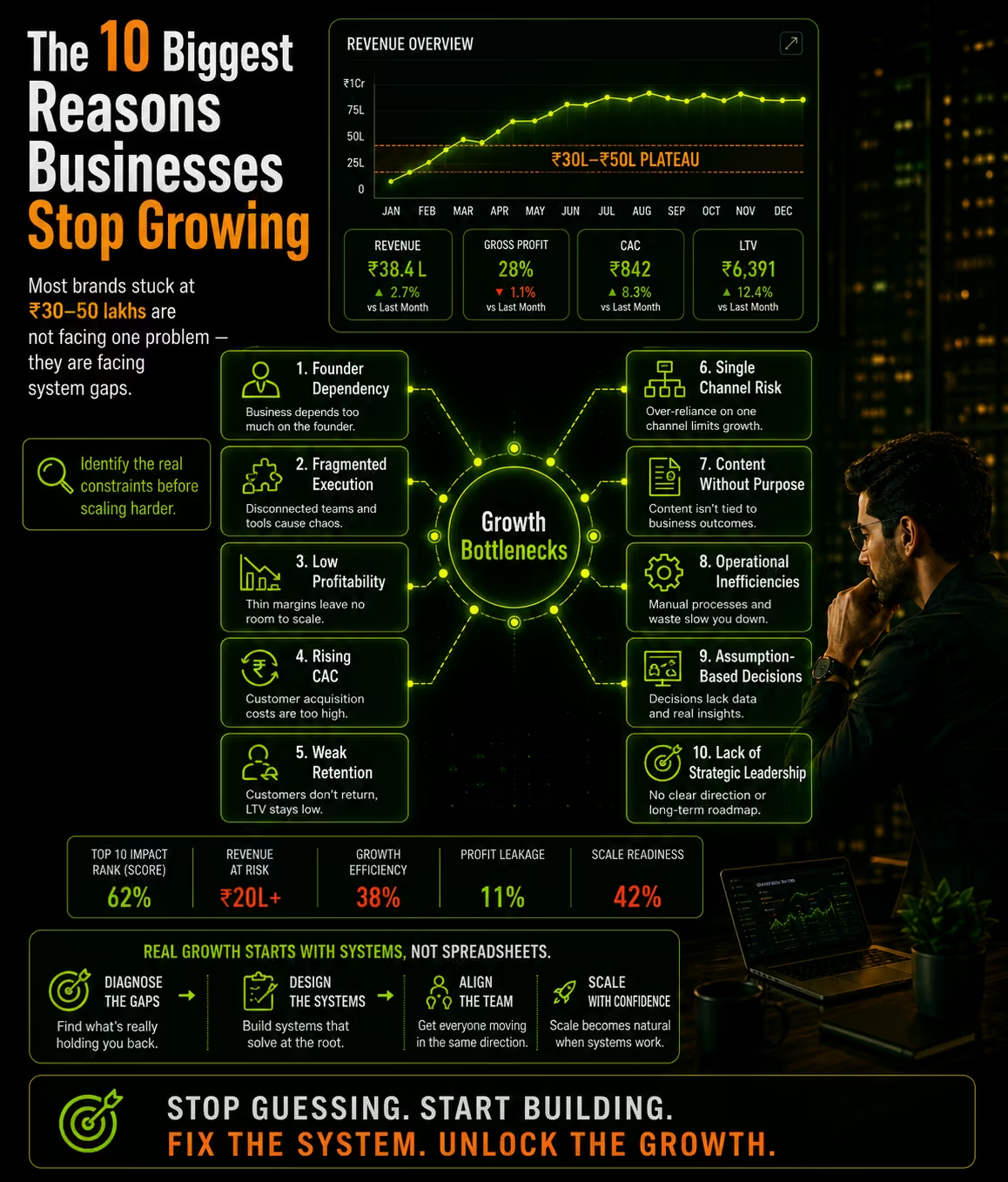
The 10 Biggest Reasons Businesses Stop Growing

Across D2C, ecommerce, and online service businesses, the same patterns appear again and again. While every company is different, most businesses stuck between ₹30–50 lakhs usually face one or more of these issues.

1

Founder Dependency

2

Fragmented Execution

3

Profitability Issues

4

High CAC

5

Weak Retention

6

Single Channel Risk

7

Weak Content

8

Operational Gaps

9

Assumption-Based Decisions

10

Strategic Leadership

Key Insight

Most businesses don't suffer from just one challenge. Several small bottlenecks combine to create one large growth ceiling.
Business Growth System
01

Founder Dependency

When the Business Cannot Grow Without You

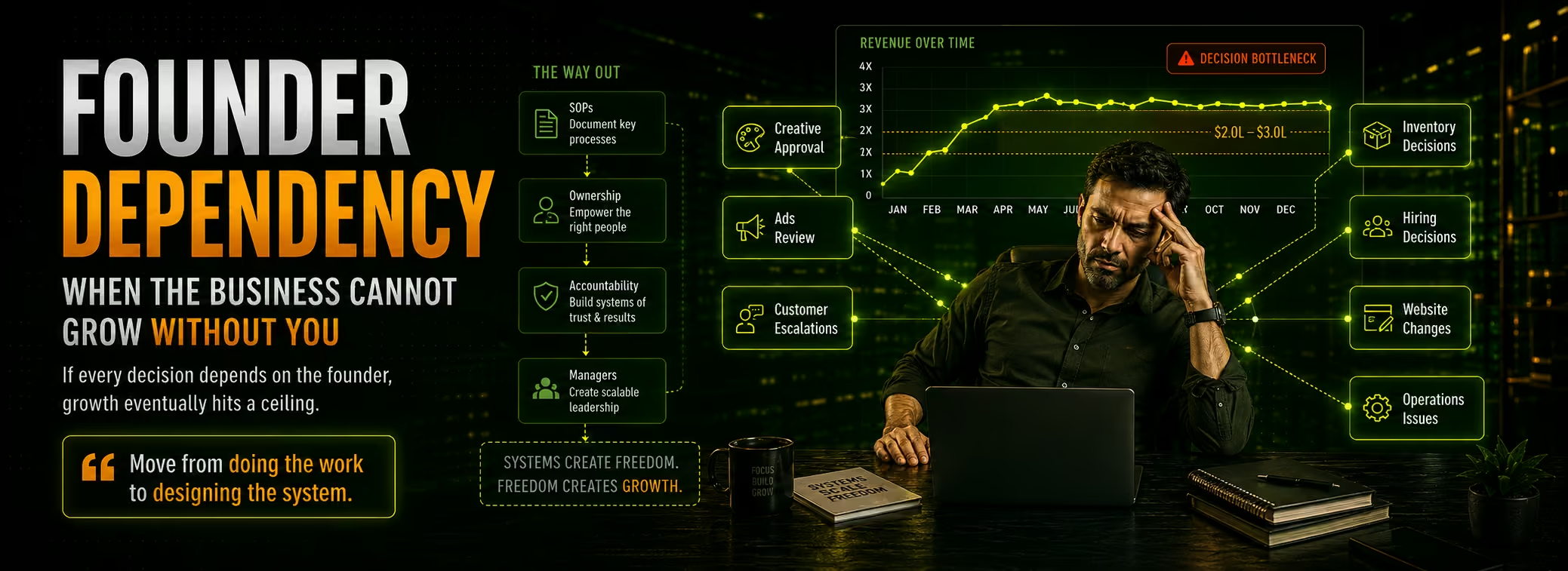
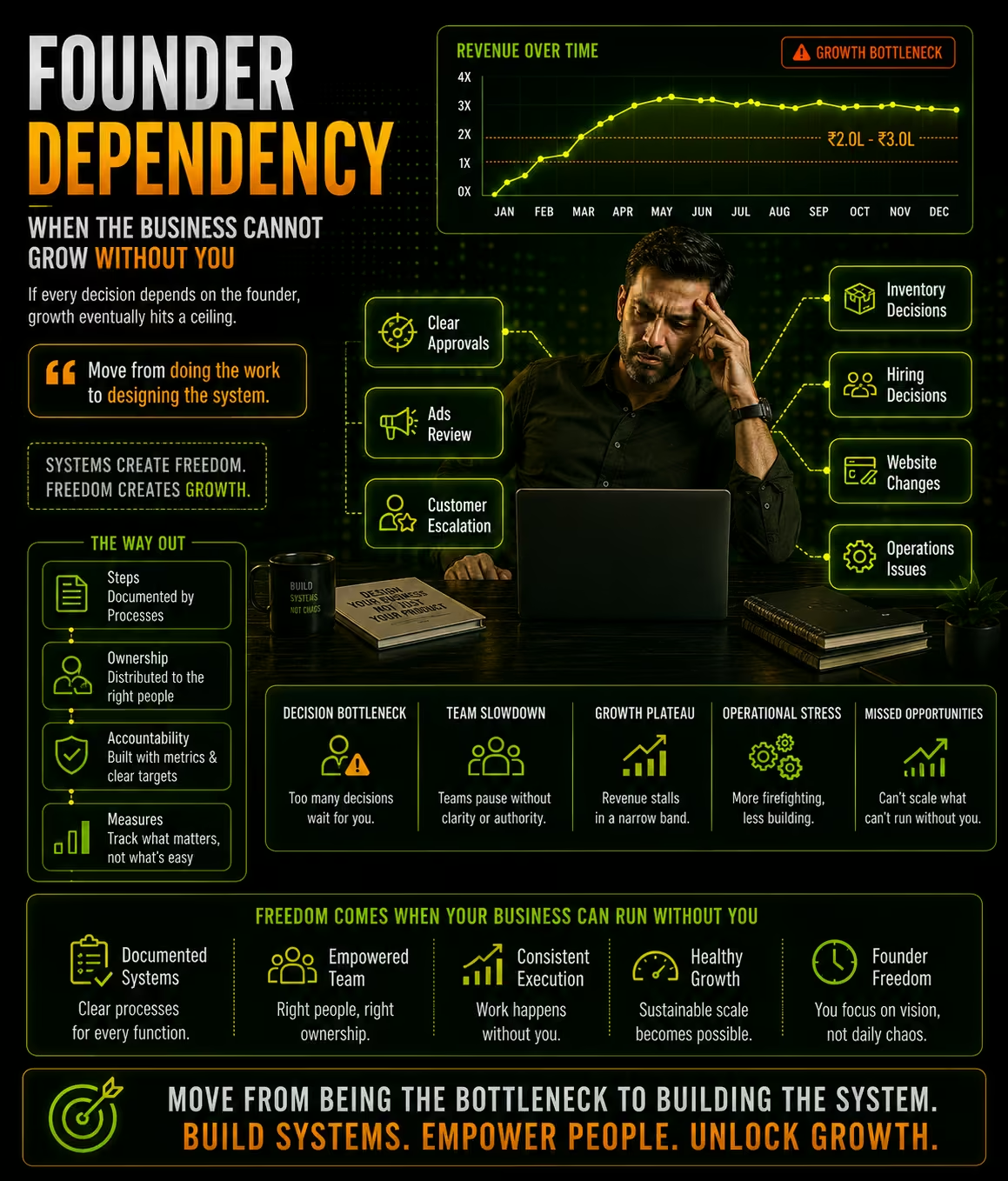
One of the most common reasons businesses stop scaling is founder dependency. In the early stages this is completely normal. The founder is involved in almost every important decision.

The Founder Usually...

  • ✔ Approves creatives
  • ✔ Reviews advertisements
  • ✔ Talks to major customers
  • ✔ Negotiates with suppliers
  • ✔ Monitors inventory
  • ✔ Approves website changes
  • ✔ Handles hiring
  • ✔ Solves operational issues

This involvement helps businesses grow quickly in the beginning because decisions happen fast. However, as revenue increases, the founder's time becomes limited. Every customer... Every campaign... Every employee... Every department... starts depending on one person.

"The business slows down not because opportunities disappear, but because decision-making becomes centralized."

Signs Your Business Is Founder-Dependent

  • Your team waits for approval before acting.
  • You cannot take a vacation.
  • Sales slow down when you are unavailable.
  • Departments rely on you for every decision.
  • Employees hesitate to take ownership.
  • Every meeting requires your presence.
Why This Becomes Dangerous

If your business doubles next year, your available time will not. Growth that depends entirely on the founder will eventually reach a ceiling. For many businesses, that ceiling appears around ₹30–50 lakhs per month.
Course Correction

Instead of asking... "How can I work harder?"
Ask... "How can this decision happen without me?"

Practical Fixes

  • Create Standard Operating Procedures (SOPs)
  • Define approval limits
  • Give departments clear ownership
  • Document recurring processes
  • Train managers to make decisions
  • Measure outcomes instead of monitoring every task
The founder's role should evolve from doing the work to designing the system that produces the work.
Business Growth System
02

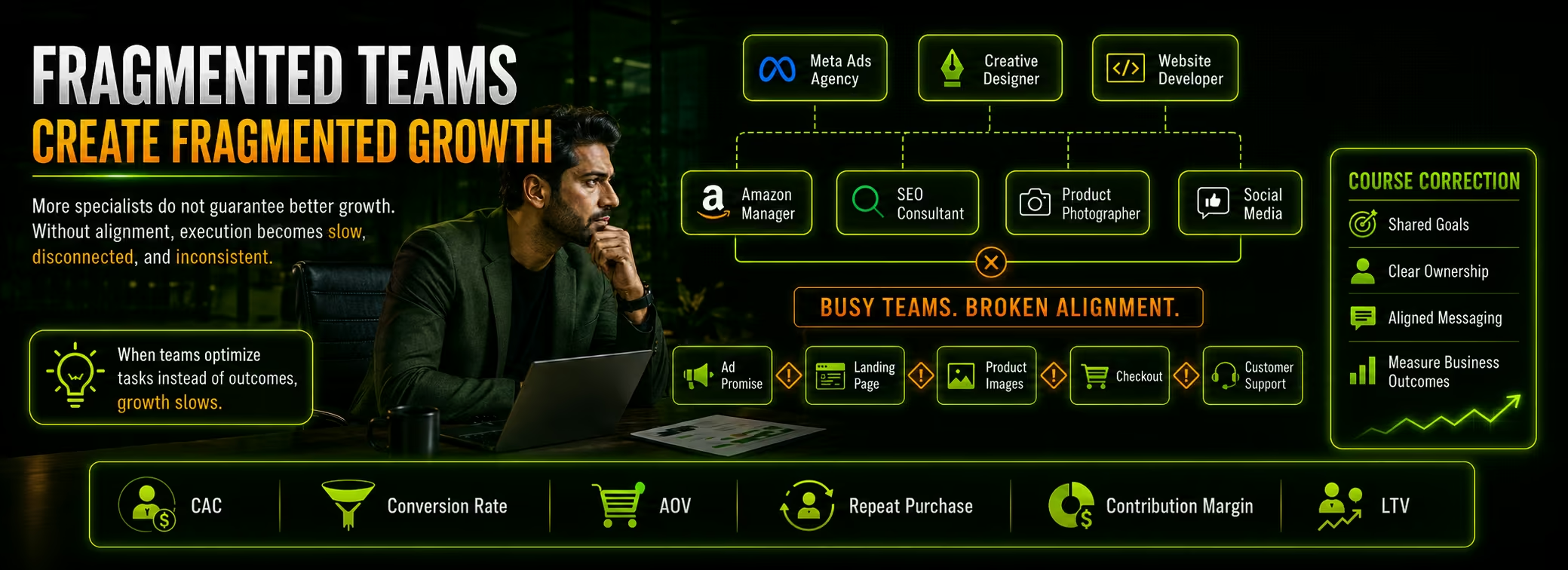
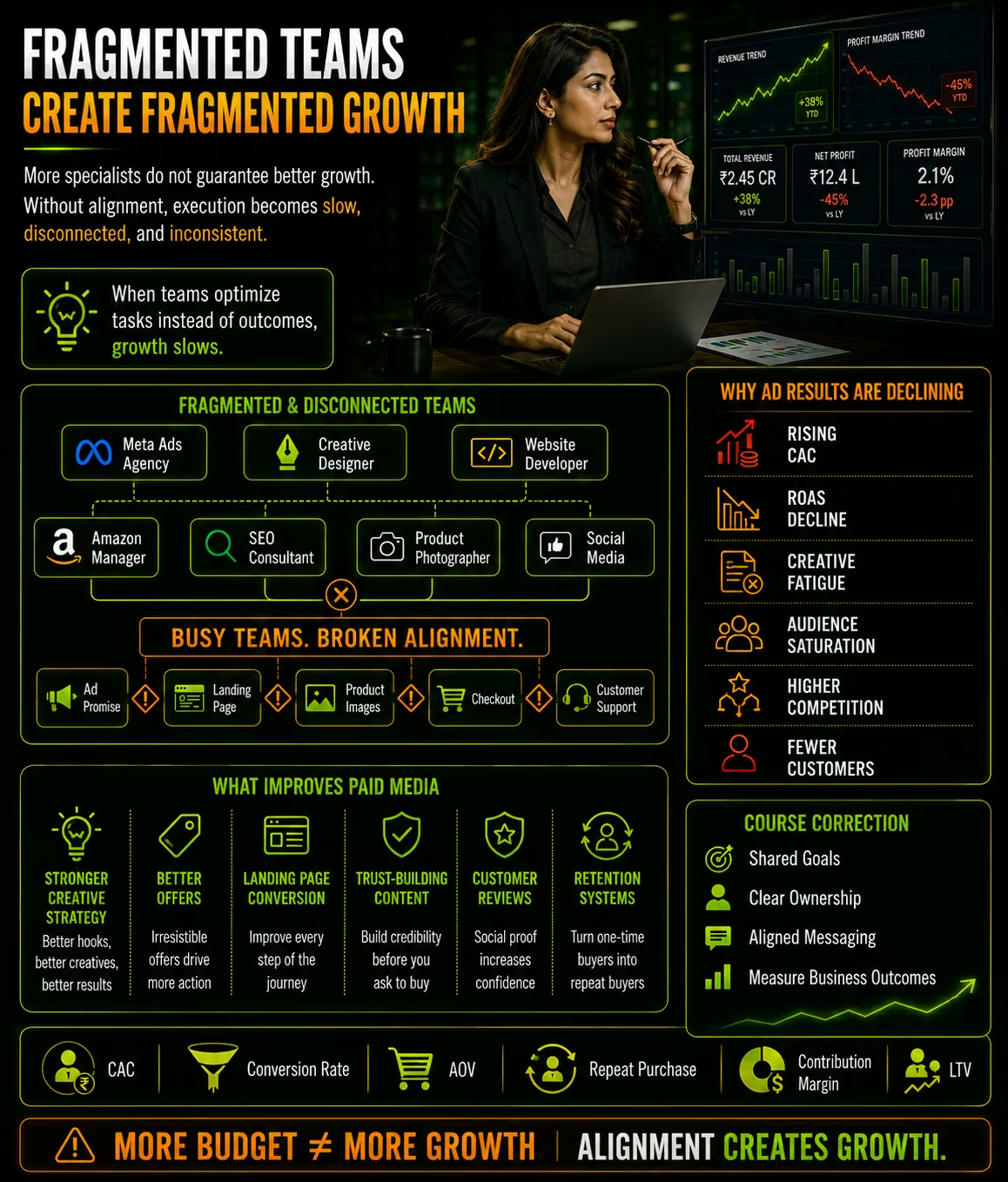
Fragmented Teams Create Fragmented Growth

As businesses grow, they naturally hire specialists. One agency handles Meta Ads. Another manages SEO. A freelancer creates graphics. Someone else manages Amazon. A developer looks after the website. On paper, this looks like a strong team.

Busy teams don't always create growing businesses. Alignment creates growth.

The Hidden Problem

Each specialist focuses on their own task. Very few focus on the overall business outcome. Imagine launching a new product.

Ad Team

Waiting for creatives.

Designer

Waiting for photography.

Photographer

Waiting for packaging.

Developer

Waiting for content.

Marketplace Manager

Waiting for pricing approval.

Everyone is working. Yet nothing moves fast. The result becomes...

  • Delays
  • Confusion
  • Missed opportunities
  • Poor customer experience

The Hidden Cost of Fragmentation

  • The advertisement promises one thing.
  • The landing page says something different.
  • The product images don't support the offer.
  • The checkout experience feels confusing.
  • Customer support receives complaints.
Marketing performance drops NOT because ads stop working, but because the customer journey becomes disconnected.

Course Correction

Growing businesses need alignment, not just more vendors. Every department should work toward the same business objectives.

Measure shared KPIs instead of isolated tasks.
  • Customer Acquisition Cost
  • Conversion Rate
  • Average Order Value
  • Repeat Purchase Rate
  • Contribution Margin
  • Customer Lifetime Value
When every team measures the same business outcomes, execution becomes coordinated, customer experience improves, and growth becomes predictable.
7
7 M
03

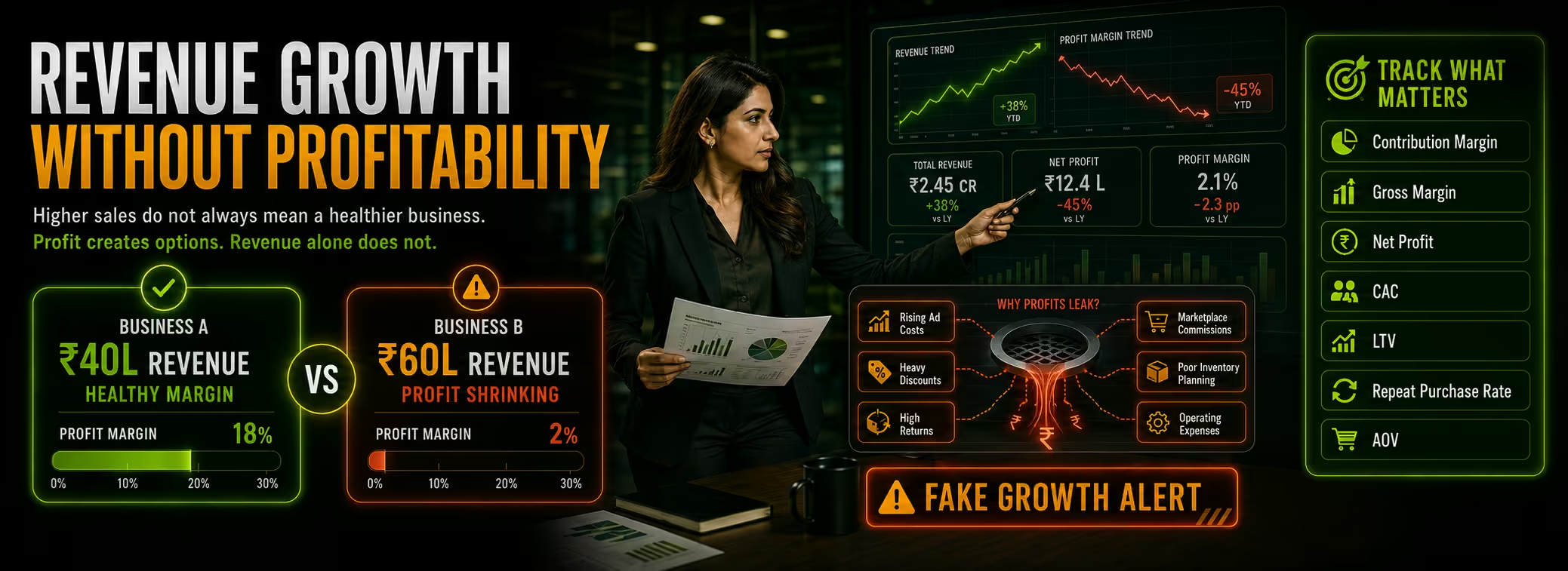
Revenue Growth Without Profitability

Revenue is exciting. It gets attention, creates headlines, and often becomes the primary metric founders celebrate. But revenue alone does not build a healthy business.

Revenue Creates Headlines.
Profit Creates Freedom.

Many companies proudly announce record sales while quietly struggling with cash flow. Revenue without profitability creates the illusion of growth.

Common Reasons Profits Shrink

📈

Rising Advertising Costs

Customer acquisition becomes increasingly expensive.

📦

Heavy Discounting

Sales increase while margins continue falling.

🔁

Low Repeat Purchases

New customers replace returning customers.

📦

Poor Inventory Planning

Inventory issues reduce profitability.

💸

Marketplace Commissions

Platform fees reduce contribution margins.

📈

High Operating Costs

Expenses grow faster than revenue.

Understanding Fake Growth

Business A generates ₹40 Lakhs with healthy margins.

Business B generates ₹60 Lakhs but spends almost everything on advertising, discounts and operational inefficiencies.

Which business is actually stronger?
Profit creates options. Revenue alone does not. Healthy profits allow businesses to invest in technology, inventory, branding, hiring and expansion.

Scaling Requires Investment

💻 Technology
👨‍💼 Leadership
📦 Inventory
🏢 Warehousing
🤖 Automation
🚀 Brand Building

Course Correction

Instead of celebrating only revenue... Track business health through:
  • Contribution Margin
  • Gross Margin
  • Net Profit
  • Customer Acquisition Cost
  • Customer Lifetime Value
  • Repeat Purchase Rate
  • Average Order Value
Healthy businesses grow Revenue + Profitability together.
Business Growth System
04

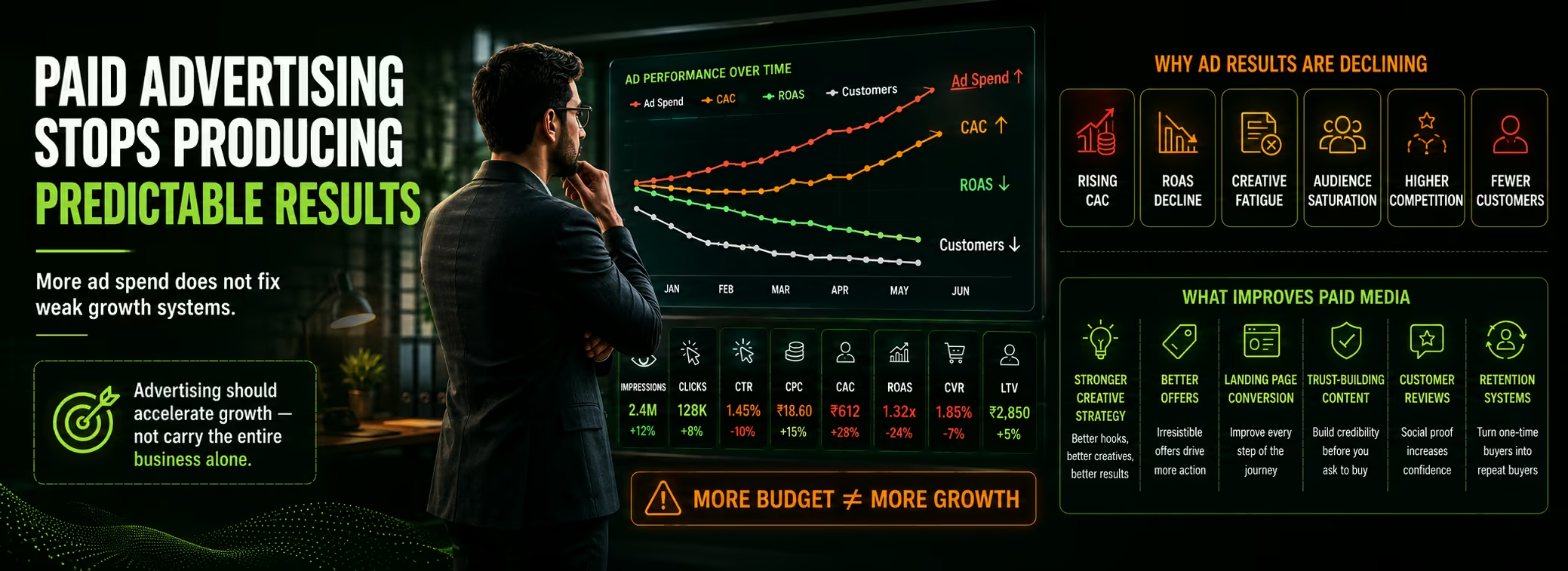
Paid Advertising Stops Producing Predictable Results

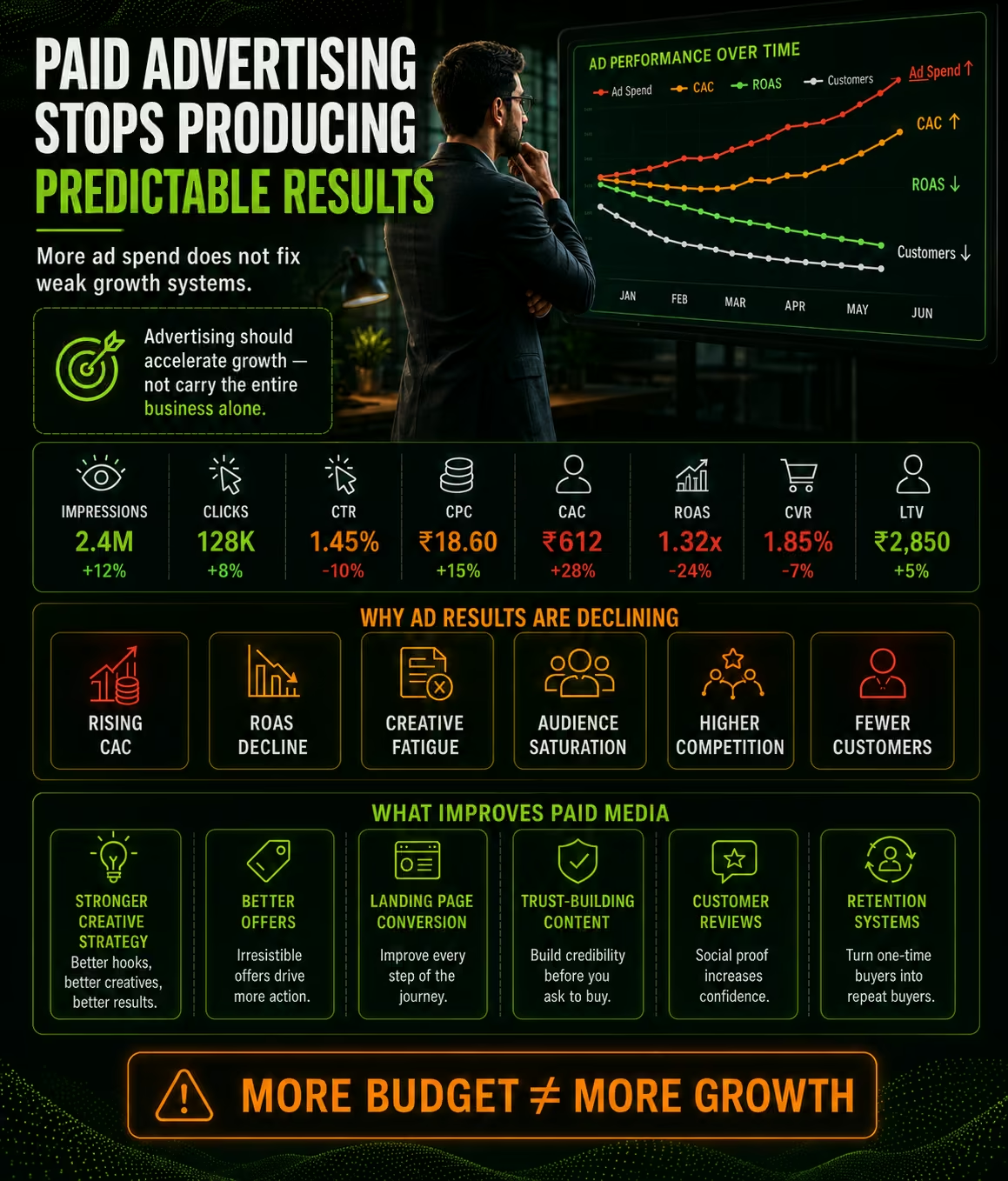
One of the biggest surprises for growing brands is that advertising eventually becomes harder. Early campaigns often generate fast sales. As competition increases, performance begins to decline.

Early Stage

Ads perform exceptionally well.

Growth Stage

Customer acquisition costs begin rising.

Scaling Stage

Creative fatigue and audience saturation appear.

Mature Stage

Higher budgets no longer guarantee better results.

Why Advertising Becomes Harder

📉

Higher CAC

Acquiring each customer becomes more expensive.

🎯

Audience Saturation

The same audience sees your ads repeatedly.

🎨

Creative Fatigue

Existing creatives lose effectiveness.

🏆

Competition

More brands compete for the same attention.

The Biggest Mistake

Many businesses respond by simply increasing ad spend. Unfortunately... More budget cannot fix poor positioning, weak branding, low customer trust, or poor conversion rates.
Advertising should accelerate growth. It should never become the only source of growth.

What Growing Brands Really Need

Creative Strategy
Better Offers
Landing Pages
Customer Trust
Content Marketing
Conversion Optimisation

Course Correction

Instead of asking... "How can we spend more on ads?" Ask... "How can we make every visitor more likely to buy, return and recommend us?"
  • Website Conversion
  • Product Pages
  • Customer Experience
  • Content Strategy
  • Email Marketing
  • WhatsApp Marketing
  • Customer Reviews
  • Post Purchase Engagement
When every customer becomes more valuable, advertising automatically becomes far more profitable.
9
9 M
05

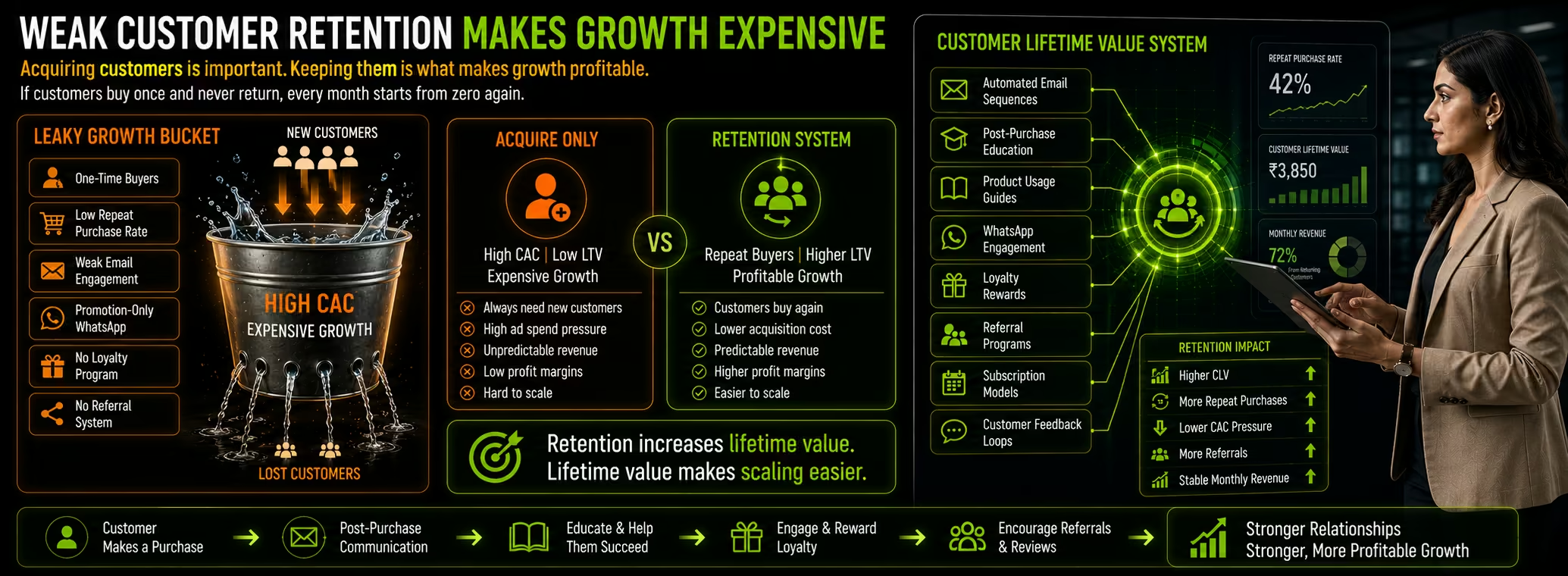
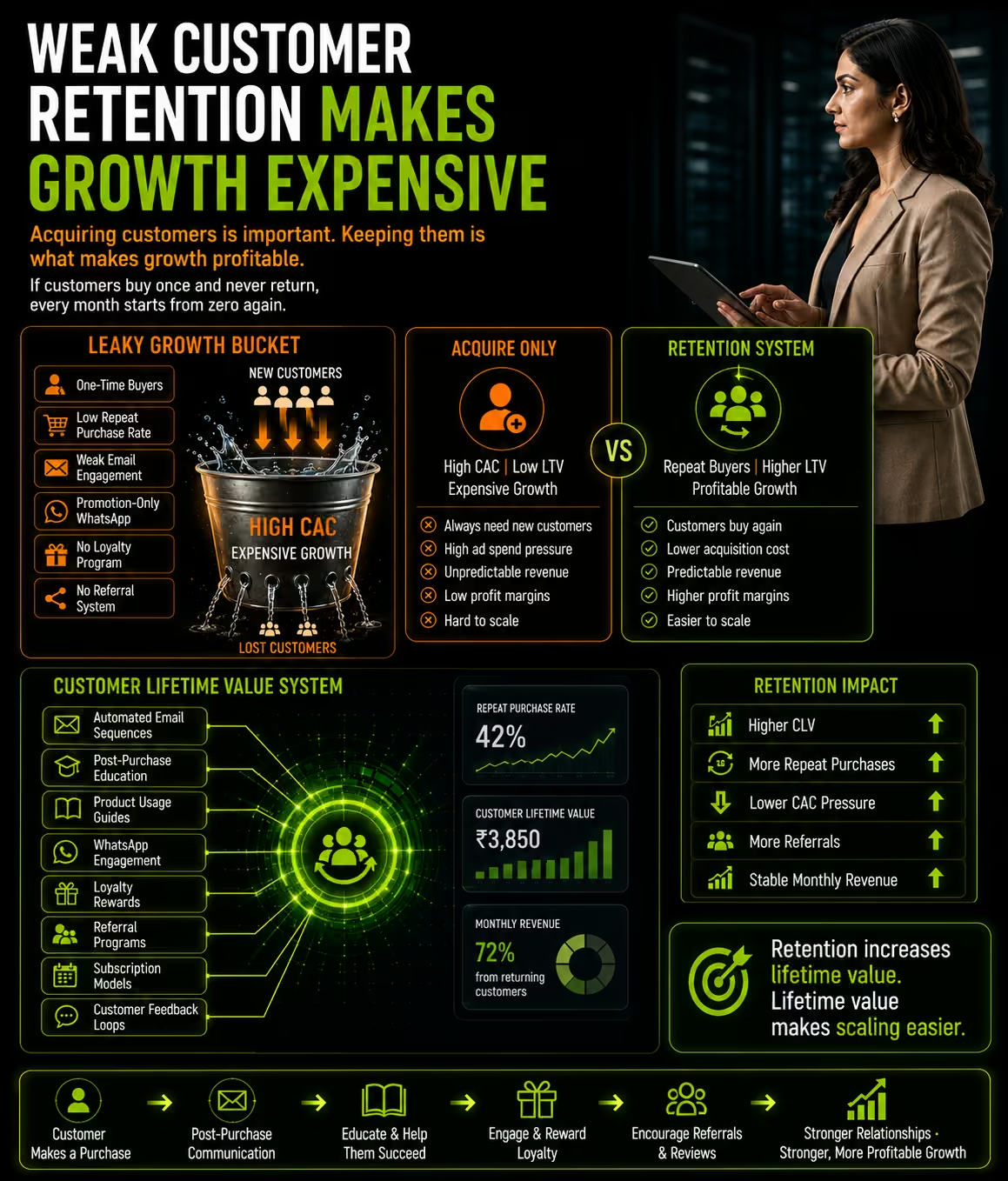
Weak Customer Retention Makes Growth Expensive

One of the biggest mistakes growing brands make is focusing almost entirely on acquiring new customers. Most marketing discussions revolve around increasing traffic, generating leads, and scaling advertising budgets—while ignoring a much bigger opportunity.

Acquiring a Customer is Just the Beginning.

The real profit comes from turning first-time buyers into repeat customers.

Most Marketing Discussions Focus On...

More Website Visitors

Increase traffic through SEO and advertising.

Higher Ad Spend

Spend more to acquire more customers.

New Marketing Channels

Launch campaigns on additional platforms.

Lead Generation

Focus almost entirely on new customer acquisition.

The Hidden Problem

Many businesses spend thousands of rupees acquiring a customer, only to lose that customer after one purchase.

Imagine filling a bucket that has a hole at the bottom. No matter how much water you add, it never stays full.

Why Retention Matters

Advertising Costs Increase

Customer acquisition becomes more expensive every year.

Competition Grows

Customers have more alternatives than ever before.

Repeat Customers Become More Valuable

Existing customers buy faster, spend more and trust your brand.

Higher Customer Lifetime Value

Profitable growth comes from keeping customers, not replacing them.
Signs Your Retention System Is Weak

  • Most customers purchase only once.
  • Repeat purchase rate remains low.
  • Email marketing receives little engagement.
  • WhatsApp messages focus only on promotions.
  • No loyalty or referral programme.
  • Existing customers rarely recommend your products.

Course Correction

  • Automated Email Sequences
  • Post Purchase Education
  • Product Usage Guides
  • WhatsApp Engagement
  • Loyalty Rewards
  • Referral Programmes
  • Subscription Models
  • Customer Feedback Loops
Goal: Increase the lifetime value of every customer. The higher the lifetime value, the easier it becomes to scale profitably.
Business Growth System
06

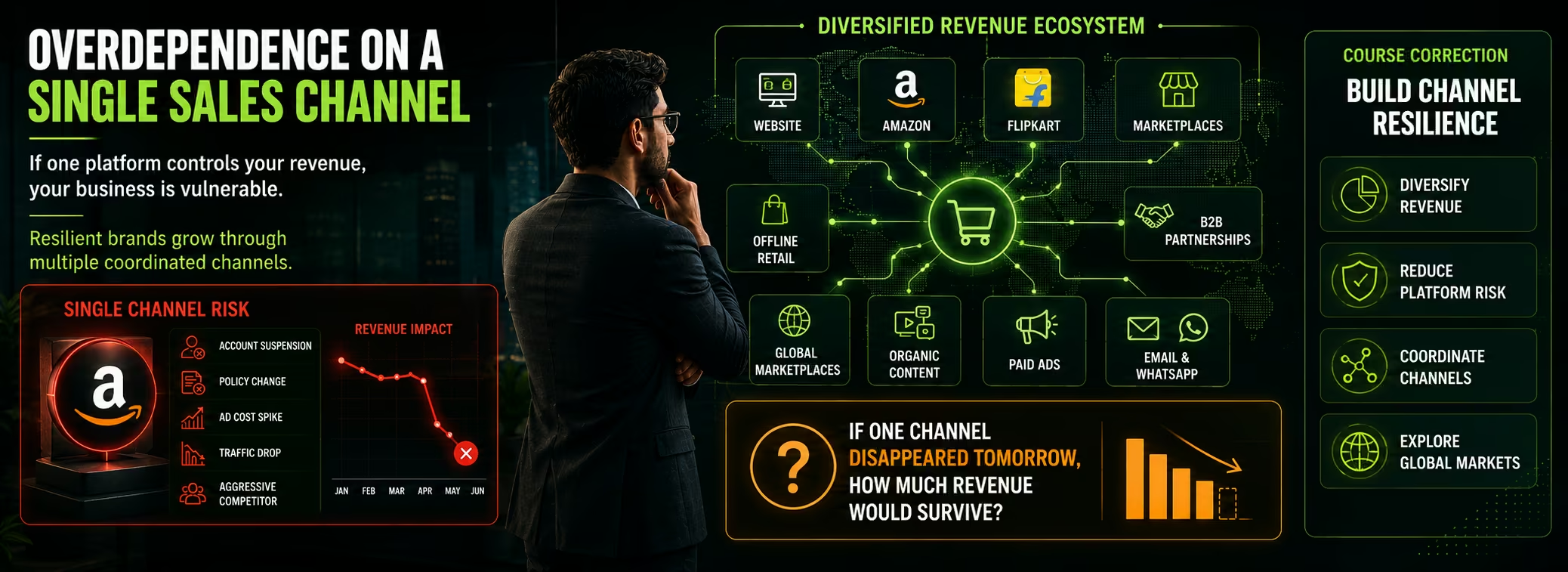
Overdependence on a Single Sales Channel

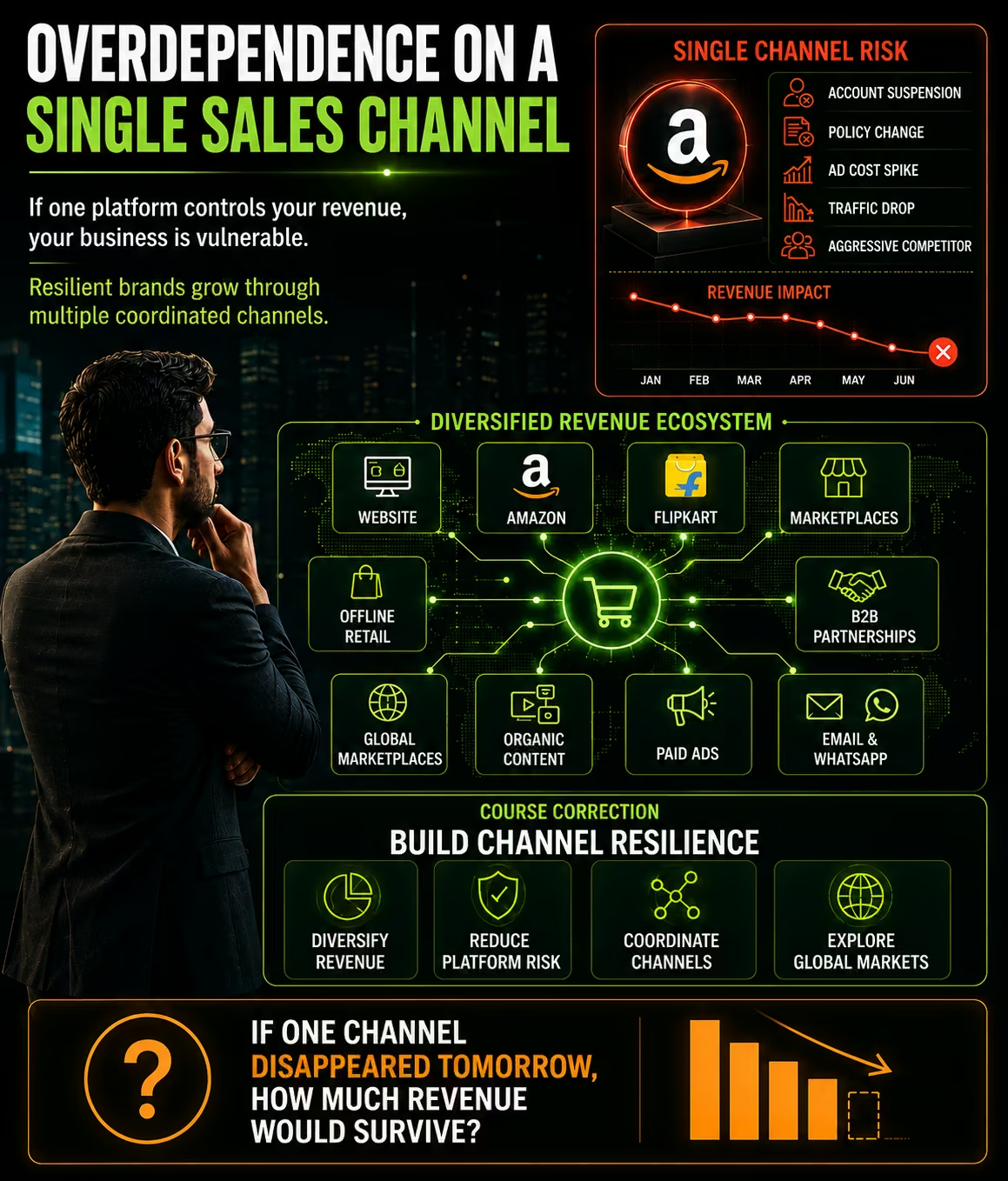
Many businesses unknowingly build their entire company around one platform. Whether it's Amazon, Shopify, Meta Ads or a single marketplace, depending too much on one channel creates long-term business risk.

Don't Build Your Business on One Platform.

Build a business that performs even if one channel disappears tomorrow.

Potential Risks

Ad Account Suspension

Your revenue suddenly drops.

Policy Changes

Marketplace rules change overnight.

Higher Advertising Costs

Customer acquisition becomes expensive.

New Competitors

Market share becomes harder to maintain.

Diversified Growth Channels

Your Website

Amazon

Flipkart

B2B Partnerships

International Markets

Email & WhatsApp marketing

Organic content

Paid advertising

Expanding Beyond India

Diversification doesn't mean being everywhere. It means reducing dependence on any single revenue source. Another common growth limitation is geographical dependence. Many Indian brands continue competing in increasingly crowded domestic markets while ignoring opportunities in international ecommerce. Depending on the product category, expanding through global marketplaces can open entirely new customer segments. International expansion should never be rushed. However, once operations, product quality, and customer experience become consistent, exploring global opportunities can become an important long-term growth strategy.
Course Correction

"If one revenue channel disappeared tomorrow, how much of our business would survive?"
A resilient business grows through multiple coordinated channels rather than depending entirely on one platform.
11
11 M
07

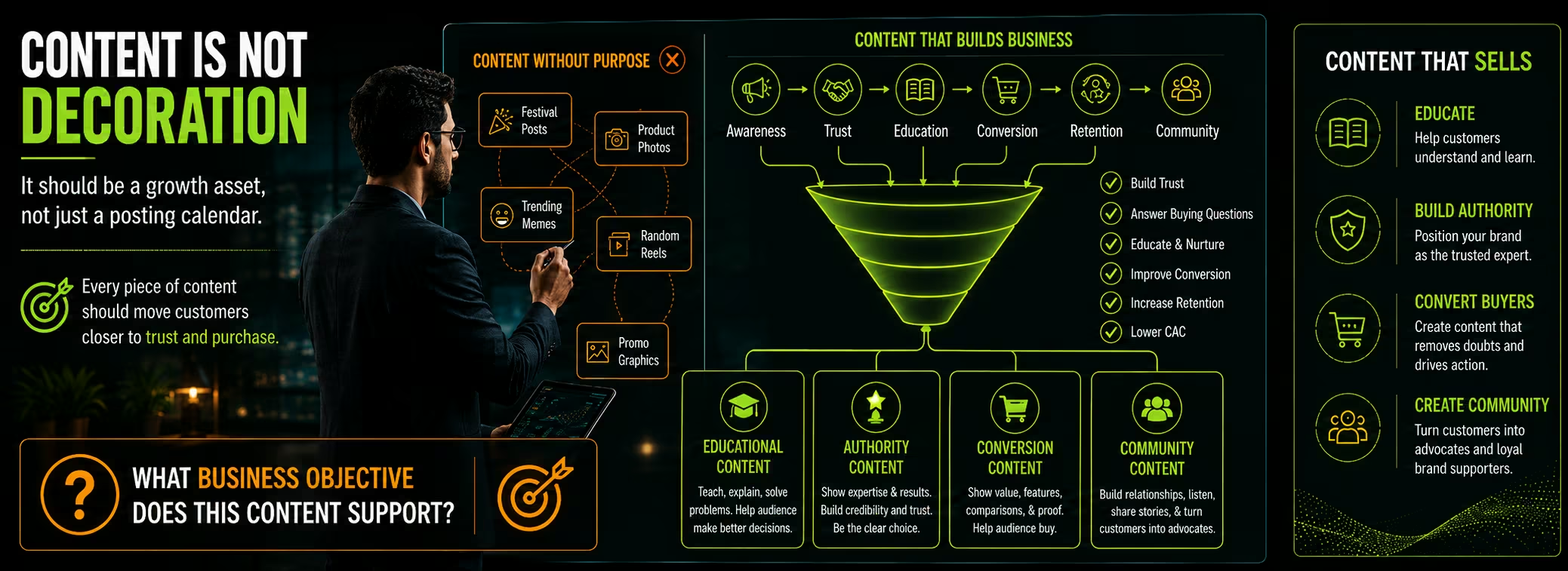
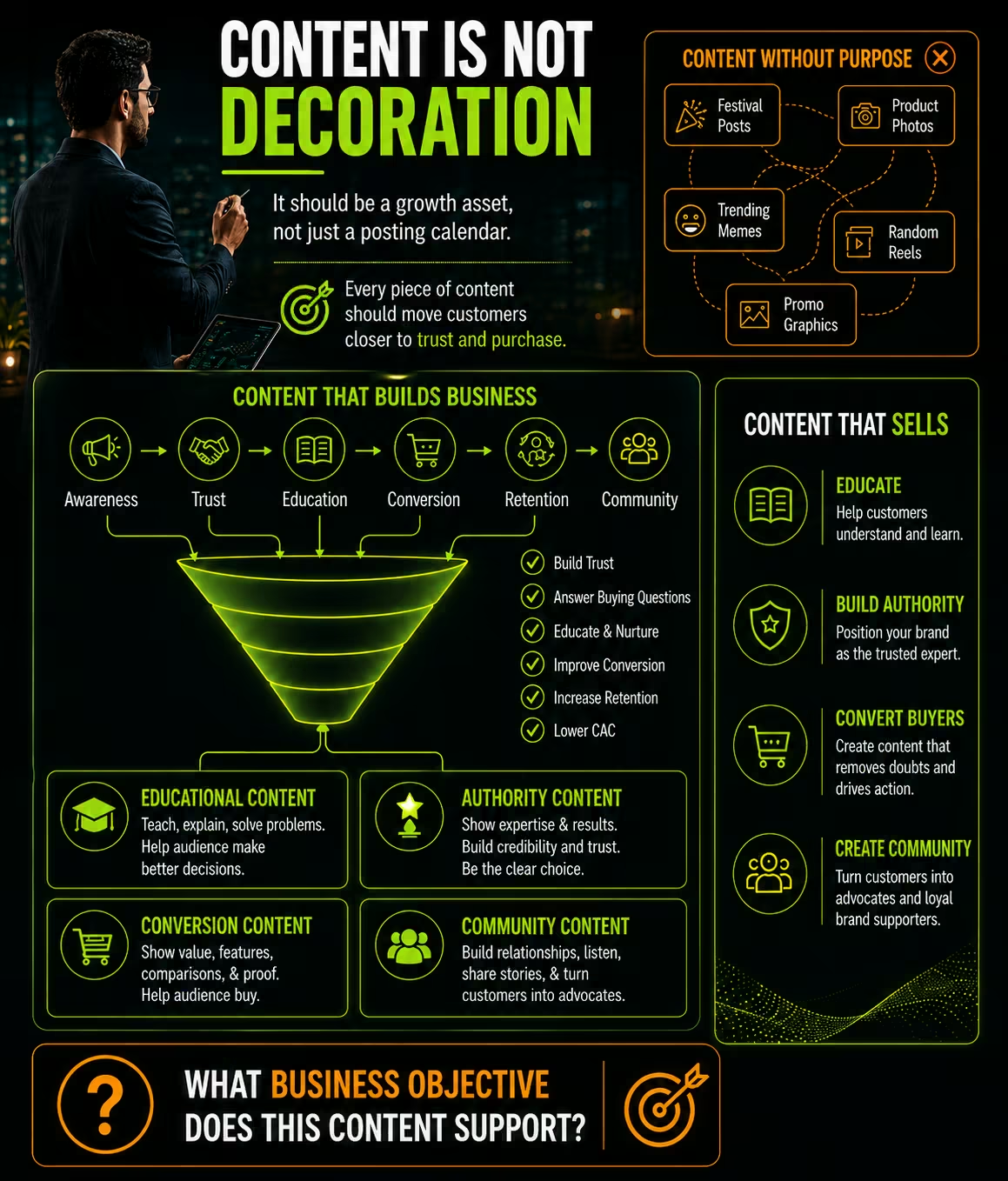
Treating Content as Decoration Instead of a Growth Asset

Many businesses invest considerable time creating content. Unfortunately, much of that content has no clear business purpose. It often fills a content calendar without supporting business growth.

Content Should Build Revenue, Not Just Reach.

Every blog, social media post, email, or video should help move a customer closer to making a buying decision.

What Most Marketing Calendars Look Like

Festival Posts

Occasional festive greetings with little business impact.

Product Photos

Images without educational or persuasive messaging.

Trending Reels

Following trends without connecting to business goals.

Promotional Graphics

Sales-focused creatives that rarely build long-term trust.

The Problem

While these activities may create engagement, they rarely build a sustainable competitive advantage. Content should support every stage of the customer journey—not simply fill a social media calendar.

What High-Performing Content Actually Does

Build Trust

Educate customers

Answer Questions

Improve Conversions

Increase Retention

Build Authority

Lower customer acquisition costs over time

Effective content helps businesses

Four Types of Content Every Brand Needs

Educational Content

Teach customers how to solve problems related to your product or service.

Authority Content

Share founder insights, customer success stories and industry expertise.

Conversion Content

Create buying guides, product demonstrations, testimonials and landing pages.

Community Content

Highlight customer stories, user-generated content and success stories.

Course Correction

Before publishing any piece of content, ask:
"What business objective does this support?"
If the answer is unclear, reconsider creating it.
Every article, video, email, or social post should move the customer one step closer to trusting your brand.

12
12 M
08

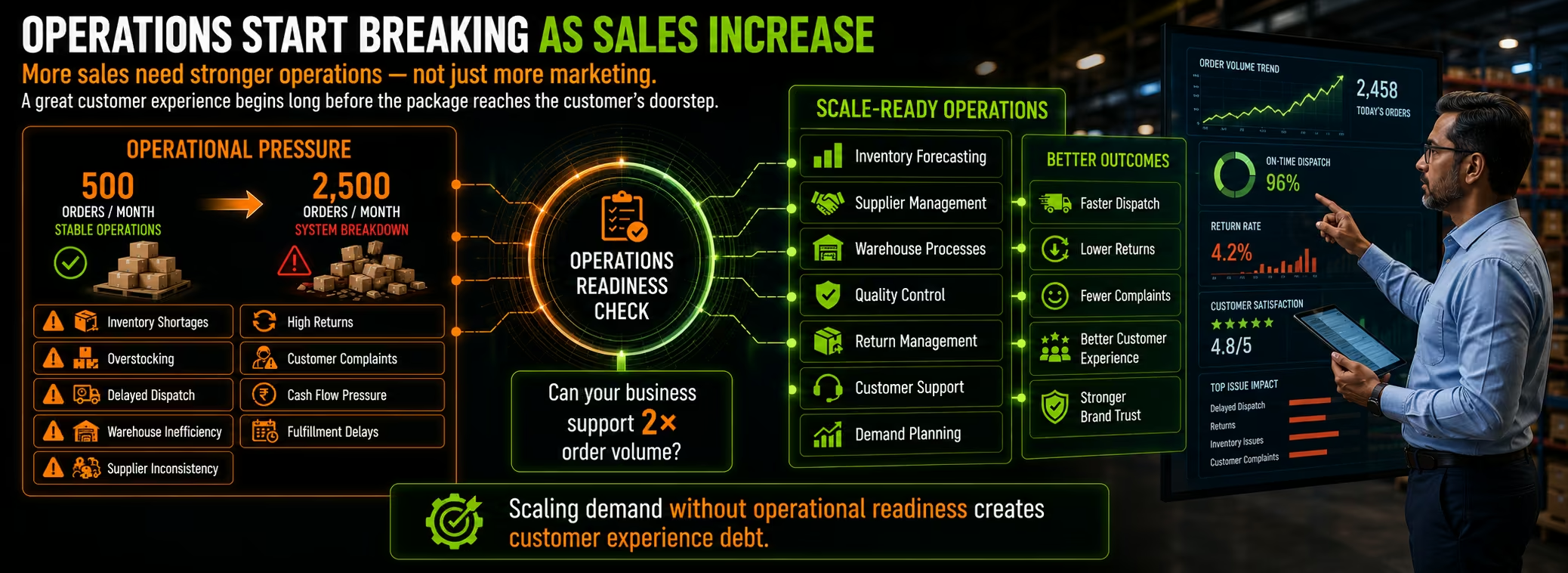
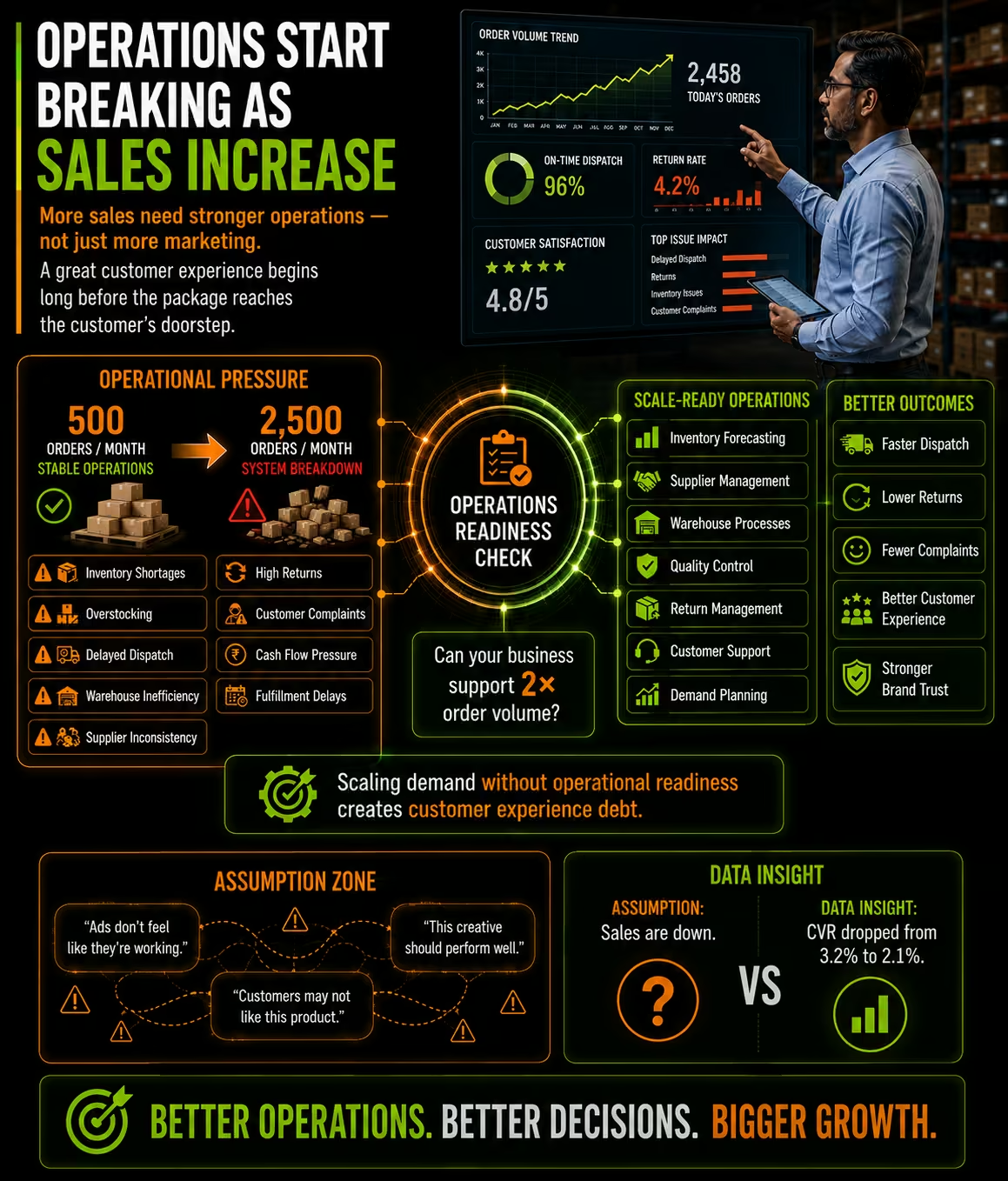
Operations Start Breaking as Sales Increase

Many founders believe they simply need more sales. In reality, sustainable scaling depends on building operational systems that can support growth. Marketing creates demand. Operations create customer experience.

Growth Without Operations Creates Chaos

A business comfortably handling 500 monthly orders may struggle significantly when demand reaches 2,500+ orders. Operational weaknesses become visible only when businesses begin scaling.

500 ➜ 2500

Monthly Orders

Common Operational Challenges

Inventory Shortages

Overstocking

Delayed Dispatch

Warehouse Issues

Supplier Delays

High Return Rate

Customer Complaints

Cash Flow Pressure

Fulfilment Delays

Important Reality

These are not marketing problems. They are operational problems. Unfortunately, customers rarely separate the two. A delayed delivery damages trust just as much as a poor advertisement.

Scaling Requires Operational Readiness

Before aggressively increasing marketing budgets, founders should ask: Can our operations comfortably support double today's order volume? If the answer is uncertain, operational improvements should become a priority.

Course Correction

📦 Inventory Forecasting
🤝 Supplier Management
🏭 Warehouse Processes
✅ Quality Control
🔄 Return Management
💬 Customer Support
📊 Demand Planning

Remember: A great customer experience begins long before the package reaches the customer's doorstep.

13
13 M
09

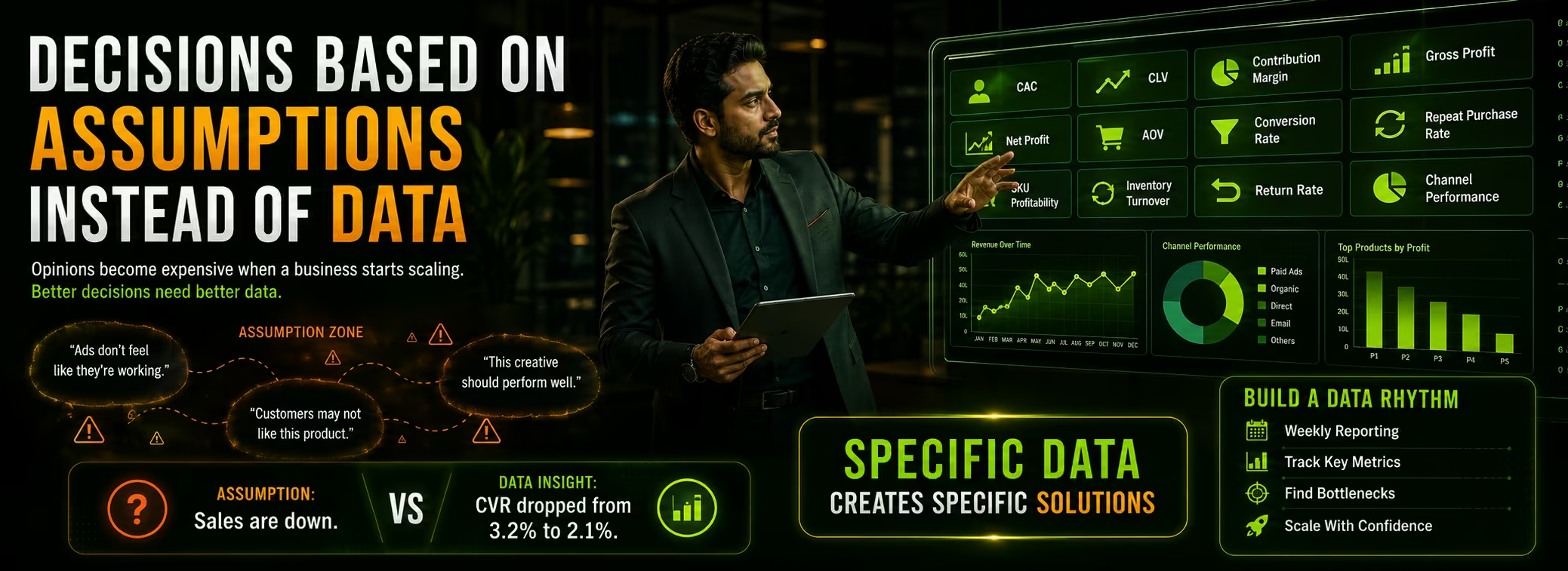
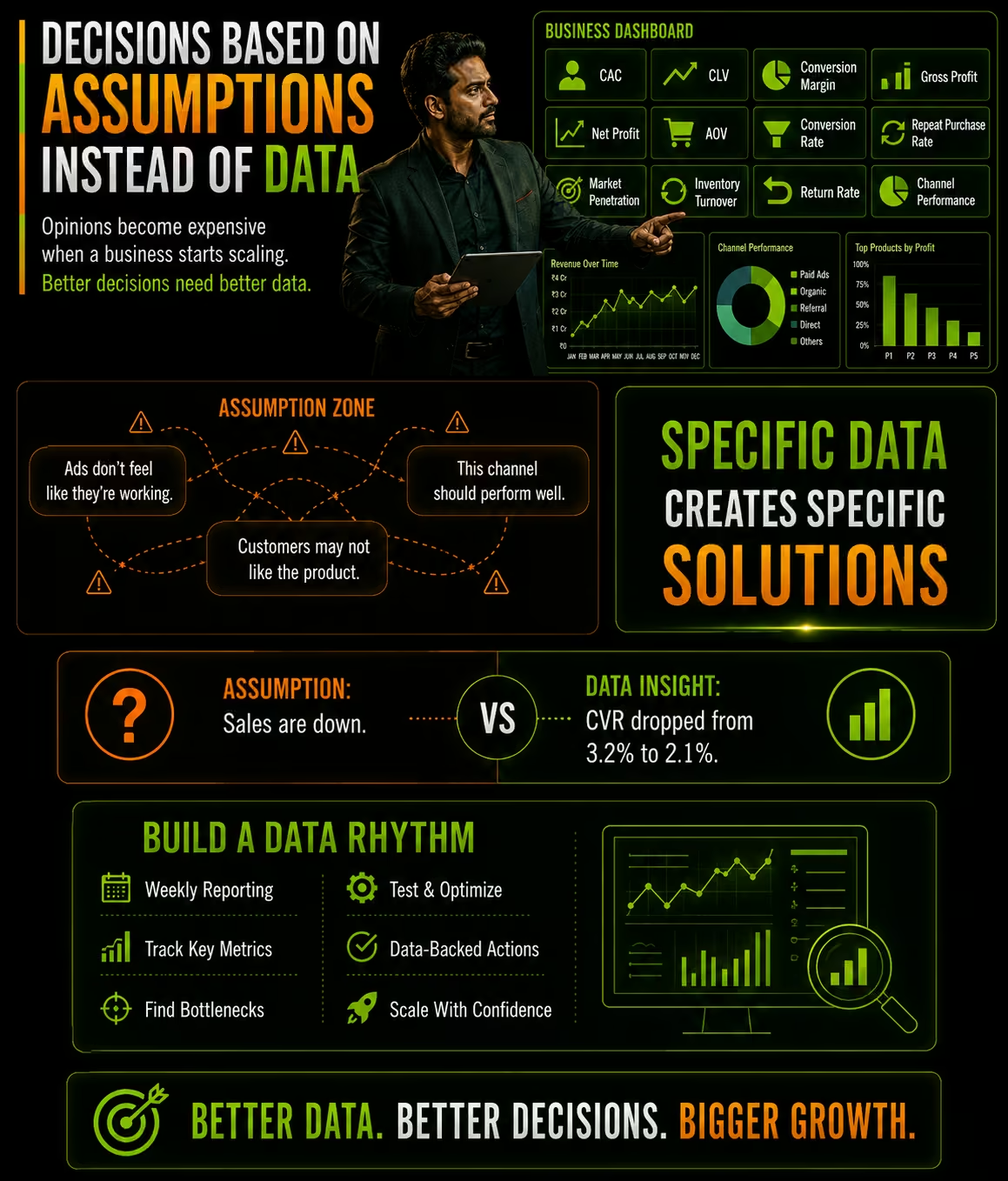
Decisions Based on Assumptions Instead of Data

Growing businesses cannot rely on instinct alone. Better decisions require better data, because opinions become increasingly expensive as businesses scale.

Opinion

  • "Our ads don't feel like they're working."
  • "Customers probably don't like this product."
  • "This creative should perform better."

Evidence

  • CAC increased by 18%
  • Conversion Rate dropped to 2.1%
  • Repeat Purchase Rate decreased

The Metrics Every Founder Should Understand

CAC Customer Acquisition Cost
CLV Customer Lifetime Value
Contribution Margin
Gross Profit
Net Profit
Average Order Value
Conversion Rate
Repeat Purchases
SKU Profitability
Inventory Turnover
Return Rate
Channel Performance

Data Creates Better Conversations

❌ Poor Question

"Why are sales down?"

✅ Better Question

"Our website conversion rate dropped from 3.2% to 2.1% during the last four weeks. What changed?"

Course Correction

Winning Products
Underperforming Campaigns
Profitable Channels
Operational Bottlenecks
Customer Behaviour Trends

Good data removes guesswork. Businesses that measure the right metrics make faster decisions, reduce costly mistakes and scale with greater confidence.

14
14 M
10

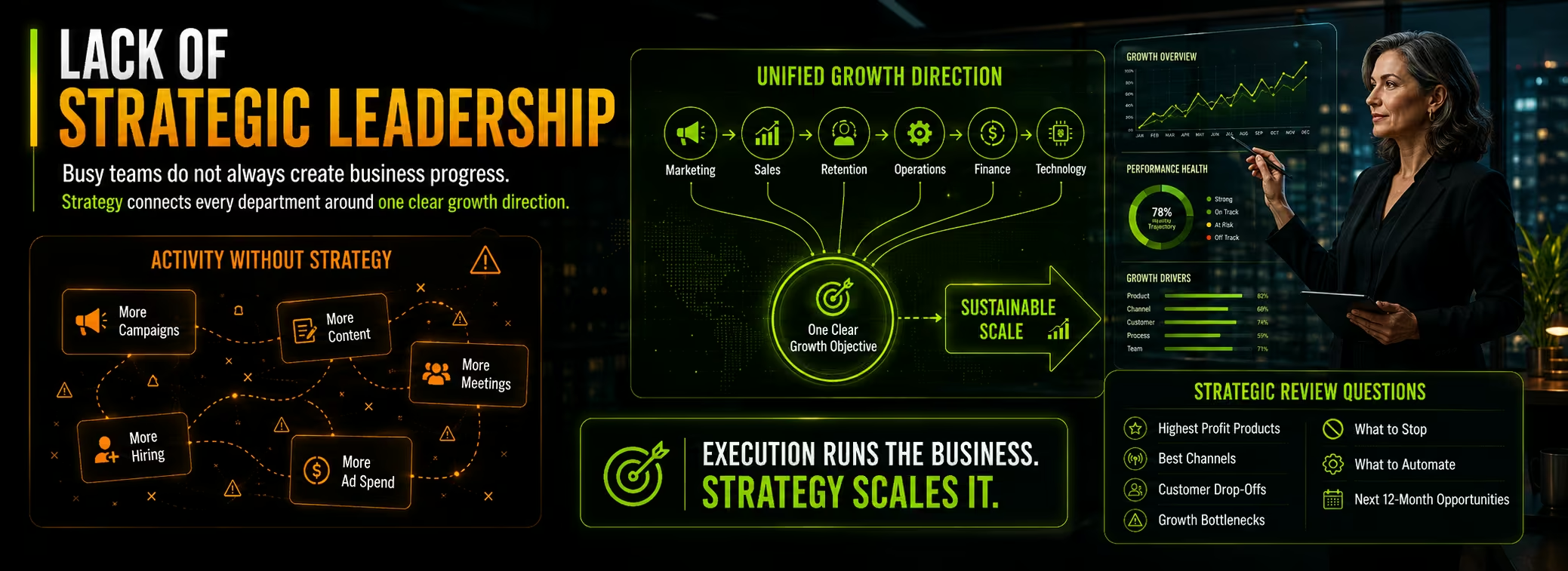
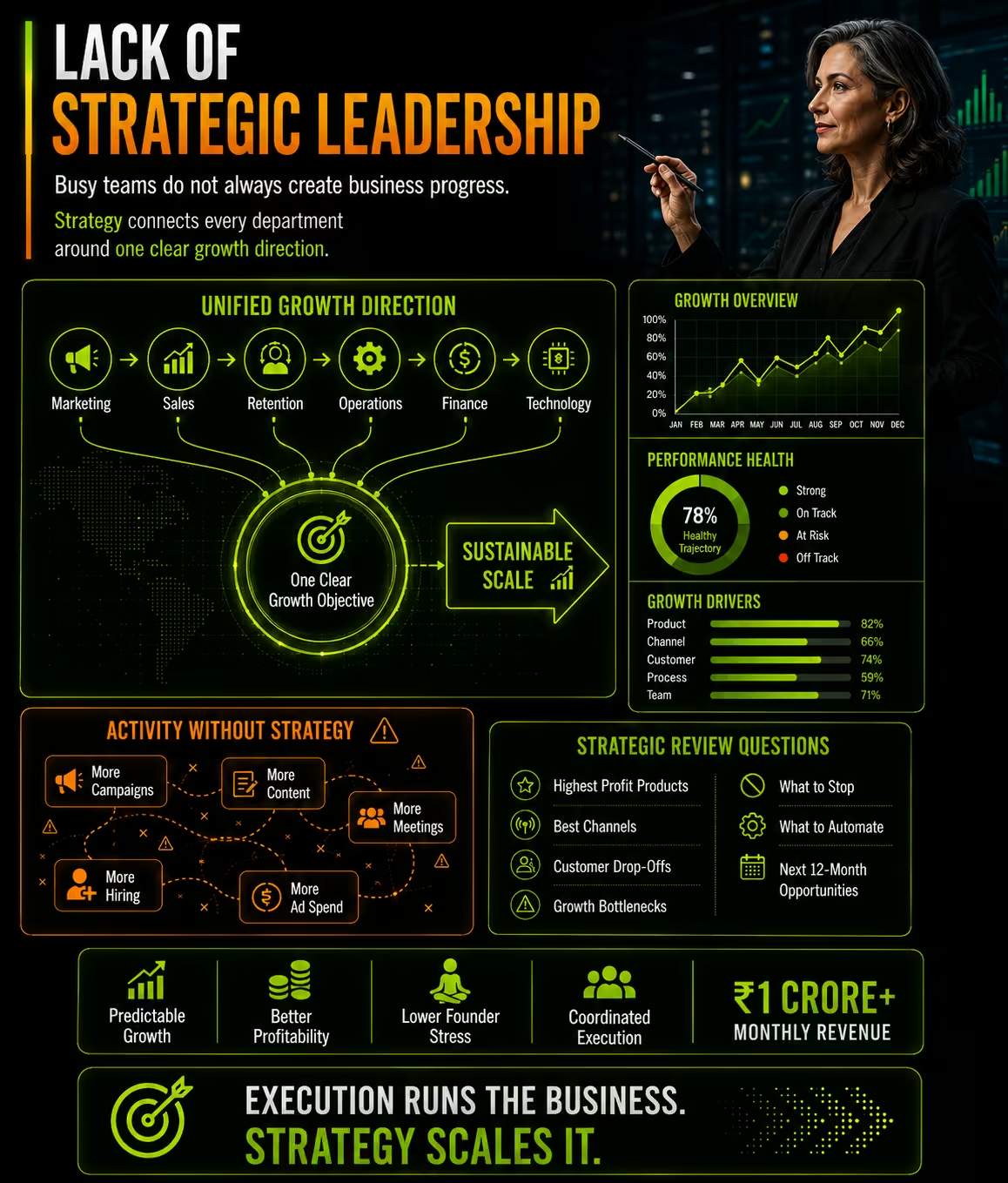
Lack of Strategic Leadership

Many growing businesses have people executing tasks. Very few have someone consistently thinking about the long-term direction of the business.

"Businesses don't scale because teams become busier. They scale because leadership becomes clearer."

The difference between a ₹50 lakh business and a ₹5 crore business is rarely effort. It is almost always strategic direction.

Execution

  • Complete today's work
  • Launch more campaigns
  • Attend meetings
  • Solve immediate problems
  • Focus on activity
  • Manage daily operations
VS

Strategic Leadership

  • Define long-term vision
  • Prioritize growth opportunities
  • Build scalable systems
  • Allocate resources wisely
  • Prevent future problems
  • Create sustainable growth

Business Growth Roadmap

Sustainable businesses don't grow by doing more. They grow by aligning every department around one strategic objective.

01

Marketing

Generate qualified traffic through content, SEO, paid advertising and brand awareness.

02

Sales

Convert interested visitors into paying customers using high-converting offers and experiences.

03

Customer Experience

Deliver a seamless experience from purchase to delivery and support.

04

Retention

Increase repeat purchases through trust, engagement and loyalty systems.

05

Profitability

Improve contribution margins, cash flow and customer lifetime value.

06

Sustainable Growth

Create systems that allow the business to scale without founder dependency.

Founder Strategic Review Checklist

Instead of discussing only daily operations, review these strategic questions every month.

Which products generate the highest profit?

Focus resources on products that improve overall profitability instead of only increasing revenue.

Which marketing channels deserve more investment?

Allocate budget based on measurable returns instead of assumptions.

Where are customers dropping off?

Identify friction across the customer journey before investing in more traffic.

Which systems slow business growth?

Remove operational bottlenecks that reduce speed and efficiency.

What should we stop doing?

Eliminate activities that consume resources without supporting long-term goals.

What should we automate?

Free leadership time by replacing repetitive work with scalable systems.

Which opportunities matter most over the next 12 months?

Create a roadmap focused on sustainable growth instead of reacting to short-term demands.

15
15 M

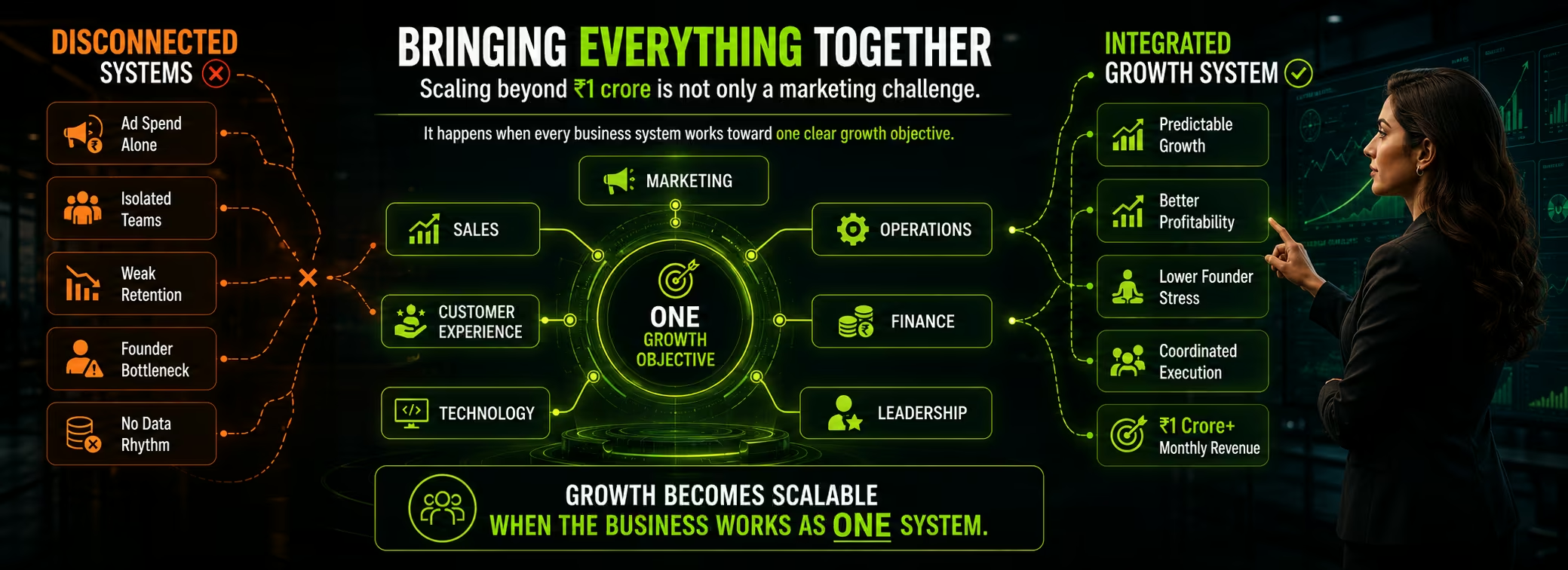
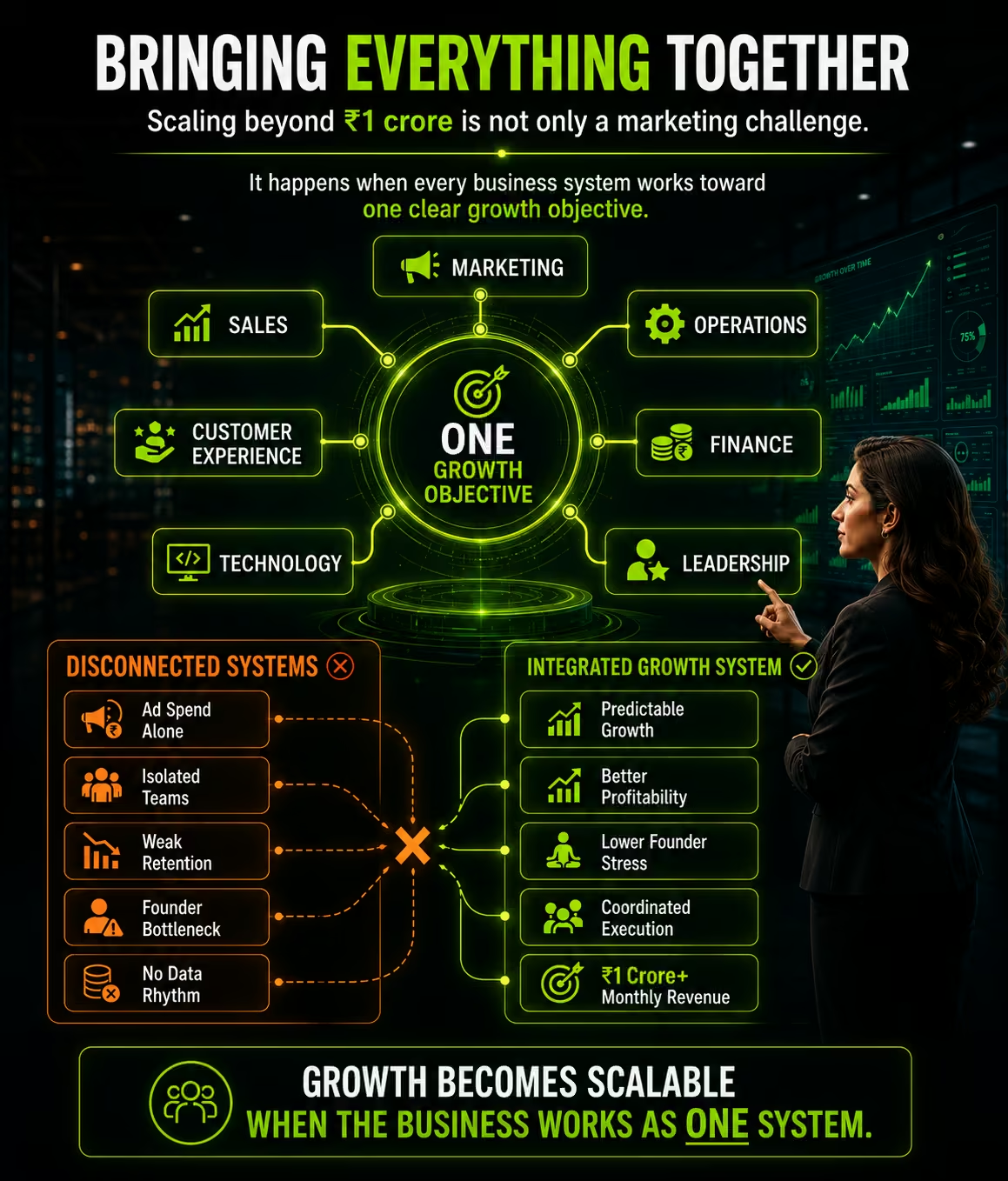
Bringing Everything Together

If you look closely, all ten challenges have one thing in common. They are not marketing problems alone—they are business system problems. That is why simply spending more on advertising rarely solves them. Businesses scale when every function supports the same growth objective.

Marketing
Sales
Operations
Customer Experience
Finance
Technology
Leadership

Integrated Growth System

When these systems begin working together instead of independently, growth becomes more predictable, more profitable, and much less stressful for the founder.
"The businesses that cross ₹1 Crore don't simply market better. They build better systems."

Business Growth System

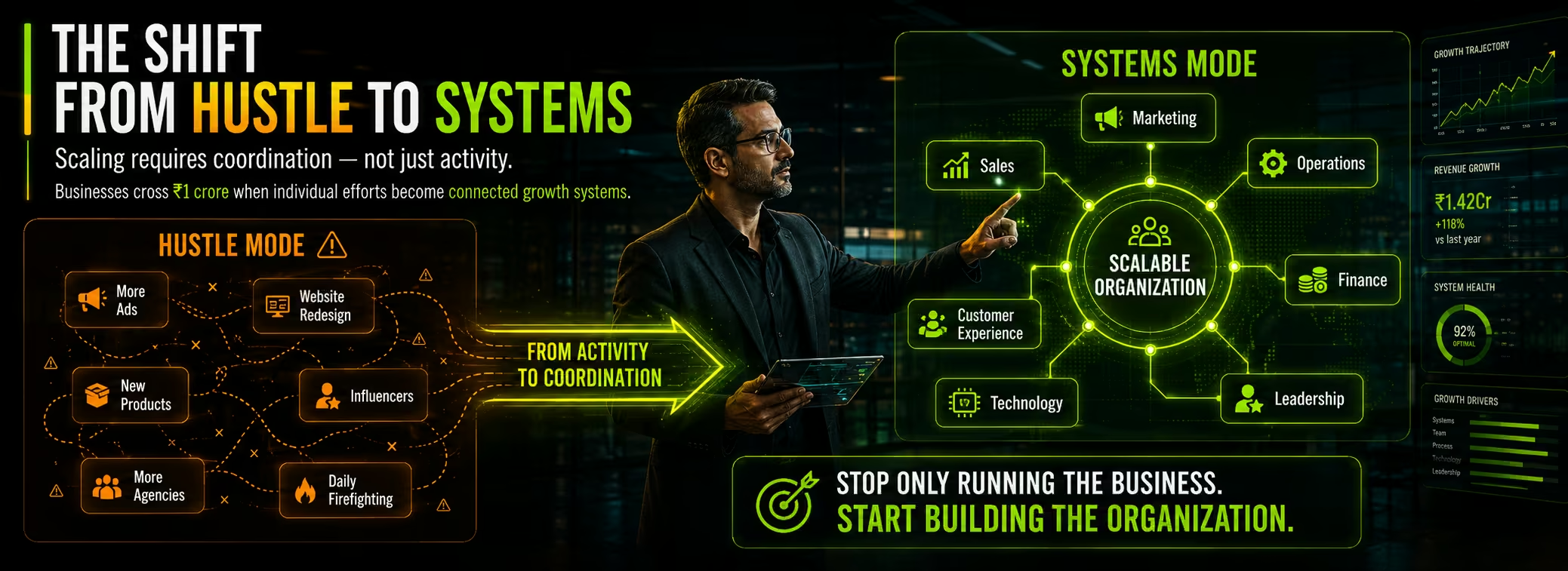
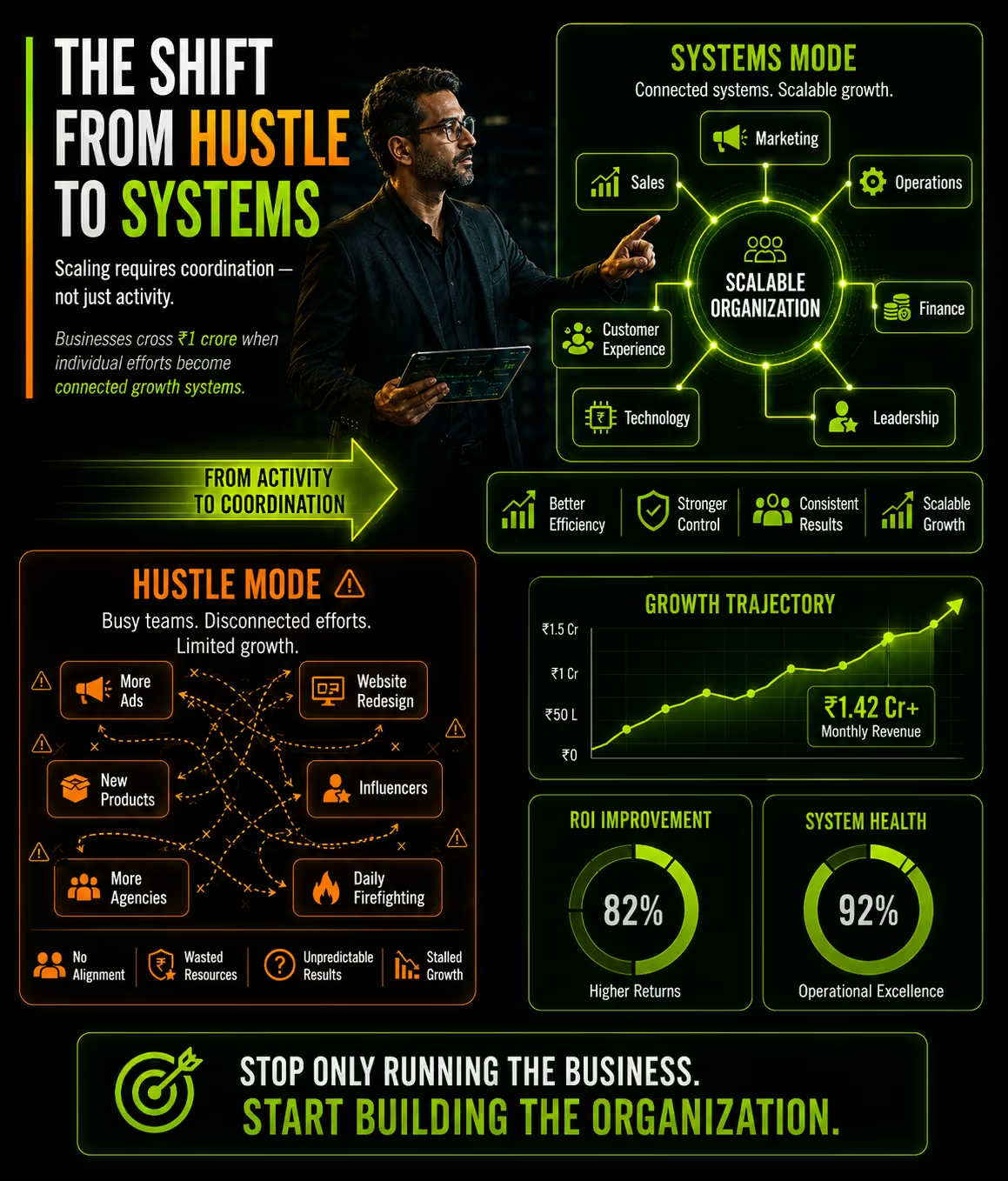
The Shift from Hustle to Systems

The businesses that successfully cross ₹1 crore per month usually make one important transition. They stop trying to grow through individual efforts. Instead, they build systems that allow the entire business to grow together.
Hustle Mode

  • Improve advertisements
  • Redesign websites
  • Launch new products
  • Experiment with influencers
  • Hire more agencies
  • Increase advertising budget

Systems Thinking

  • Align every department
  • Create scalable processes
  • Improve coordination
  • Measure business outcomes
  • Build repeatable systems
  • Create sustainable growth
17
17 M

A Simple Framework for Sustainable Growth

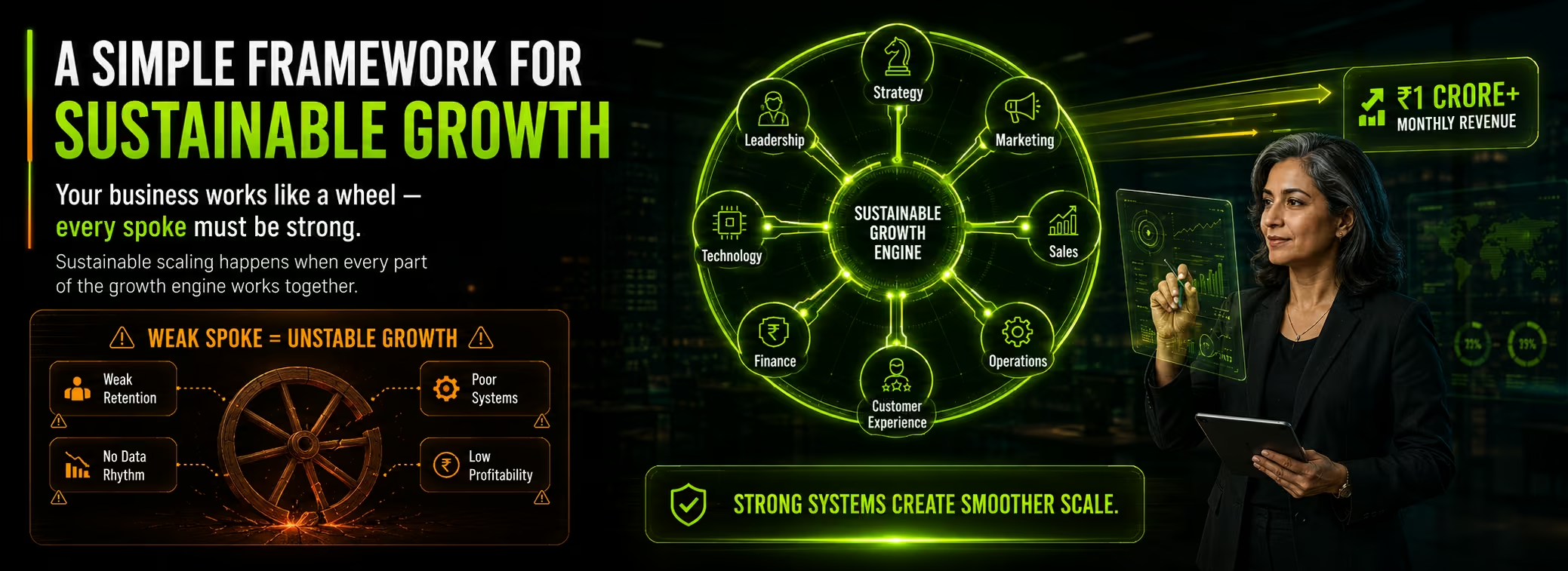
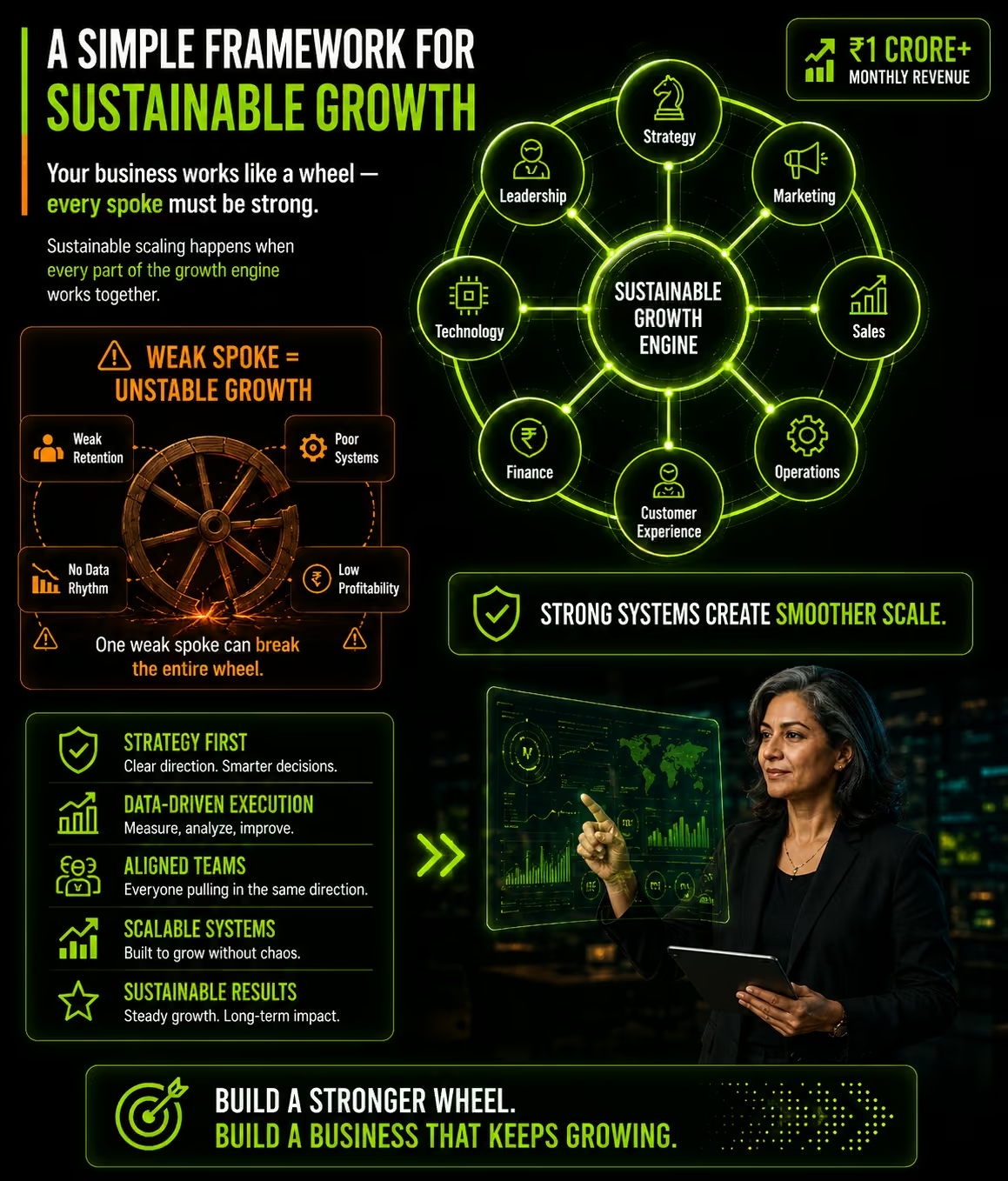
One way to think about scaling is to imagine your business as a wheel. For the wheel to move smoothly, every spoke must be strong. If even one spoke breaks, the entire wheel becomes unstable. The same principle applies to a growing business. Instead of thinking about marketing in isolation, successful companies strengthen every part of the growth engine. Below is a simple framework that many high-growth businesses naturally develop as they scale.
Business Growth System
01

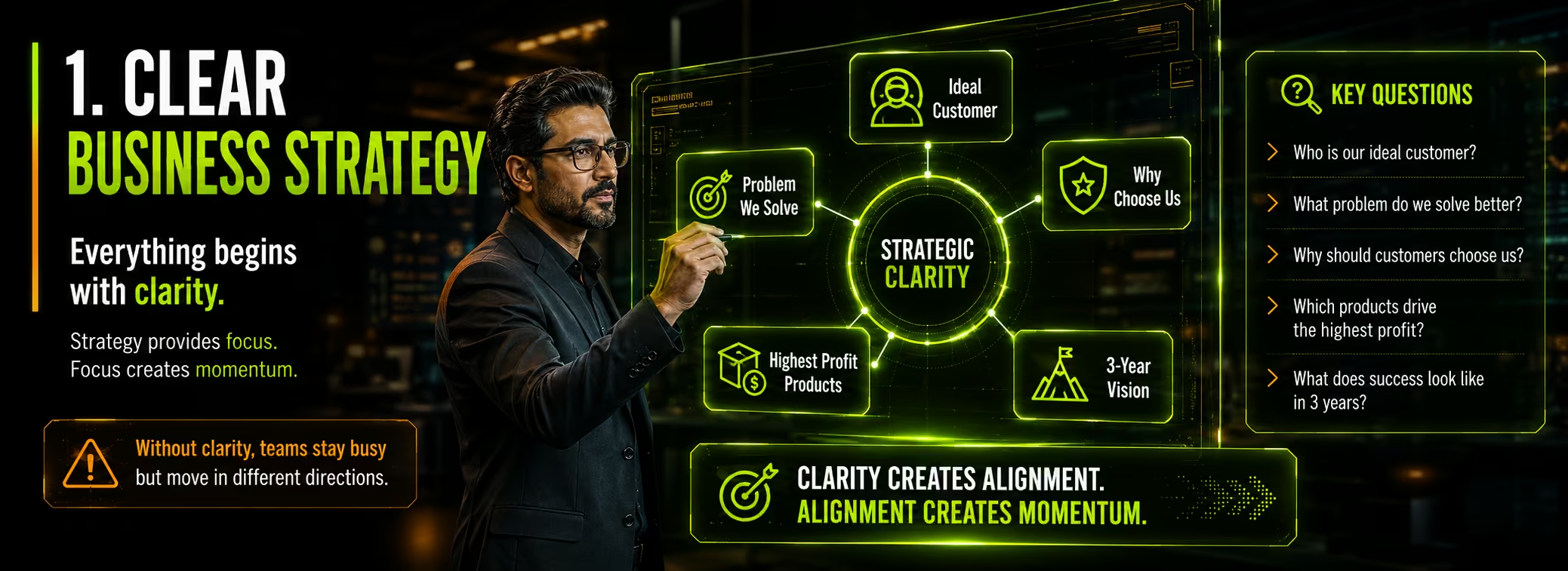
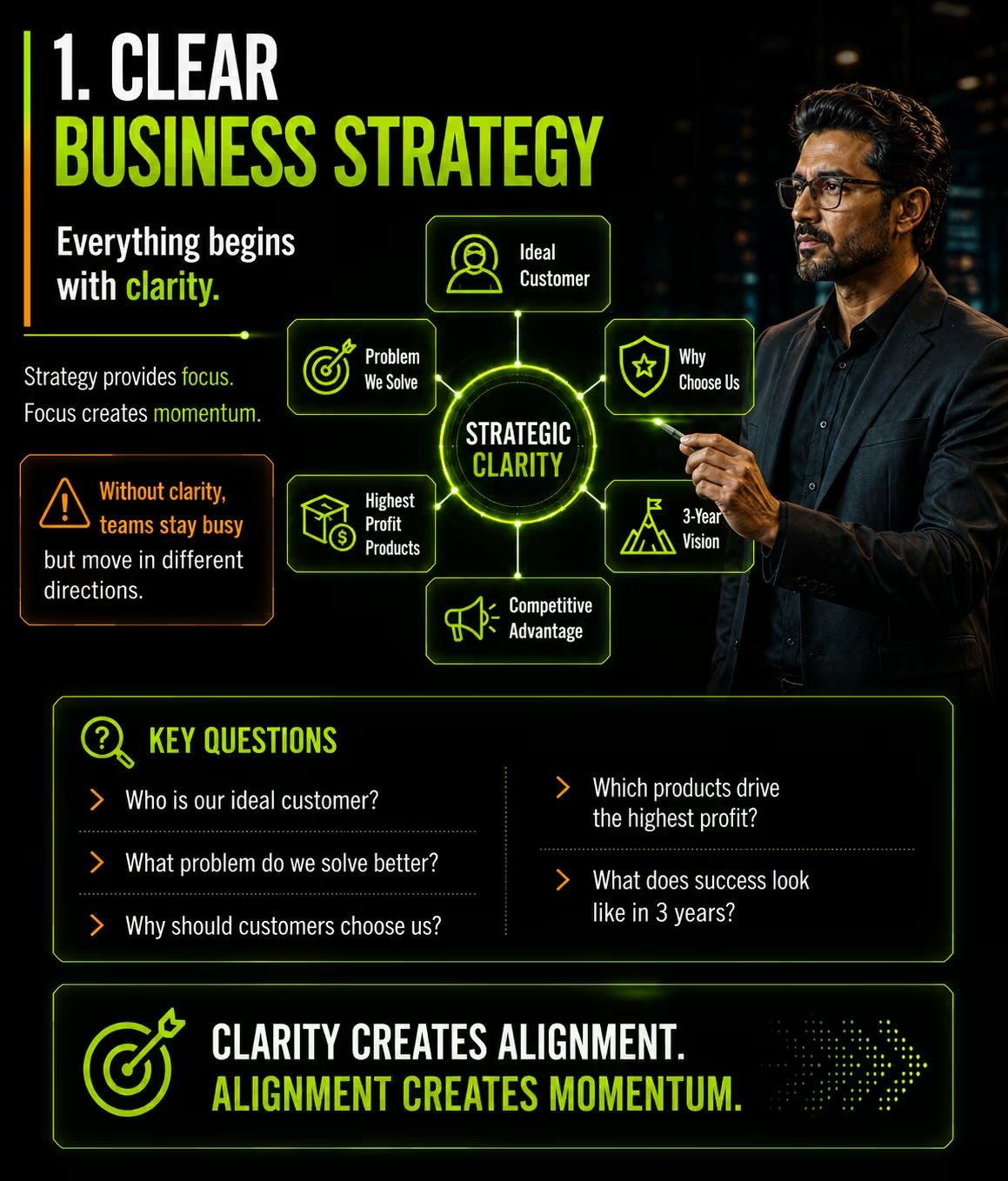
Clear Business Strategy

Everything begins with clarity. Every business should have clear answers to:

  • Who is our ideal customer?
  • What problem do we solve?
  • Why should customers choose us?
  • Which products generate the highest profit?
  • What does success look like in the next 3 years?
Key Insight

Without strategic clarity, teams stay busy but rarely move in the same direction. Strategy creates focus. Focus creates momentum.
Business Growth System
02

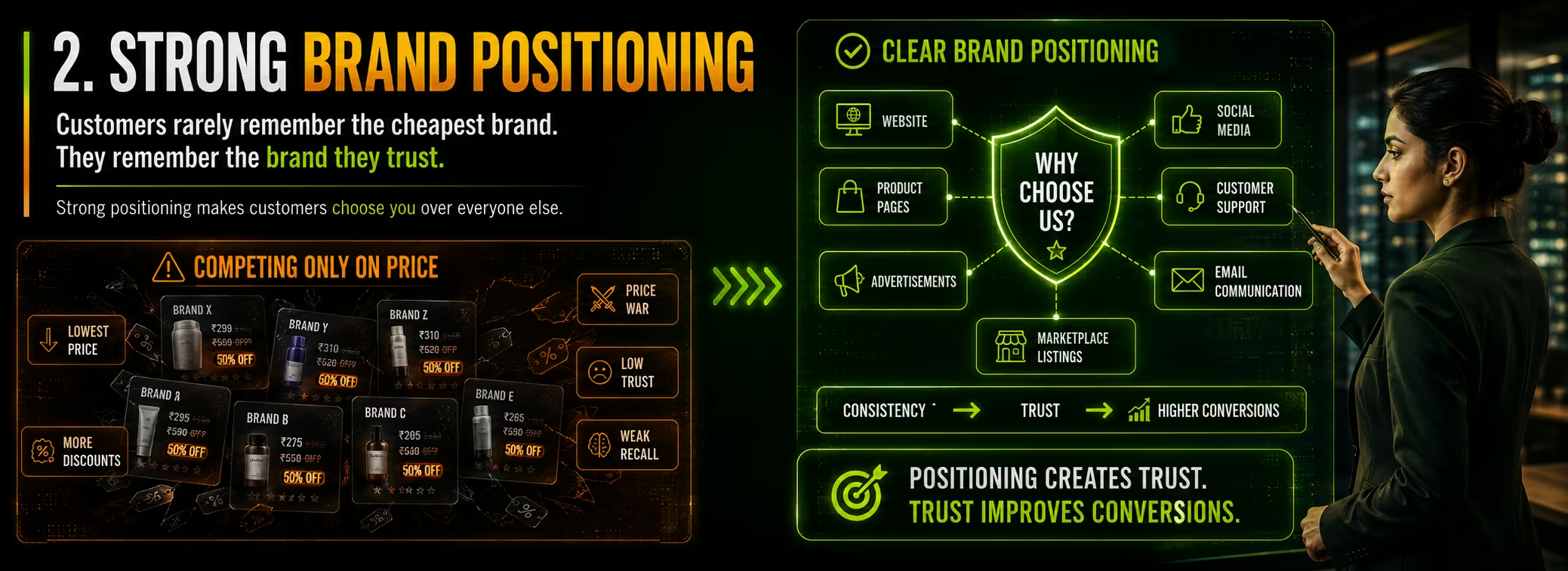
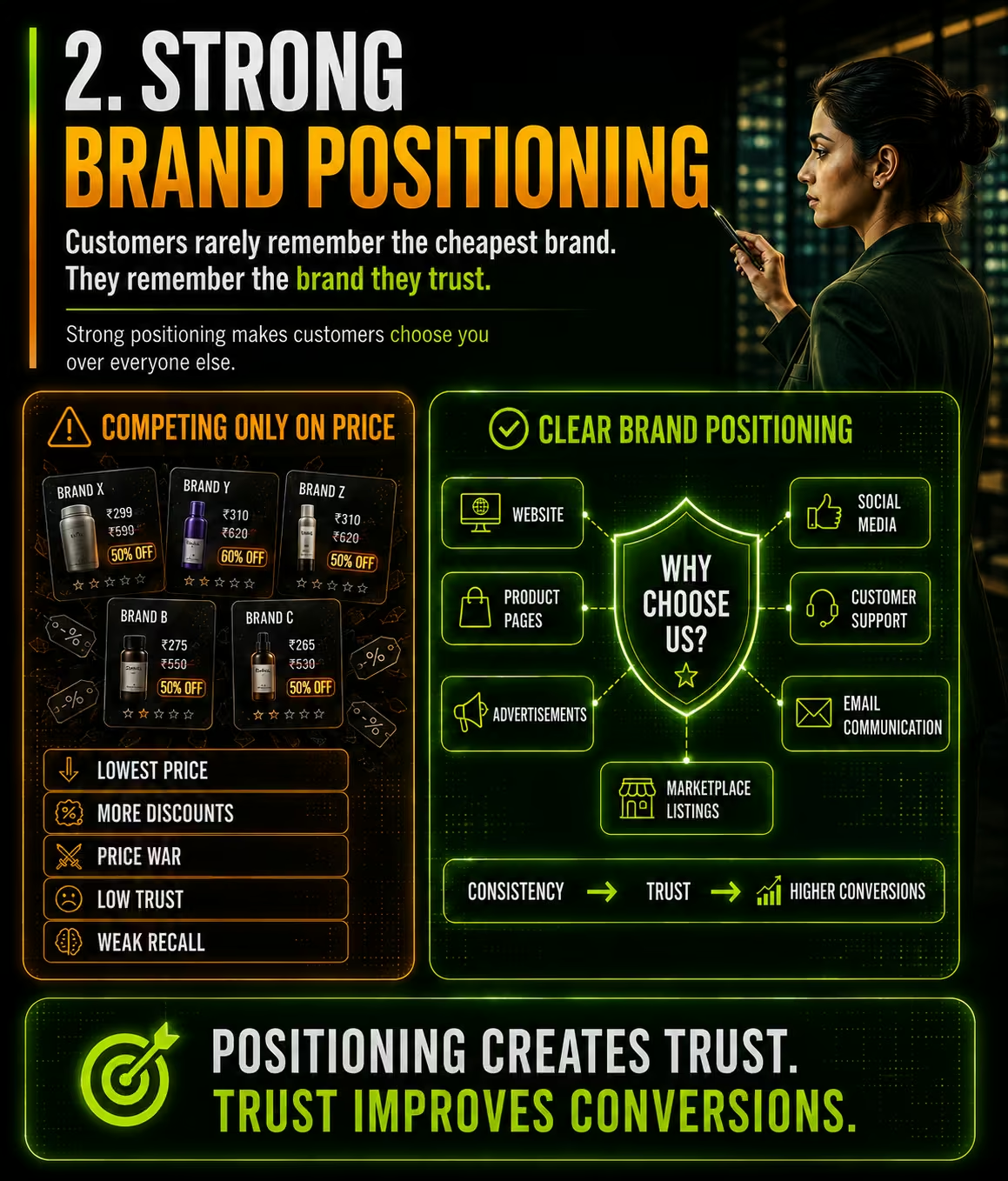
Strong Brand Positioning

Customers rarely remember the cheapest brand. They remember the brand they trust.

✔ Website
✔ Product Pages
✔ Advertisements
✔ Social Media
✔ Email Marketing
✔ Customer Support
Key Insight

Consistency builds trust. Trust improves conversions.
Business Growth System
03

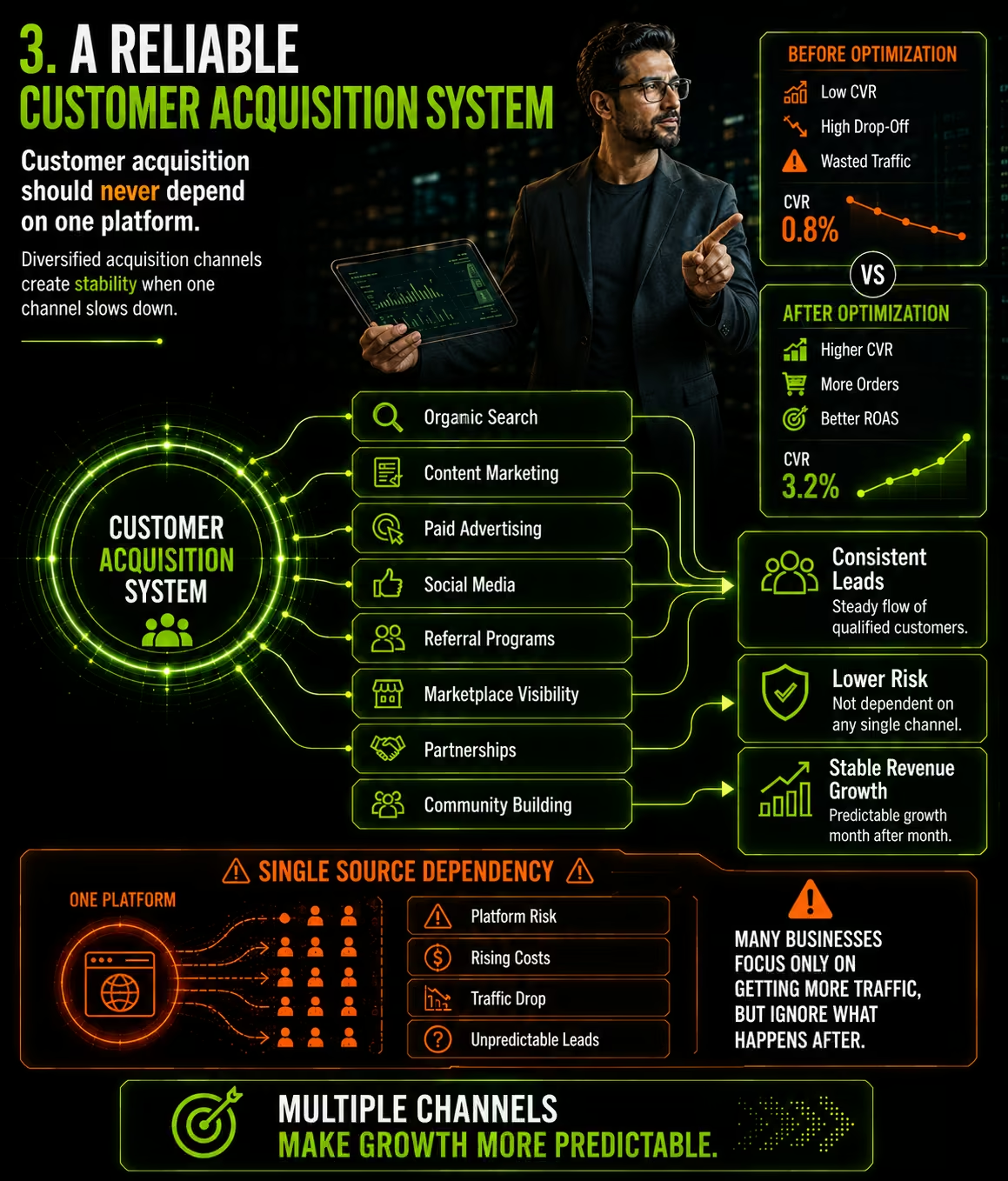
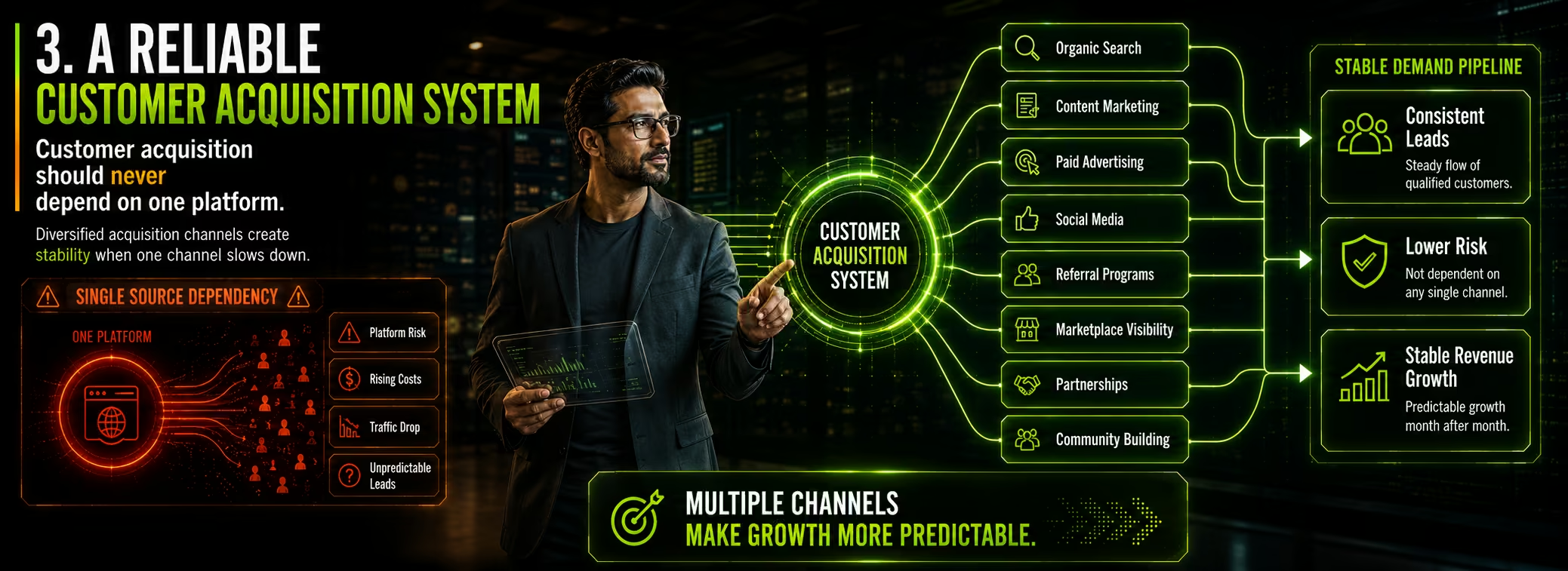
Reliable Customer Acquisition System

Healthy businesses don't depend on one traffic source. Instead, they build multiple acquisition channels.

Organic Search
SEO
Paid Ads
Social Media
Referral Programs
Marketplaces
Communities
Partnerships
Key Insight

Diversification creates stability. When one channel slows, others continue generating demand.
Business Growth System
04

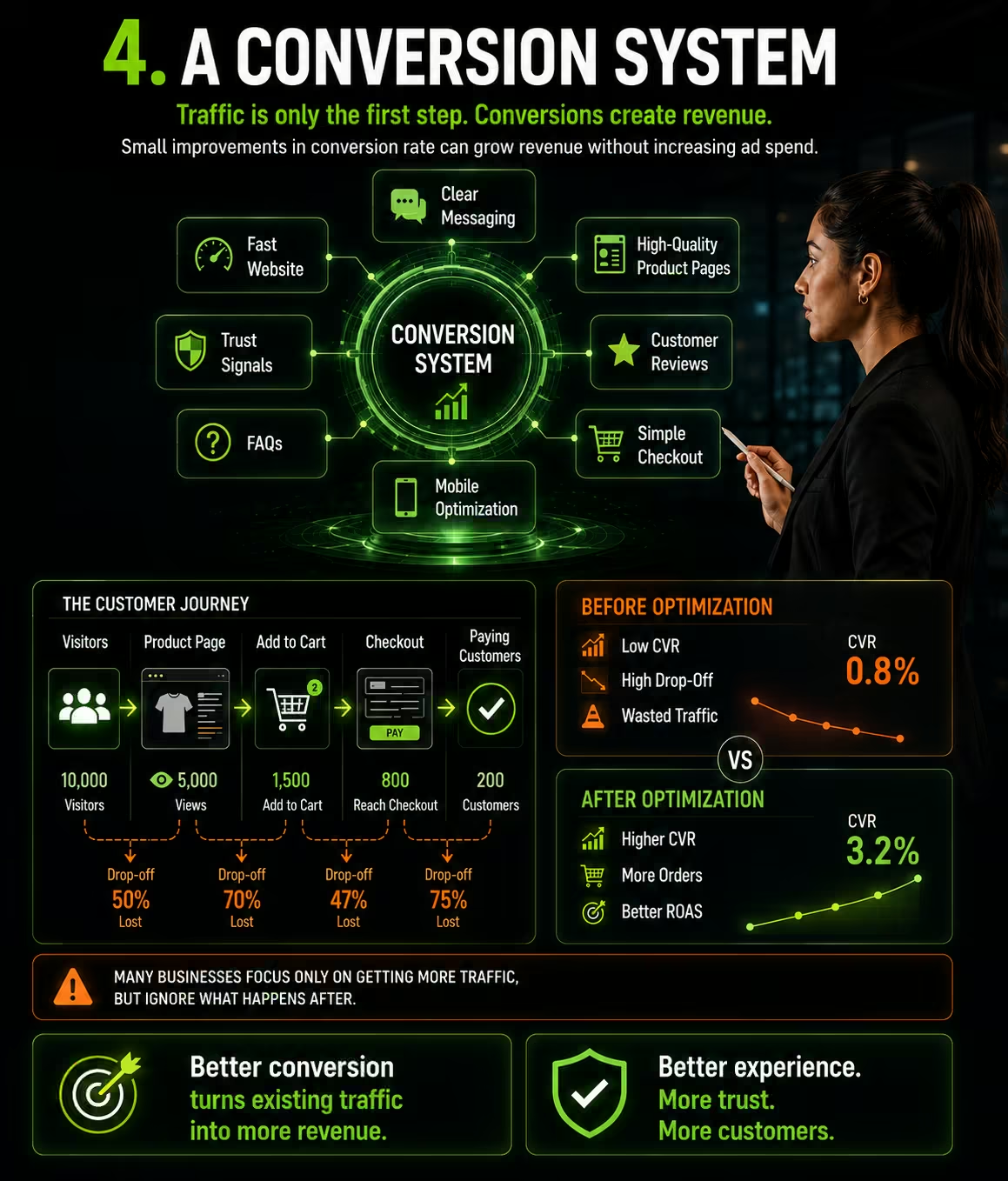
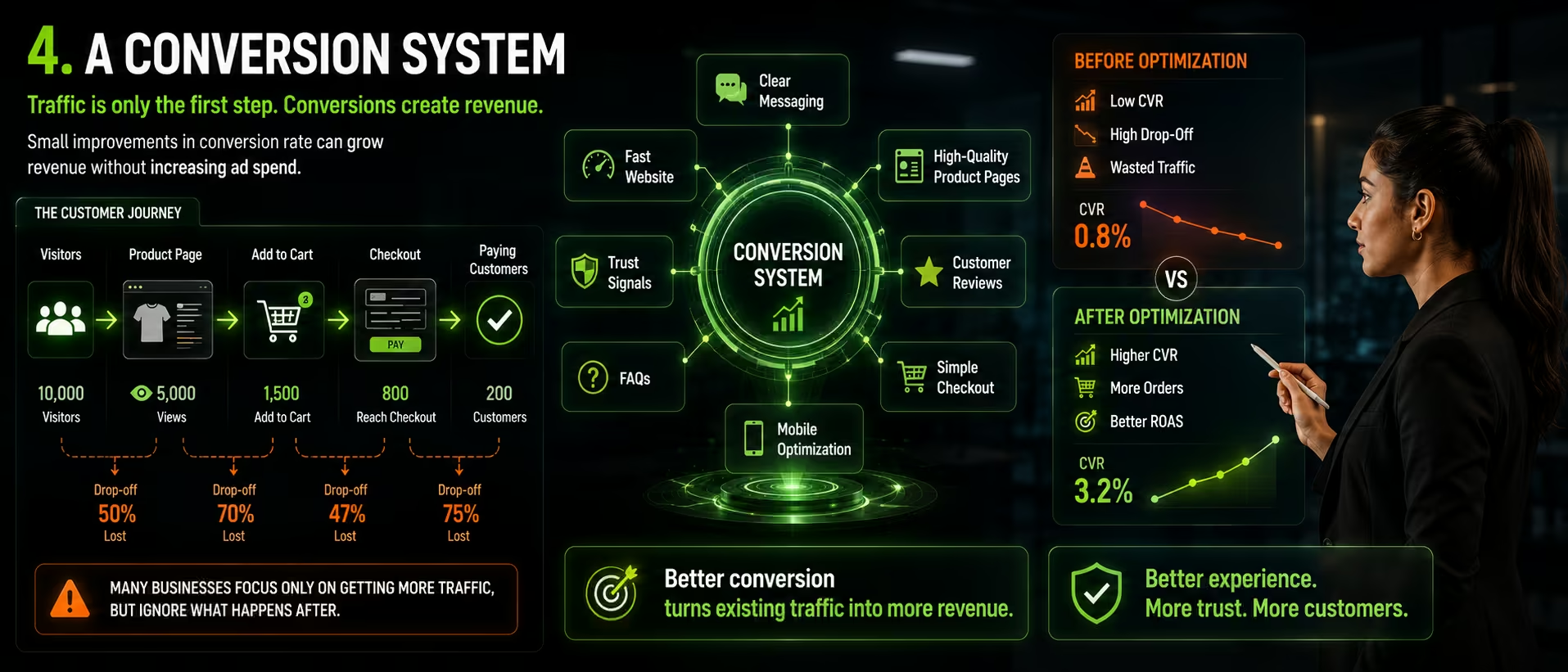
High-Converting Sales System

Traffic alone doesn't create revenue. The real question is:

How many visitors become paying customers?
  • Clear Messaging
  • Fast Website
  • Trust Signals
  • Customer Reviews
  • Simple Checkout
  • Mobile Optimization
  • FAQ Section
  • Product Pages
Key Insight

Small improvements in conversion rates often generate more revenue than increasing advertising budgets.
Business Growth System
05

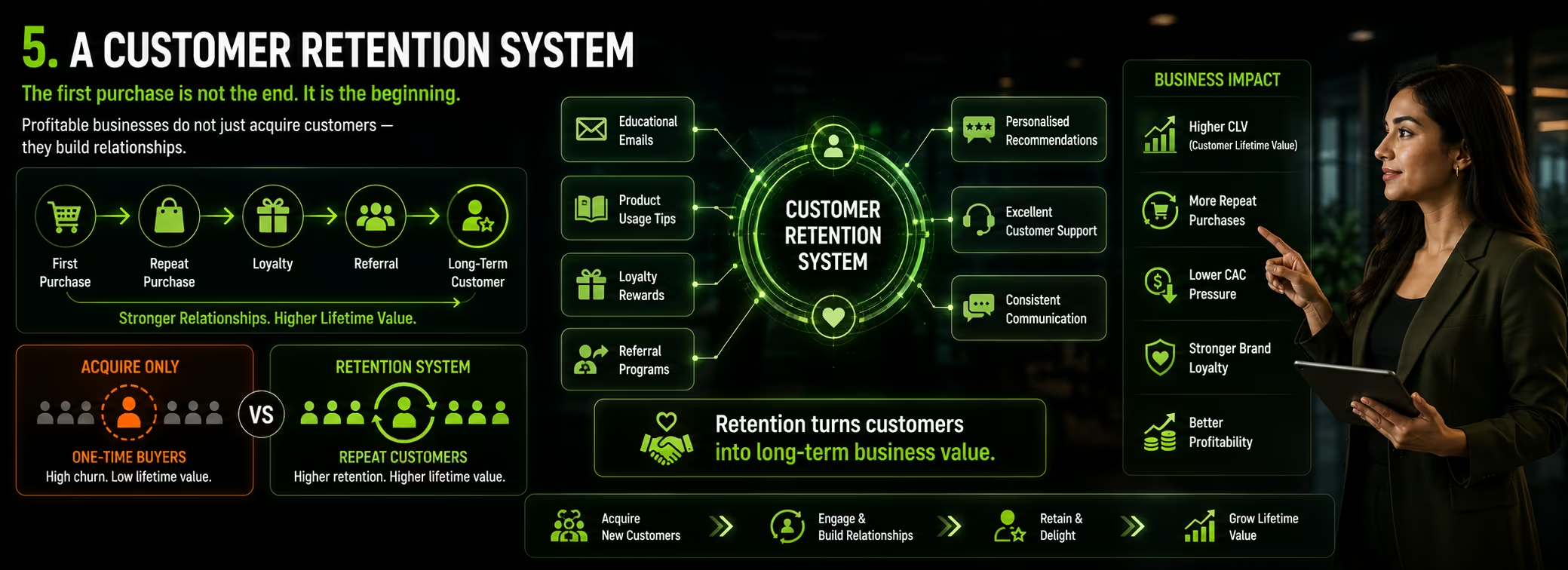
Customer Retention System

The first purchase should never be the end of the customer journey. It should be the beginning of a long-term relationship. Successful businesses focus on increasing customer lifetime value instead of constantly chasing new customers.

Educational Emails

Keep customers engaged through helpful email sequences that educate, nurture and encourage repeat purchases.

Product Usage Tips

Help customers get maximum value from every purchase by sharing practical product education and usage guides.

Loyalty Rewards

Encourage repeat purchases through exclusive rewards, points and VIP customer benefits.

WhatsApp Campaigns

Stay connected with personalized updates, product launches and customer support.

Referral Programs

Turn satisfied customers into brand advocates by rewarding successful referrals.

Increase Customer Lifetime Value

Higher customer lifetime value creates stronger profitability and sustainable long-term growth.

Key Insight

Acquiring a customer is expensive. Retaining them is where real profitability begins.
Business Growth System
06

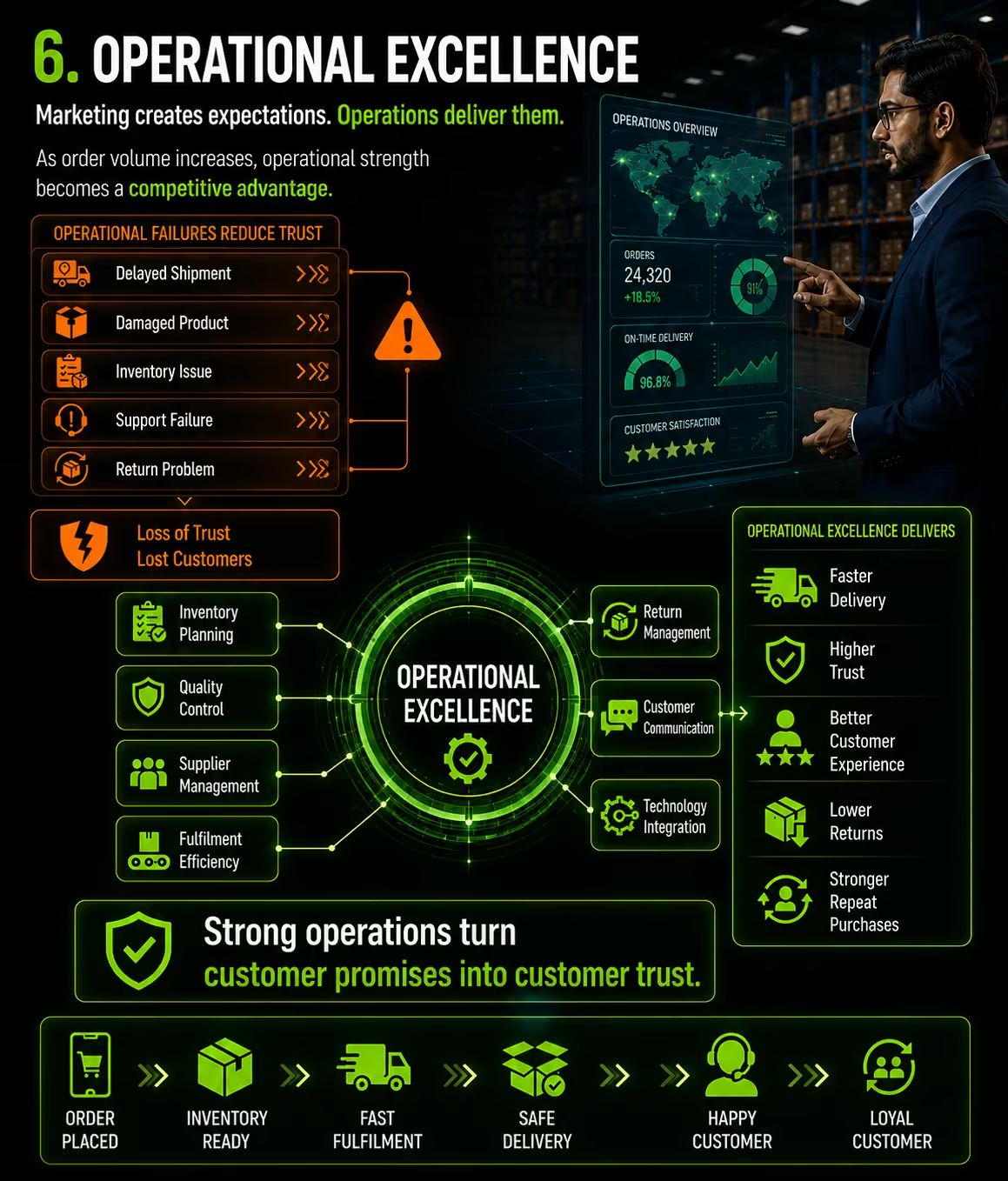
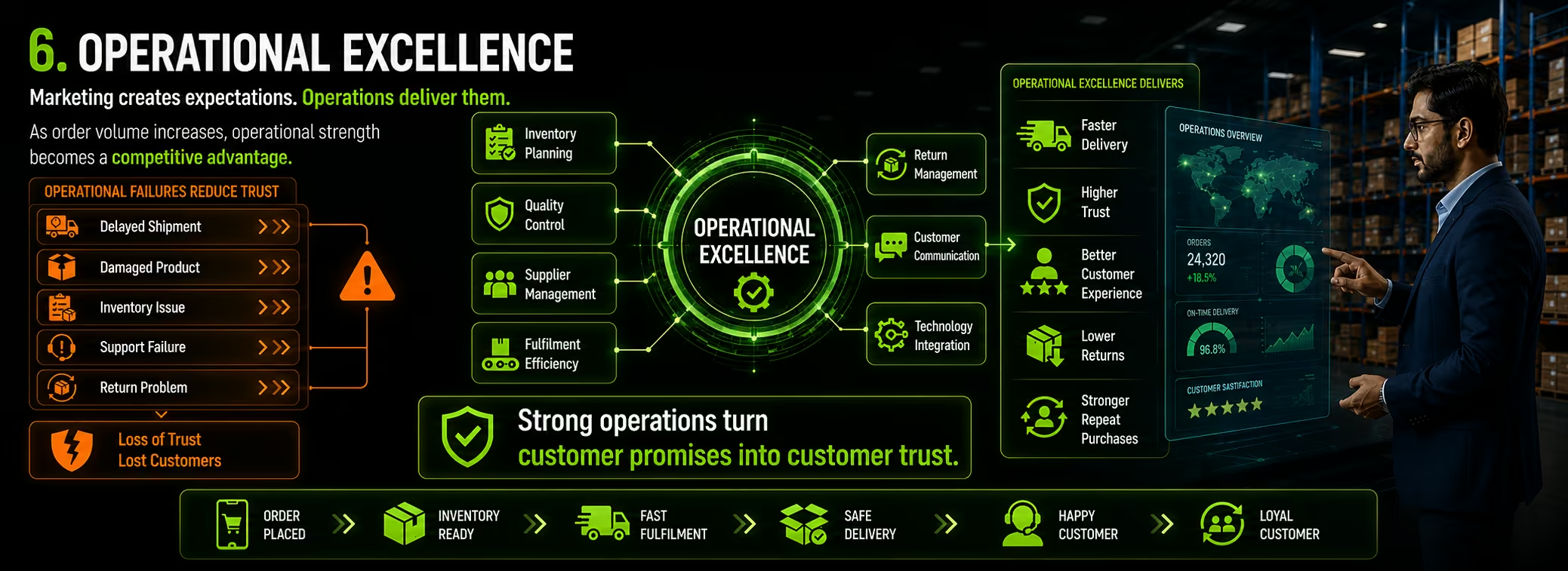
Operational Excellence

Marketing creates expectations, but operations deliver them. Every delayed shipment, damaged product, inventory issue, or customer support failure reduces customer trust. Operational excellence becomes a major competitive advantage as order volumes increase.

Inventory Planning

Forecast demand accurately to avoid stock shortages and unnecessary inventory costs.

Supplier Management

Build reliable supplier relationships that support consistent business growth.

Fulfilment Efficiency

Improve warehouse workflows to deliver orders faster and more accurately.

Quality Control

Maintain consistent product quality and reduce customer complaints.

Return Management

Create smooth return processes that strengthen customer confidence.

Customer Support

Deliver fast and helpful support that turns customers into loyal advocates.

Key Insight

Great marketing wins the first order. Great operations win every order after that.
Business Growth System
07

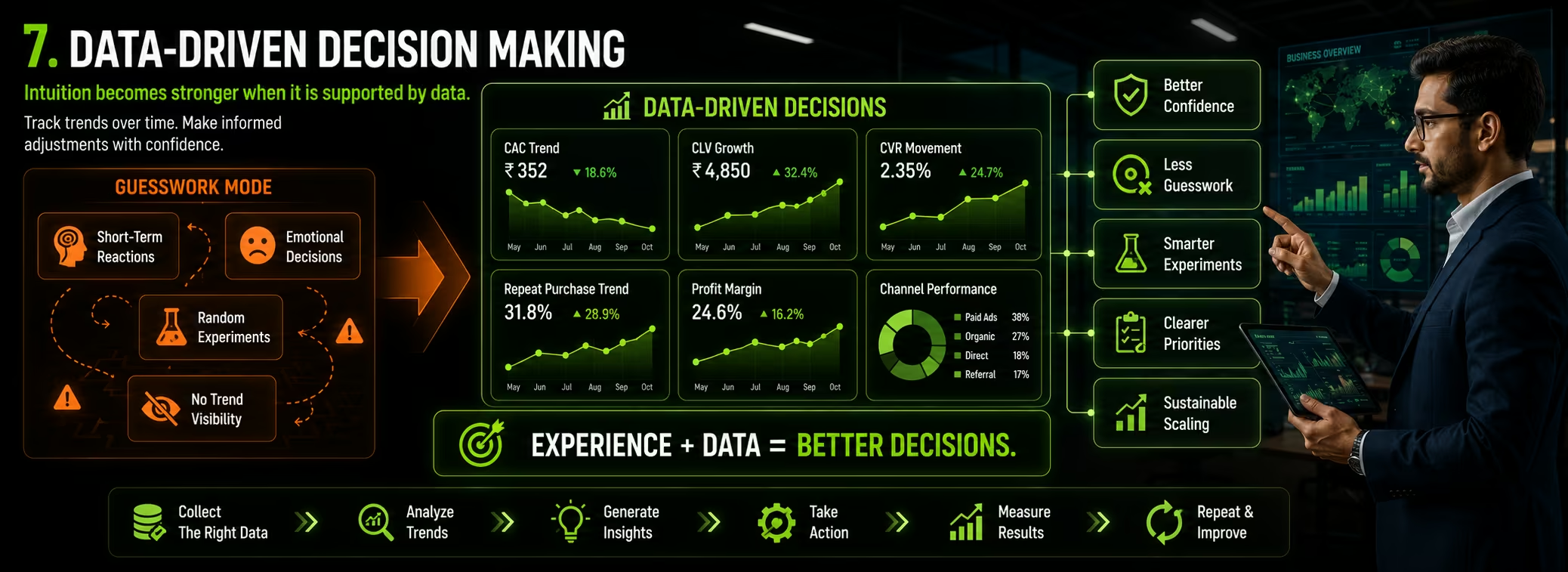
Data-Driven Decision Making

Successful founders don't eliminate intuition—they strengthen it with data. Instead of making decisions based on assumptions, growing businesses rely on measurable insights to identify opportunities, solve problems, and scale with confidence.

Customer Acquisition Cost

Monitor CAC to ensure every marketing investment remains profitable.

Customer Lifetime Value

Measure long-term customer value instead of focusing only on first purchases.

Profitability Metrics

Track contribution margin, gross profit and net profit regularly.

Conversion Performance

Improve conversion rate, average order value and repeat purchase rate.

Inventory & SKU Analysis

Identify profitable products, inventory turnover and slow-moving stock.

Channel Performance

Compare every sales channel to understand where growth is most profitable.

Key Insight

Better data creates better decisions. Businesses that consistently measure performance solve problems faster and scale with far greater confidence.
Business Growth System
08

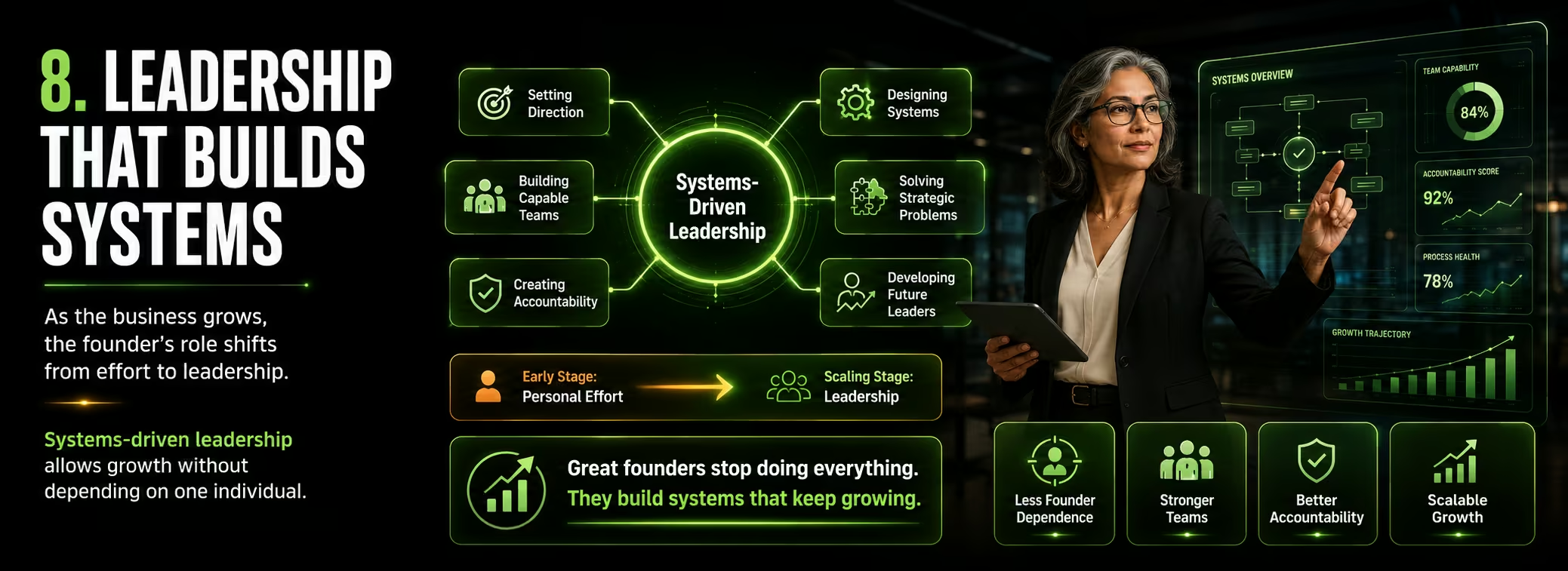
Leadership That Builds Systems

The founder's role changes as the business grows. In the early stages, founders create momentum through personal effort. During the scaling stage, they create momentum through leadership, systems, and empowered teams. Sustainable businesses are built by leaders who design systems that continue to perform even when they are not involved in every decision.

Set Clear Direction

Define long-term business goals and ensure every team works toward the same vision.

Build Strong Teams

Hire, mentor, and empower capable people who can make decisions independently.

Create Accountability

Establish ownership, clear responsibilities, and measurable performance indicators.

Design Scalable Systems

Replace manual processes with documented workflows and scalable operating systems.

Solve Strategic Problems

Focus on business opportunities, innovation, and long-term growth instead of daily firefighting.

Develop Future Leaders

Build leadership within the organization so the business continues to grow beyond the founder.

Leadership Insight

Great founders don't build businesses that depend on them. They build systems, develop leaders, and create organizations that continue growing long after the founder steps away from daily operations.
27
27 M
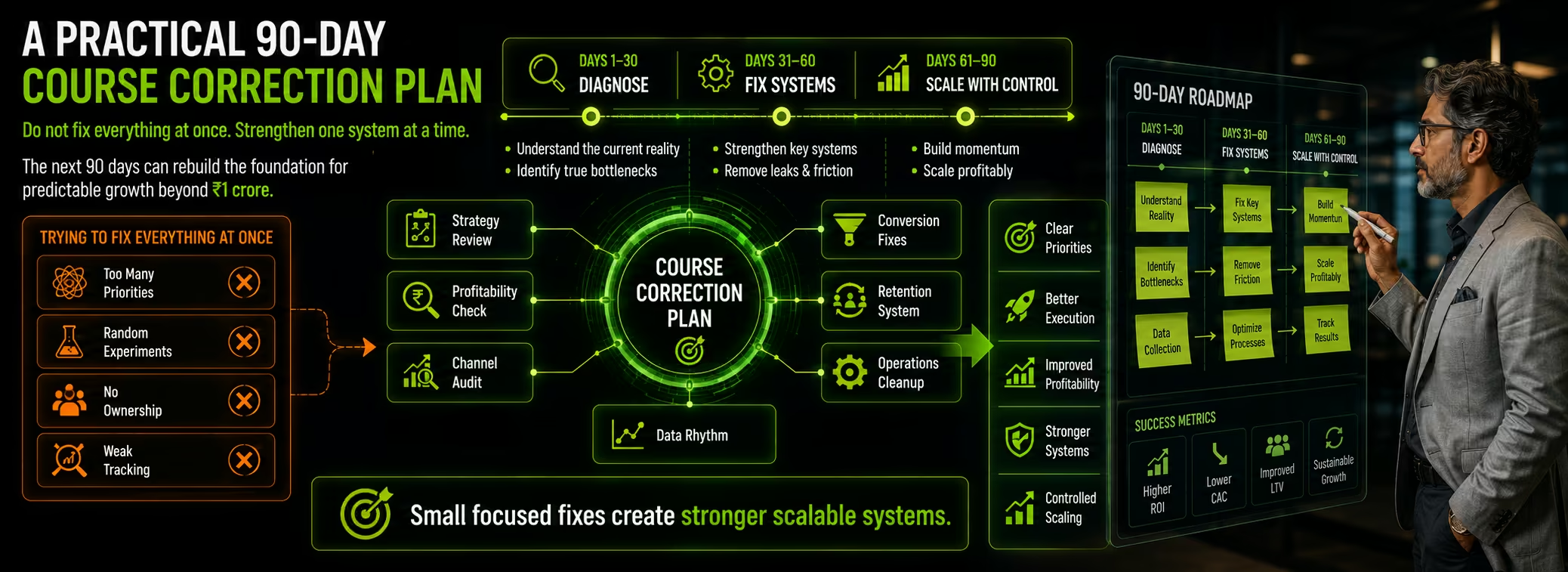
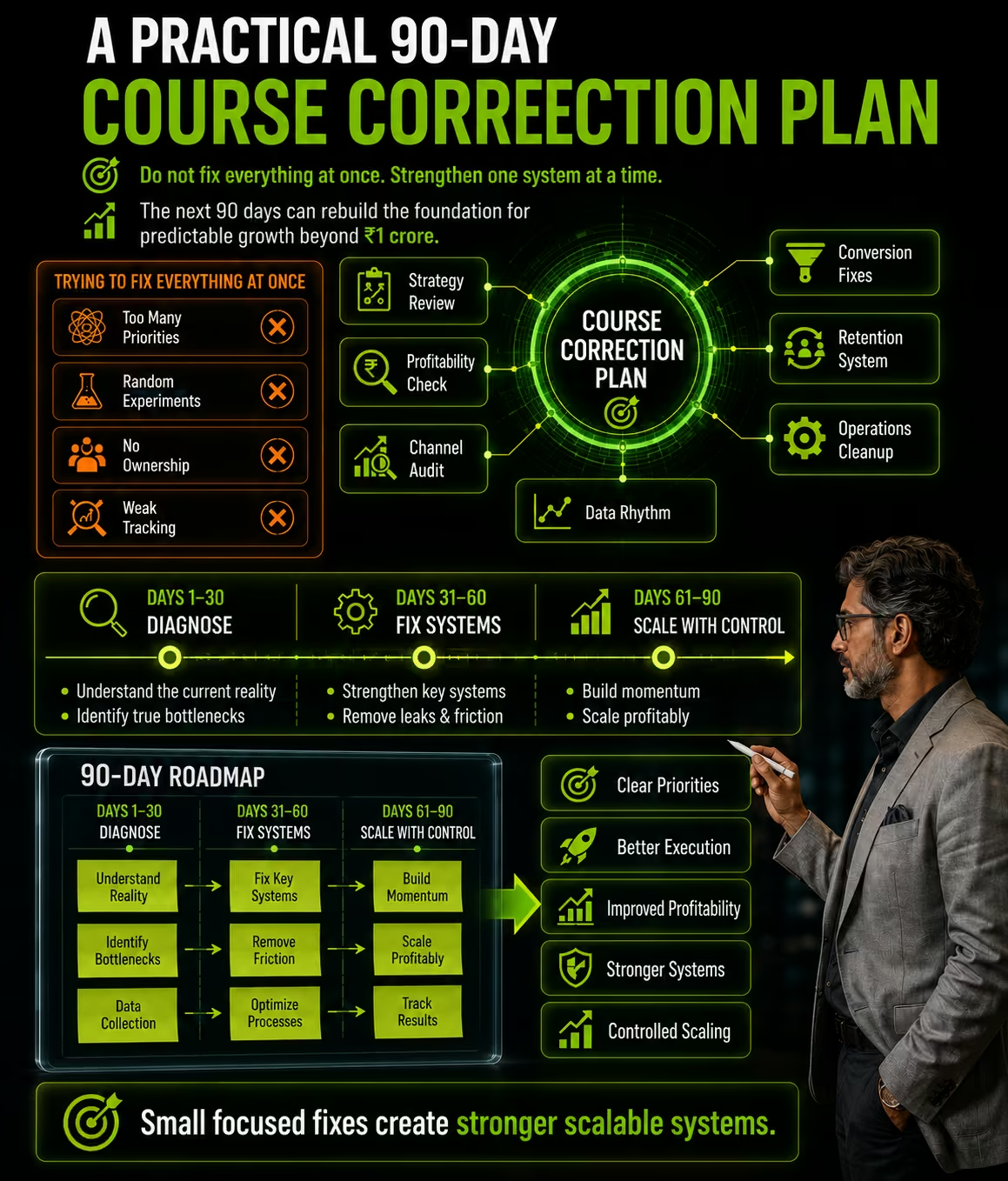
90-Day Growth Roadmap

A Practical 90-Day Course Correction Plan

If your business is currently generating between ₹30–50 lakhs per month, the next ninety days can become an excellent opportunity to strengthen your foundation. Rather than fixing everything at once, focus on one improvement at a time.
Business Growth System
01
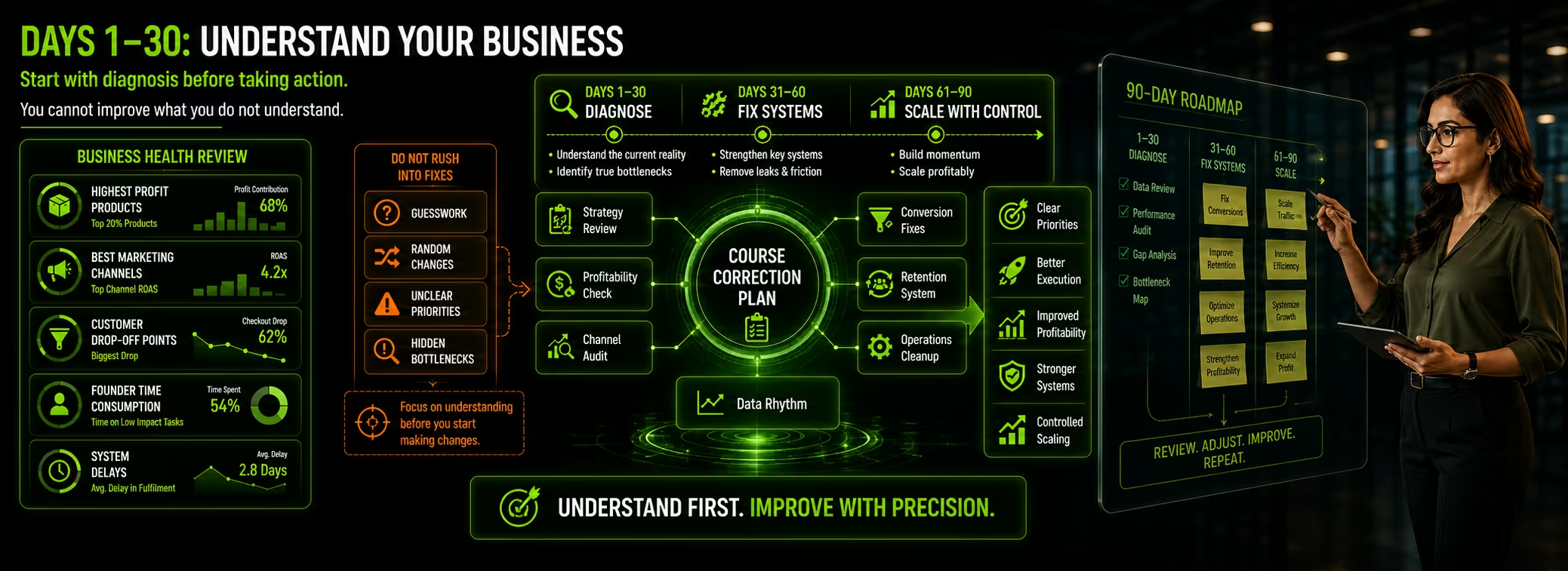
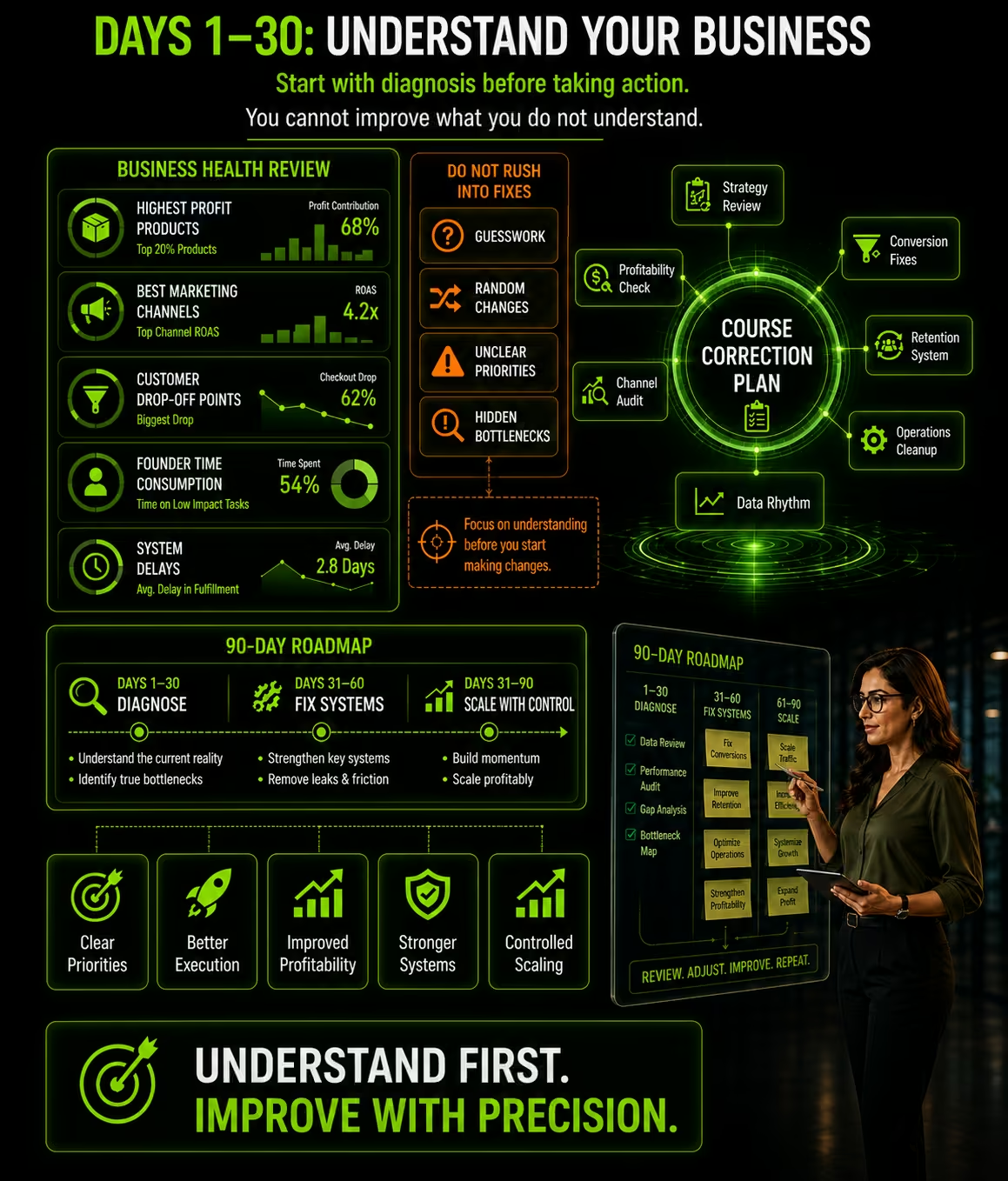
Days 1–30

Understand Your Business

Start by reviewing your current position. Before making changes, understand exactly where your business stands.
Which products generate the highest profit?
Which marketing channels perform best?
Where are customers dropping off?
Which activities consume the founder's time?
Which systems create delays?
Goal: Diagnose before taking action. You cannot improve what you do not understand.
Business Growth System
02
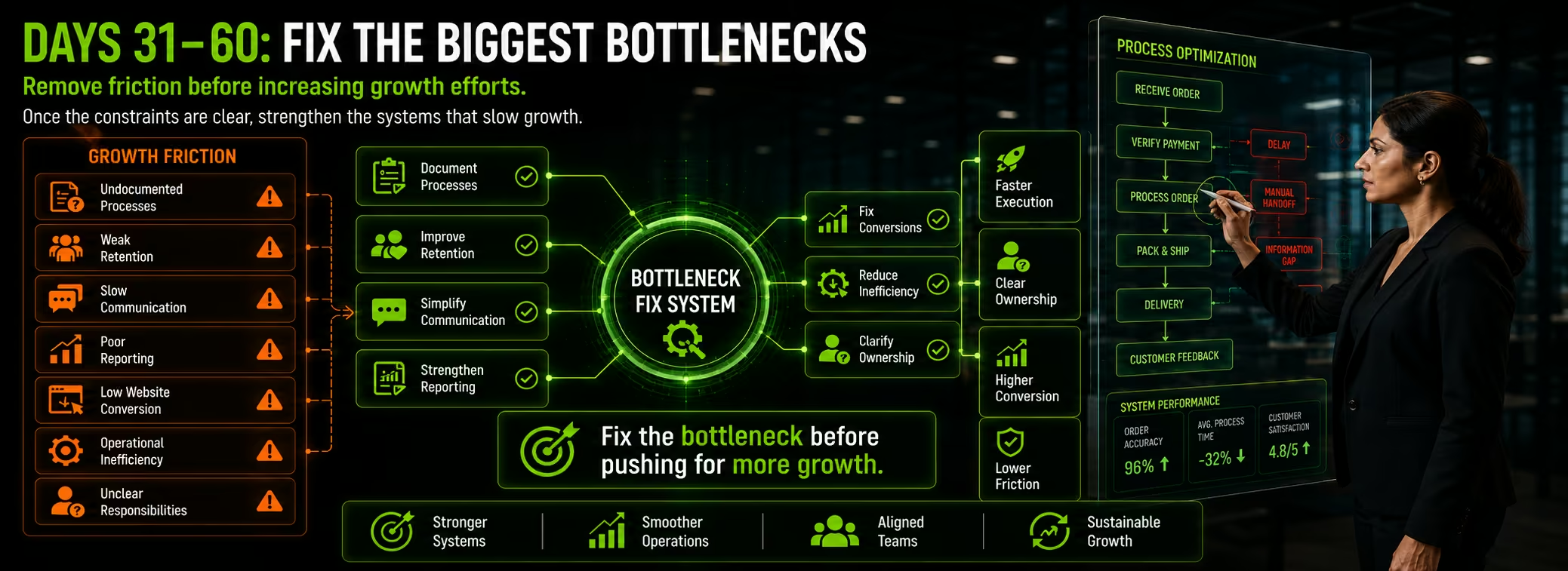
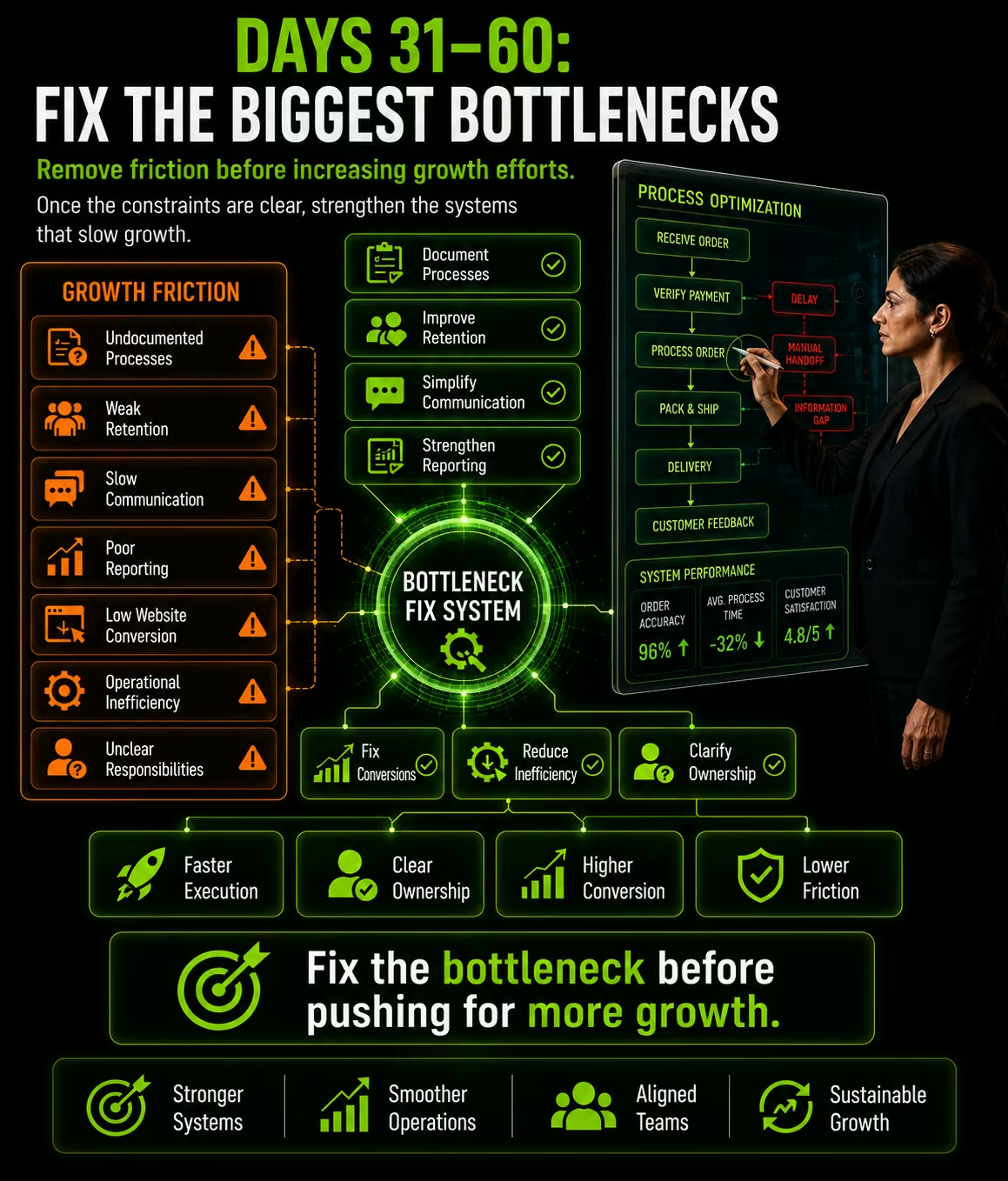
Days 31–60

Fix the Biggest Bottlenecks

Once you identify the largest constraints, begin removing friction across the business.
Document recurring processes
Improve customer retention
Simplify internal communication
Strengthen reporting systems
Improve website conversions
Reduce operational inefficiencies
Clarify team responsibilities
Goal: Remove friction before increasing growth efforts.
Business Growth System
03
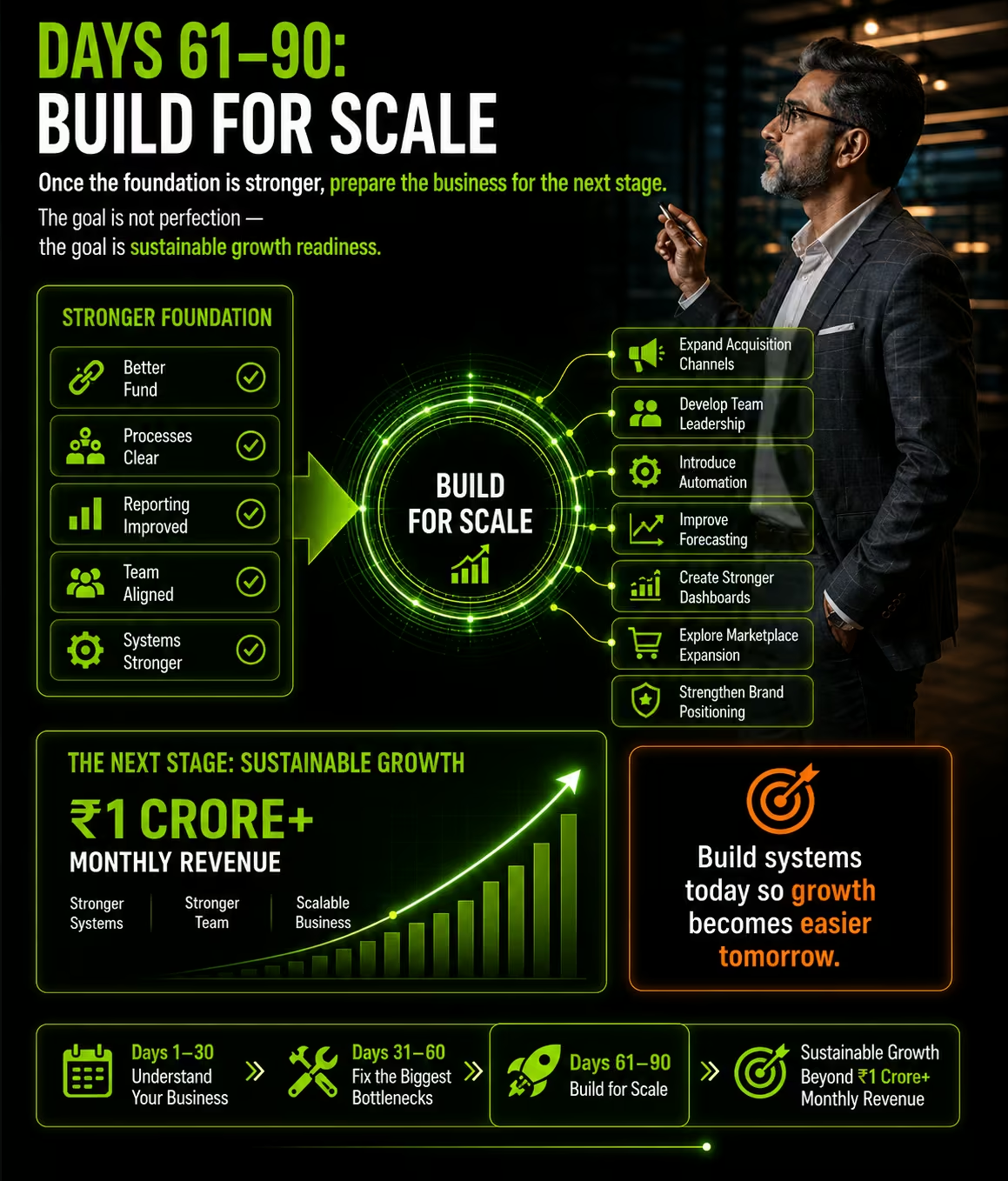
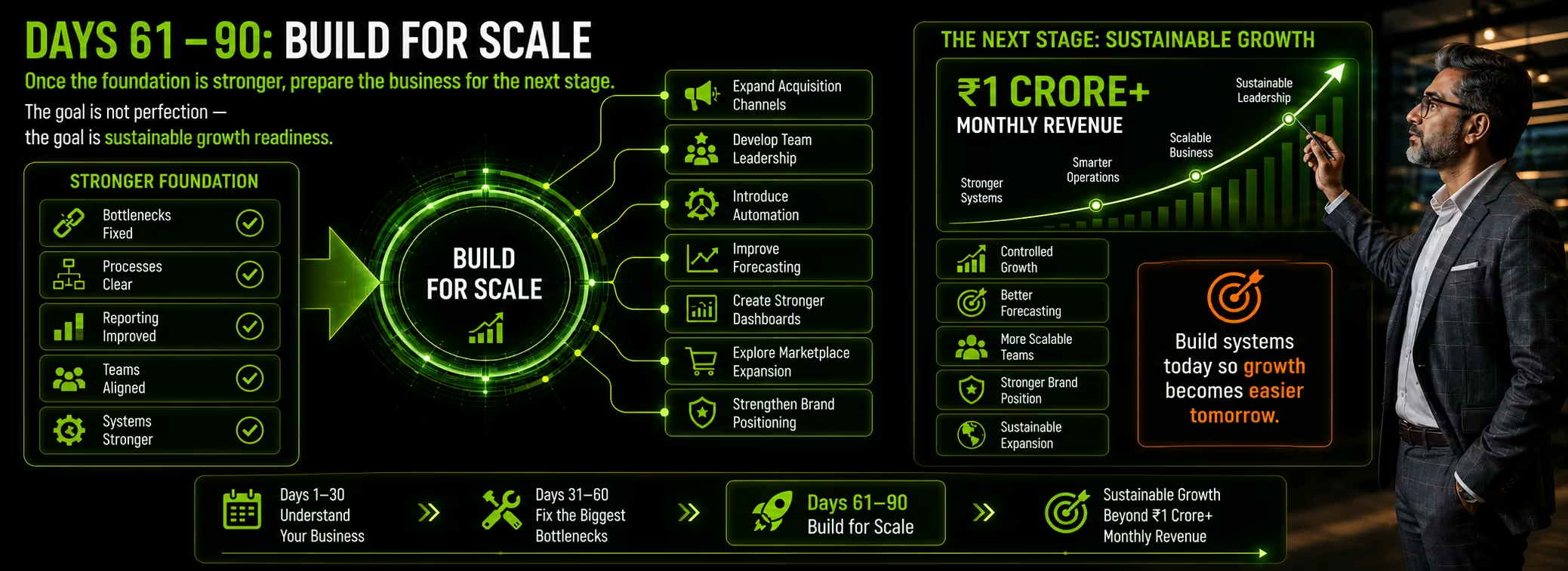
Days 61–90

Build for Scale

Once the foundation is stronger, begin preparing for the next stage of sustainable growth.
Expand acquisition channels
Develop leadership within the team
Introduce automation
Improve forecasting
Create stronger dashboards
Explore marketplace expansion
Strengthen brand positioning
Goal: Build a business prepared for sustainable growth.
Business Growth System

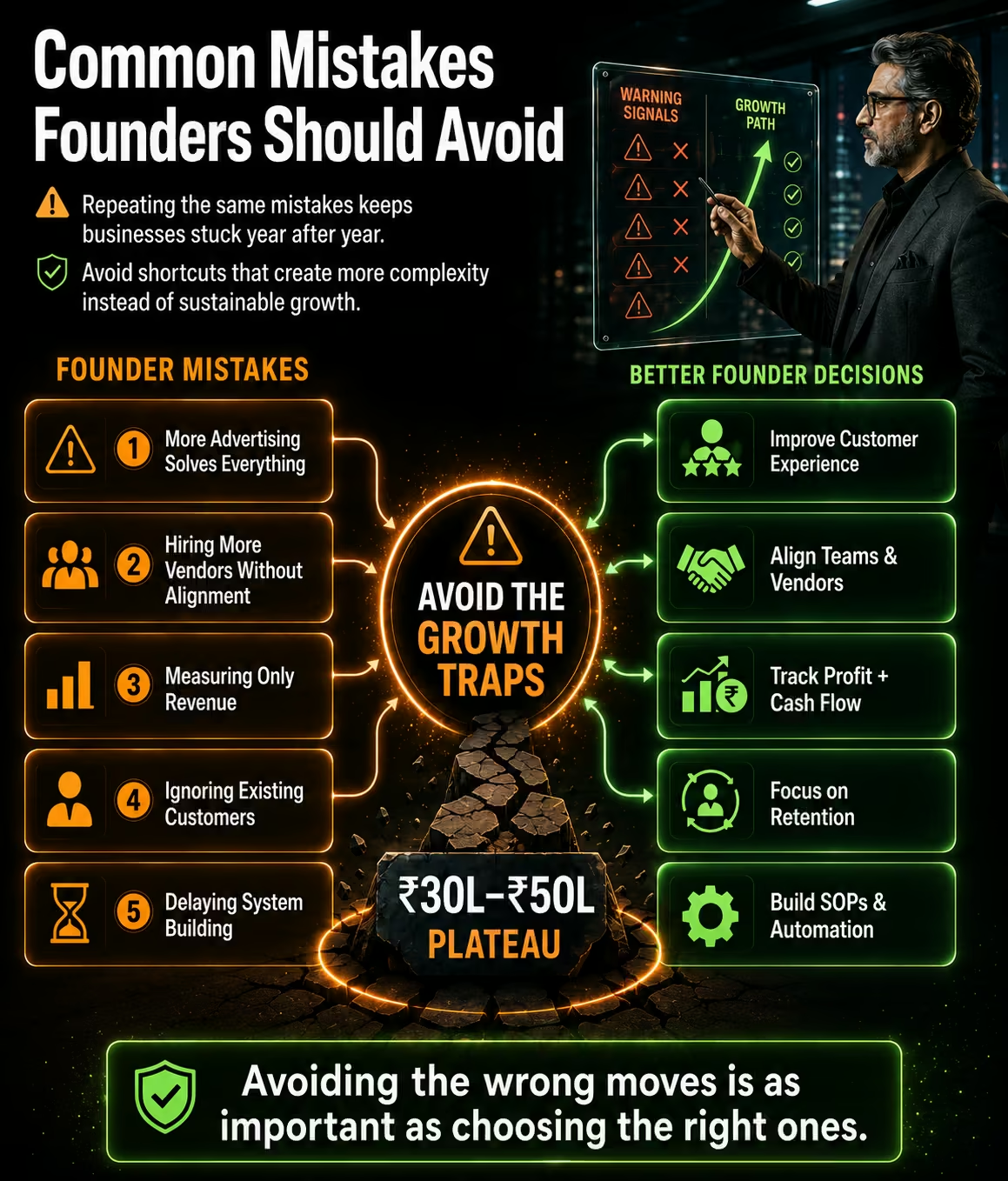
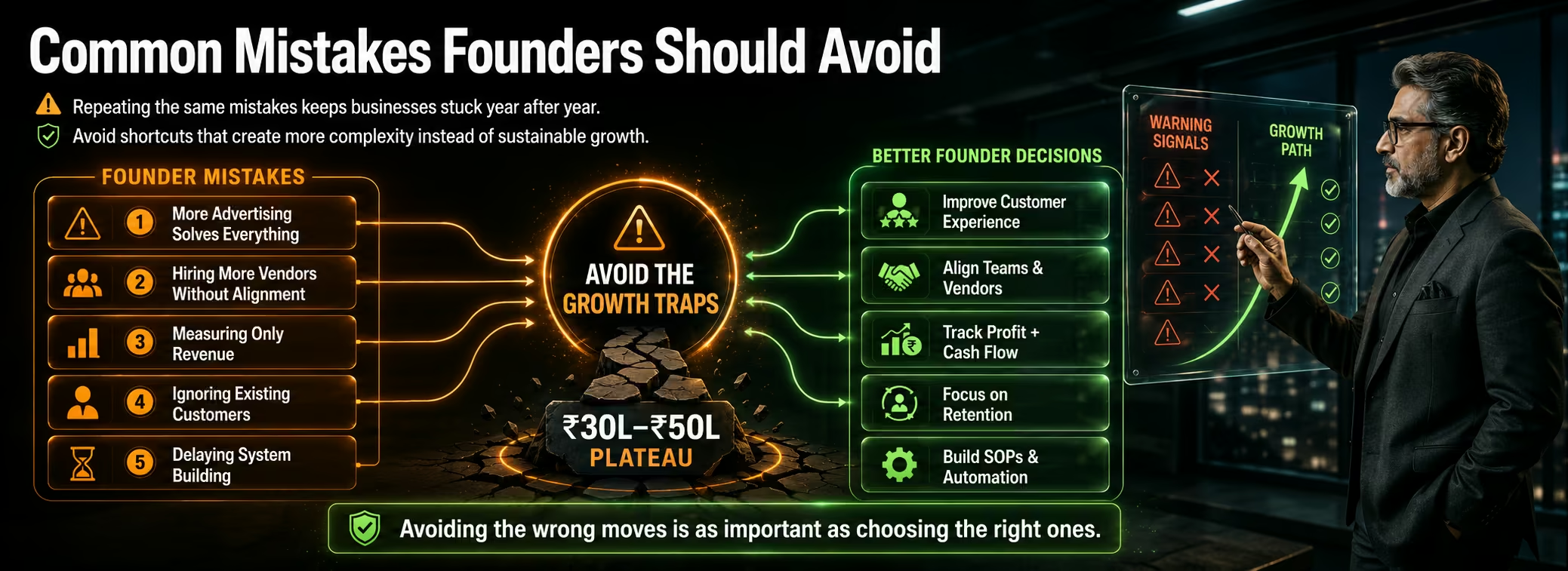
Common Mistakes Founders Should Avoid

Many businesses remain stuck because they repeat the same mistakes year after year. Recognizing these patterns early can help you build stronger systems, improve profitability, and scale with greater confidence.

01

Believing More Advertising Solves Everything

Advertising can accelerate growth. It cannot fix poor customer experience, weak positioning, or operational problems.

02

Hiring More Vendors Instead of Improving Alignment

Adding more agencies rarely creates better coordination. Often, it creates more complexity.

03

Measuring Success Only Through Revenue

Revenue is important. Profitability, cash flow, customer satisfaction, and retention are equally important.

04

Ignoring Existing Customers

Acquiring a new customer usually costs far more than retaining an existing one. Retention deserves continuous attention.

05

Delaying System Building

Many founders postpone documentation, automation, reporting, and delegation because they feel "too busy." Ironically, those systems are what reduce busyness over time.

Remember

Sustainable growth rarely comes from working harder. It comes from eliminating the habits and bottlenecks that repeatedly slow your business down.
Frequently Asked Questions

Here are answers to some of the most common questions founders ask when scaling a D2C brand from ₹30–50 lakhs to ₹1 crore per month.

Why do most D2C brands struggle after reaching ₹30–50 lakhs per month?

Because business complexity increases faster than revenue. Without stronger systems, founders become bottlenecks, operations become inefficient, and growth slows.

Is increasing ad spend the fastest way to reach ₹1 crore per month?

Not always. Advertising works best when supported by strong positioning, excellent customer experience, healthy customer retention, and efficient operations.

How important is customer retention?

Extremely important. Retaining existing customers generally costs less than acquiring new customers and significantly improves long-term profitability.

Should every D2C brand expand internationally?

Not immediately. International expansion works best after establishing operational consistency and a profitable domestic business.

At what stage should founders begin building systems?

As early as possible. The earlier systems are introduced, the easier scaling becomes later.

Business Growth System

Real Business Growth Stories Across Multiple Platforms

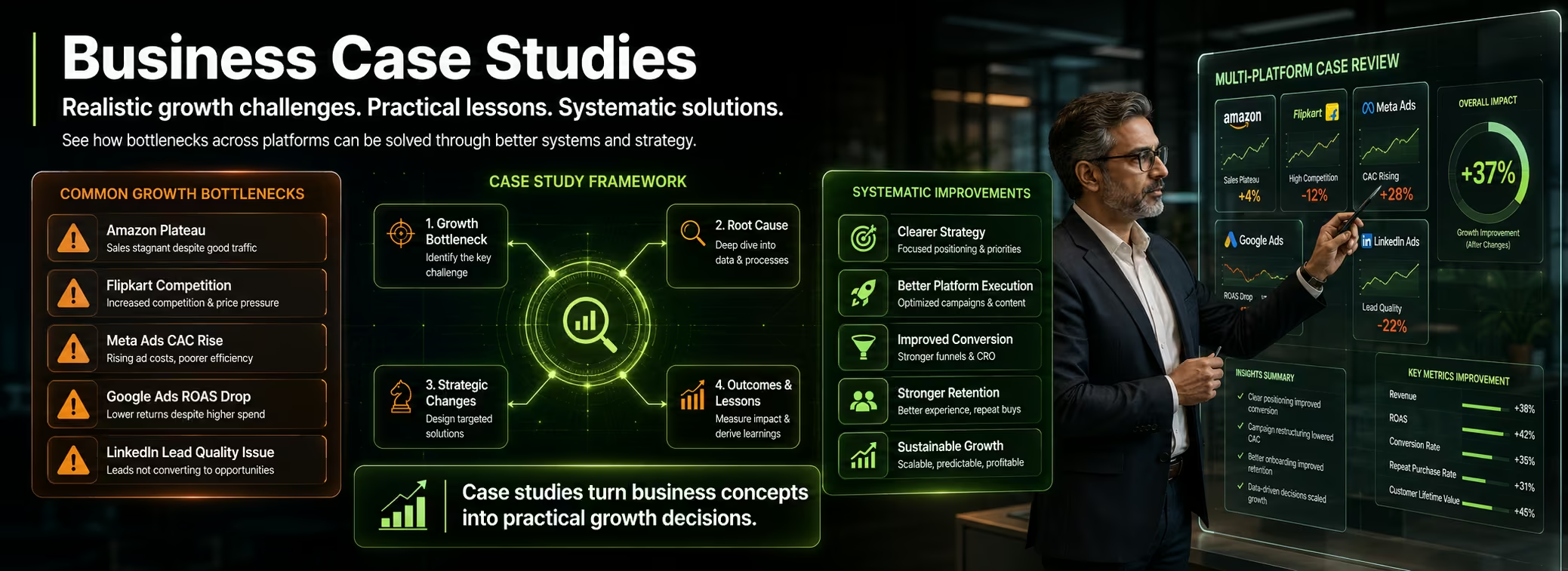
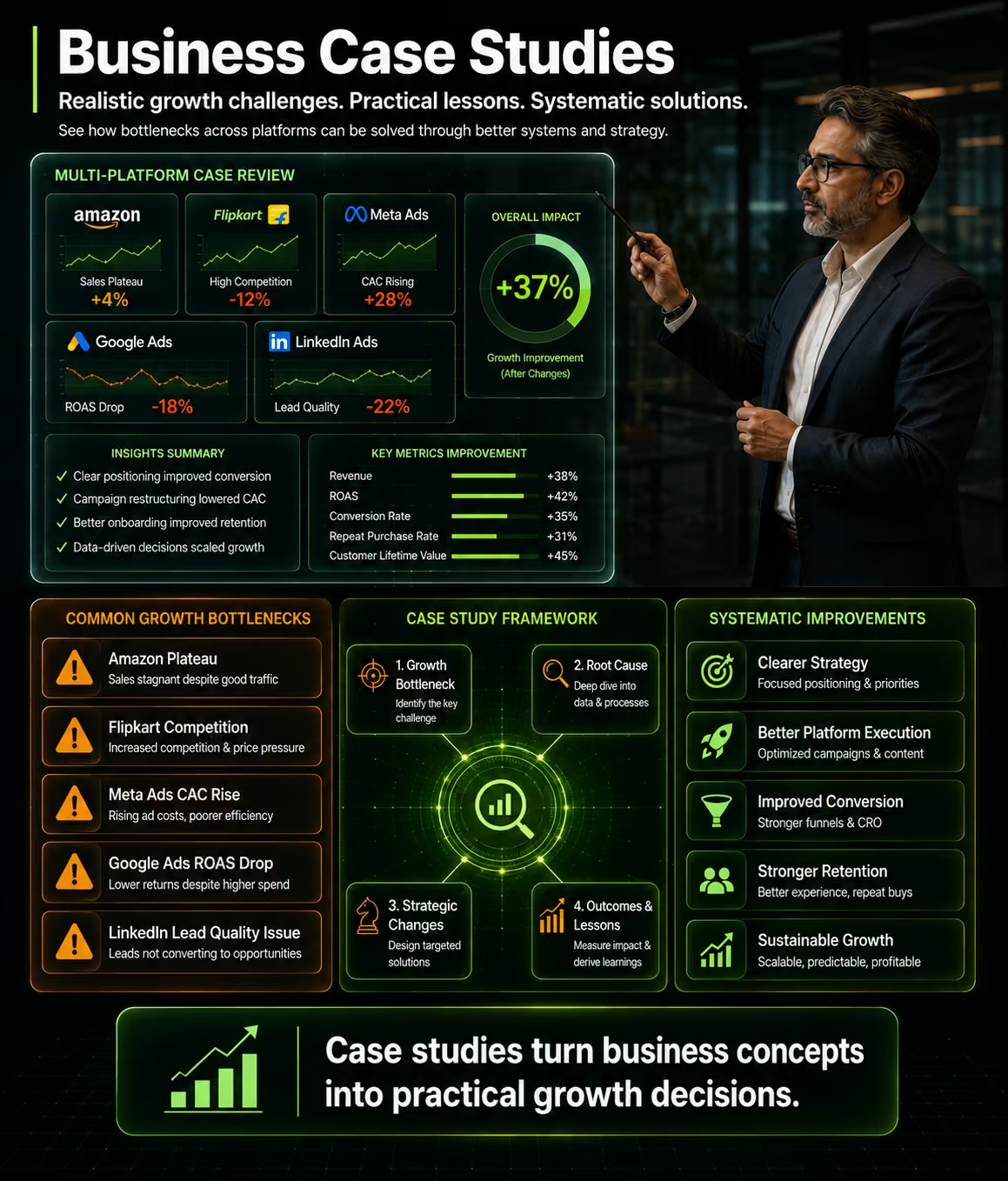
Throughout this guide, you'll find case studies based on common growth challenges faced by D2C and online service businesses. These examples reflect realistic situations across Amazon, Flipkart, Meta Ads, Google Ads and LinkedIn.

Why These Case Studies Matter

To maintain confidentiality and keep every example broadly applicable, all company names, industries and identifying details have been fictionalised.

The goal isn't to showcase one company. It's to help founders recognise patterns that repeatedly prevent businesses from scaling.

Growth Bottleneck

The challenge limiting business growth.

Root Cause

The hidden issue slowing down progress.

Strategic Changes

Practical improvements implemented.

Outcome & Lesson

Results and key business insights.

01
Amazon Marketplace

Amazon Growth Stalled Despite Strong Demand

Growth Bottleneck

Sales were inconsistent and the brand was losing visibility on high-intent keywords.

Root Cause

Product titles, bullet points, images and backend keywords were poorly optimised. Reviews and conversion rates were not actively managed.

Strategic Changes Implemented

  • Rewrote product titles using keyword-rich copy.
  • Improved product images and A+ Content.
  • Added comparison charts and trust-building visuals.
  • Built a review generation system.
  • Tracked keyword rankings and conversion rates weekly.
Outcome

Organic visibility improved, conversion rates increased, and dependence on paid promotions reduced significantly.

Key Lesson

Strong demand alone isn't enough. Listing quality, keyword optimisation and review management directly influence Amazon growth.

02
Flipkart Marketplace

Flipkart Sales Were High, But Profitability Was Low

Growth Bottleneck

Revenue was increasing, but profitability continued to decline.

Root Cause

Heavy discounting, rising logistics costs and lack of SKU-level profitability analysis.

Strategic Changes Implemented

  • Reviewed profitability by product category.
  • Reduced dependence on low-margin SKUs.
  • Improved pricing strategy.
  • Negotiated better fulfilment terms.
  • Focused on products with stronger repeat purchase potential.
Outcome

Sales remained healthy while net margins and cash flow improved.

Key Lesson

Marketplace success should never be measured by revenue alone. Profitability must be monitored at both SKU and channel level.

03
Meta Ads

Meta Ads Generated Traffic, But Not Enough Conversions

Growth Bottleneck

Click-through rates were acceptable, but purchases remained consistently low.

Root Cause

Weak creative strategy, poor landing page alignment, and audience targeting that was too broad.

Strategic Changes Implemented

  • Developed customer pain-point focused creatives.
  • Tested multiple hooks, formats and offers.
  • Improved landing pages to match ad messaging.
  • Narrowed audience targeting using purchase behaviour.
  • Strengthened retargeting campaigns for engaged visitors.
Outcome

Return on Ad Spend improved, conversion rates increased, and wasted advertising spend reduced significantly.

Key Lesson

Meta Ads perform best when creative, audience targeting, landing pages, and customer experience work together.

04
Google Ads

Google Ads Brought High-Intent Traffic, But Leads Were Poor Quality

Growth Bottleneck

Lead volume remained high, but conversion into paying customers stayed low.

Root Cause

Campaigns targeted mixed keyword intent, landing pages failed to qualify visitors, and negative keywords were not being used effectively.

Strategic Changes Implemented

  • Restructured campaigns around high-intent keywords.
  • Added negative keywords to reduce irrelevant traffic.
  • Created dedicated landing pages for different audiences.
  • Improved lead qualification forms.
  • Tracked lead-to-sale conversion by keyword group.
Outcome

Lead quality improved dramatically, sales teams spent less time on poor-quality enquiries, and conversion rates increased.

Key Lesson

Google Ads generate powerful results only when search intent, keyword selection, and landing page relevance are perfectly aligned.

05
LinkedIn

Case Study 5: LinkedIn Generated Visibility, But Not Enough B2B Opportunities

A B2B consulting firm was active on LinkedIn but was not converting visibility into meaningful business leads.

Growth Bottleneck

The founder had a strong personal profile, but inbound enquiries remained limited.

Root Cause

The content was too generic, messaging wasn't tailored for decision-makers, and there was no lead nurturing system.

Strategic Changes Implemented

  • Refined founder positioning around a specific business problem.
  • Published educational content for decision-makers.
  • Shared case-based insights instead of generic motivational posts.
  • Improved personalised outreach.
  • Built a structured follow-up process.

Outcome

The firm began attracting higher-quality B2B conversations and increased qualified inbound opportunities.

Key Lesson

LinkedIn performs best when positioning, educational content, and outreach support a clear business objective.

06
Multi-Channel

Case Study 6: Multi-Channel Growth Created Confusion Instead of Scale

A consumer brand was active across Amazon, Flipkart, Meta Ads, and Google Ads, but the overall business became increasingly difficult to manage.

Growth Bottleneck

Every channel generated results independently, but the business lacked one unified growth strategy.

Root Cause

Teams worked in silos, reporting was inconsistent, and customer data was fragmented across platforms.

Strategic Changes Implemented

  • Created one central dashboard.
  • Standardised reporting across every platform.
  • Aligned messaging across paid media and marketplaces.
  • Reviewed channel profitability monthly.
  • Assigned clear ownership for each growth function.

Outcome

The company improved visibility, coordination, profitability, and strategic decision-making across every sales channel.

Key Lesson

Scaling across multiple platforms requires integration, not just more activity.
Business Growth System
Key Business Lessons

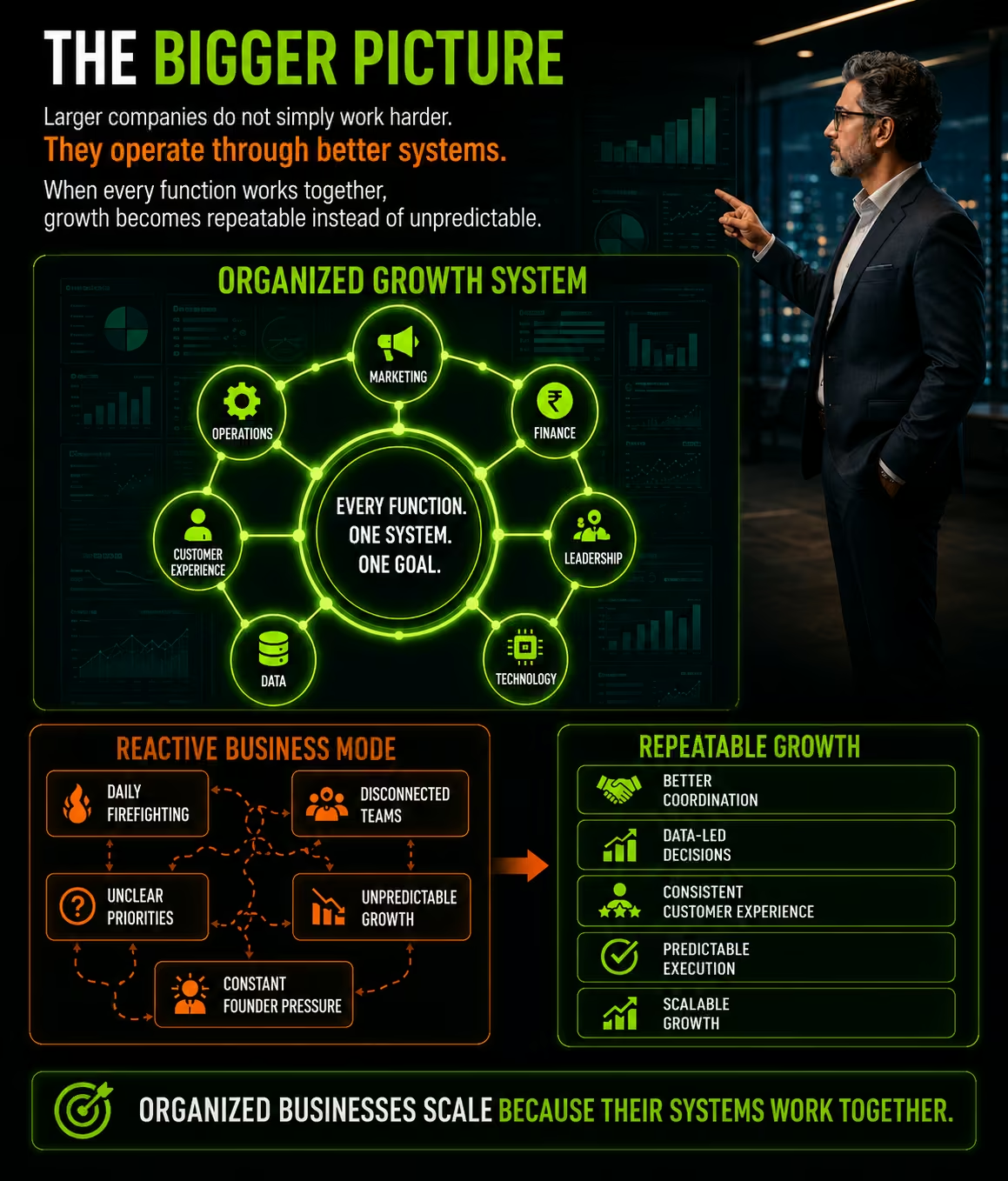
The Bigger Picture

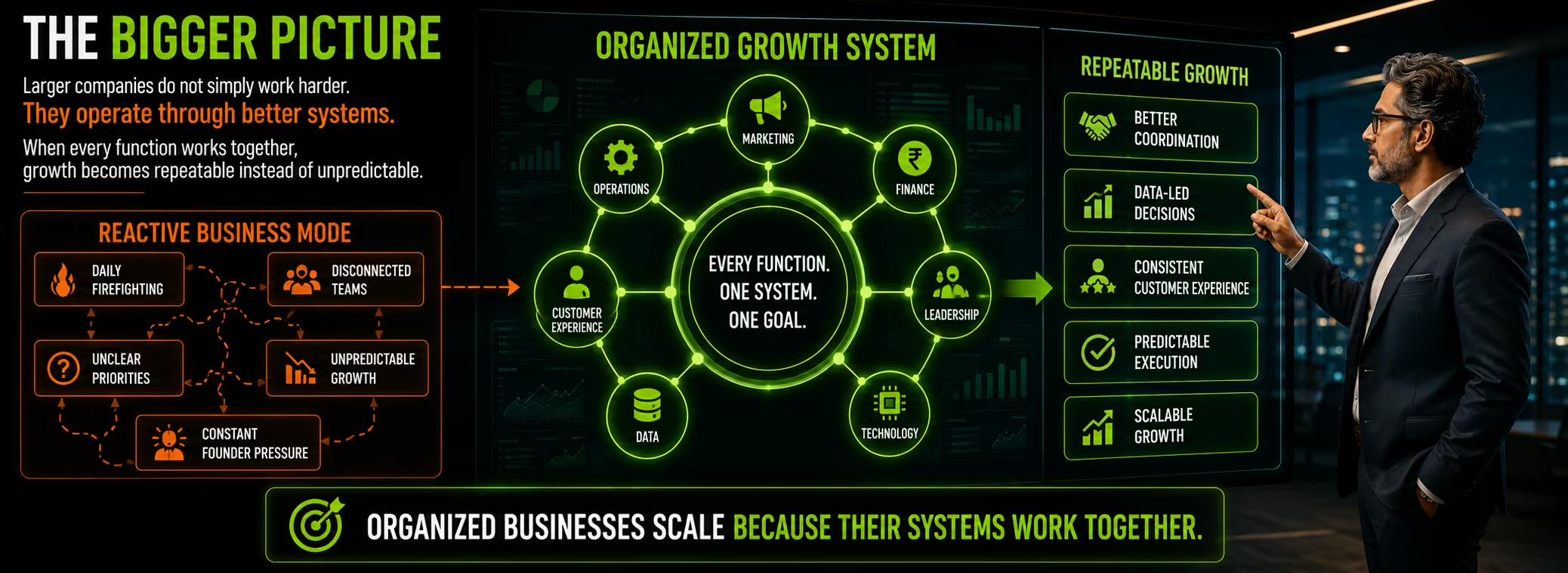
One of the biggest misconceptions about business growth is that larger companies simply work harder. In reality, larger companies usually have better systems. Their marketing teams communicate with operations. Their finance teams understand marketing. Leadership makes decisions using data. Customer experience remains consistent across every touchpoint. Growth becomes repeatable rather than unpredictable. That is why scaling often feels easier for organized businesses than for companies constantly reacting to daily problems.

Find the Real Bottleneck

Growth slows because of systems—not just marketing.

Measure Profit, Not Just Revenue

Healthy margins create long-term growth opportunities.

Build Customer Relationships

Retention consistently outperforms constant acquisition.

Integrate Every Channel

Marketing, operations and leadership should work together.

Use Data

Metrics remove assumptions and improve decision making.

Build for Scale

Systems create sustainable growth beyond ₹1 crore/month.
Business Growth System

A Different Way to Think About Growth

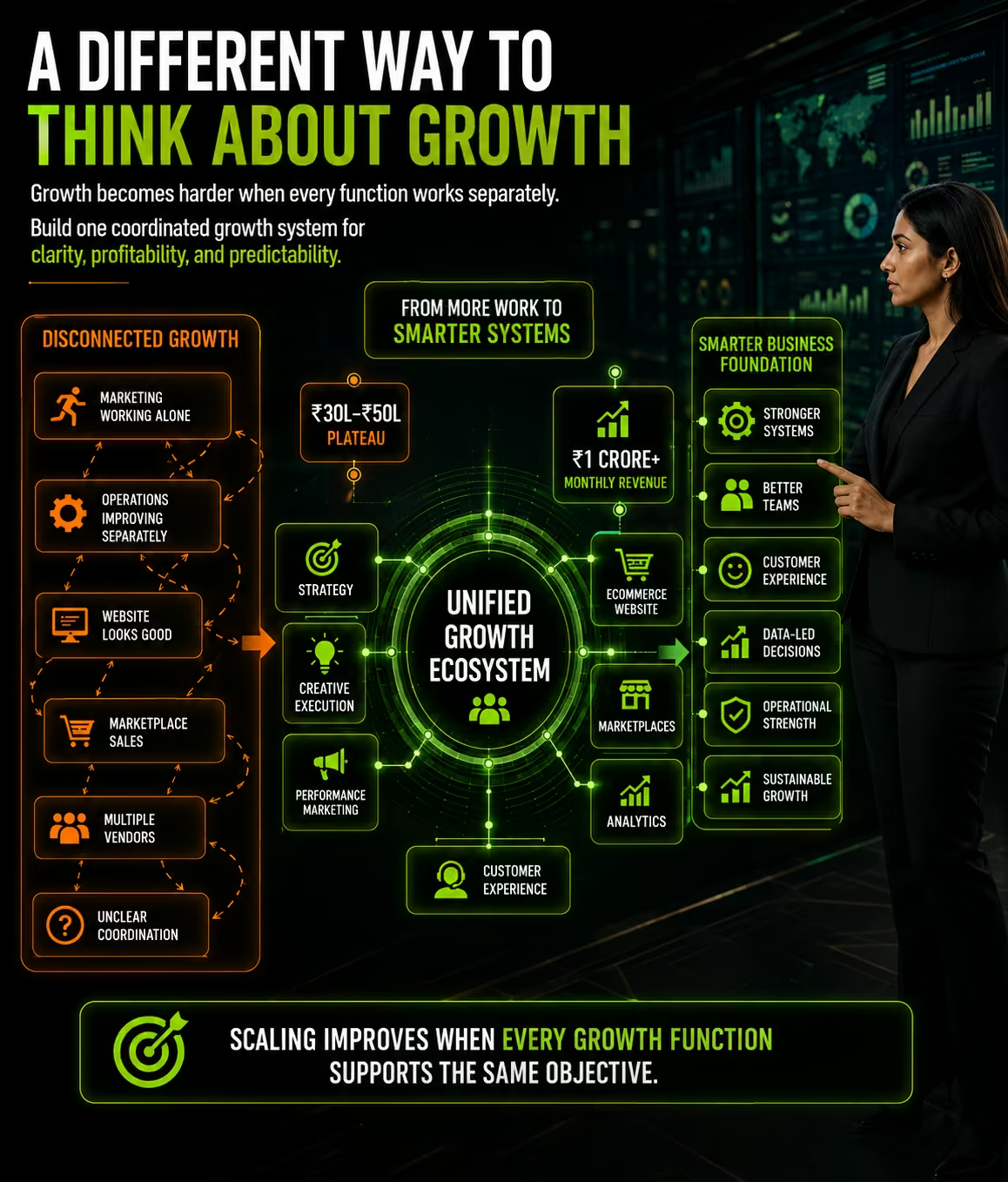
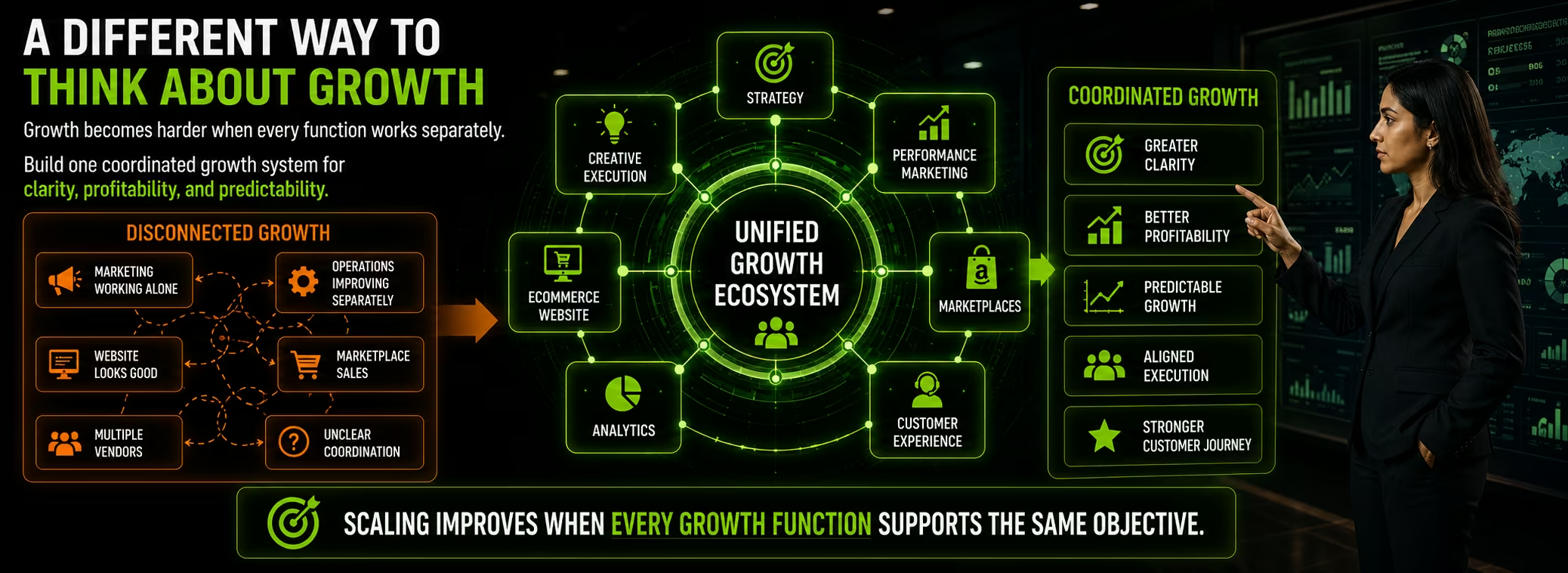
At Tatvagya Consultants, we have observed a common pattern among growing businesses. Most founders are not short of ambition. They work hard, understand their products, and know their customers well. What often limits growth is not effort— it is the challenge of connecting every part of the business into one coordinated growth system.

Why Businesses Get Stuck

Marketing may be working. Operations may be improving. The website may look professional. Marketplaces may generate sales.

Yet if these functions operate independently, scaling becomes unnecessarily difficult. Sustainable growth happens when every department supports the same business objective.

The objective is not simply to grow faster. It is to grow with greater clarity, profitability, and predictability.
Unified Growth Ecosystem

Strategy
Creative
Marketing
Ecommerce
Marketplaces
Analytics
Customer Experience
Operations
Business Growth System

Final Thoughts

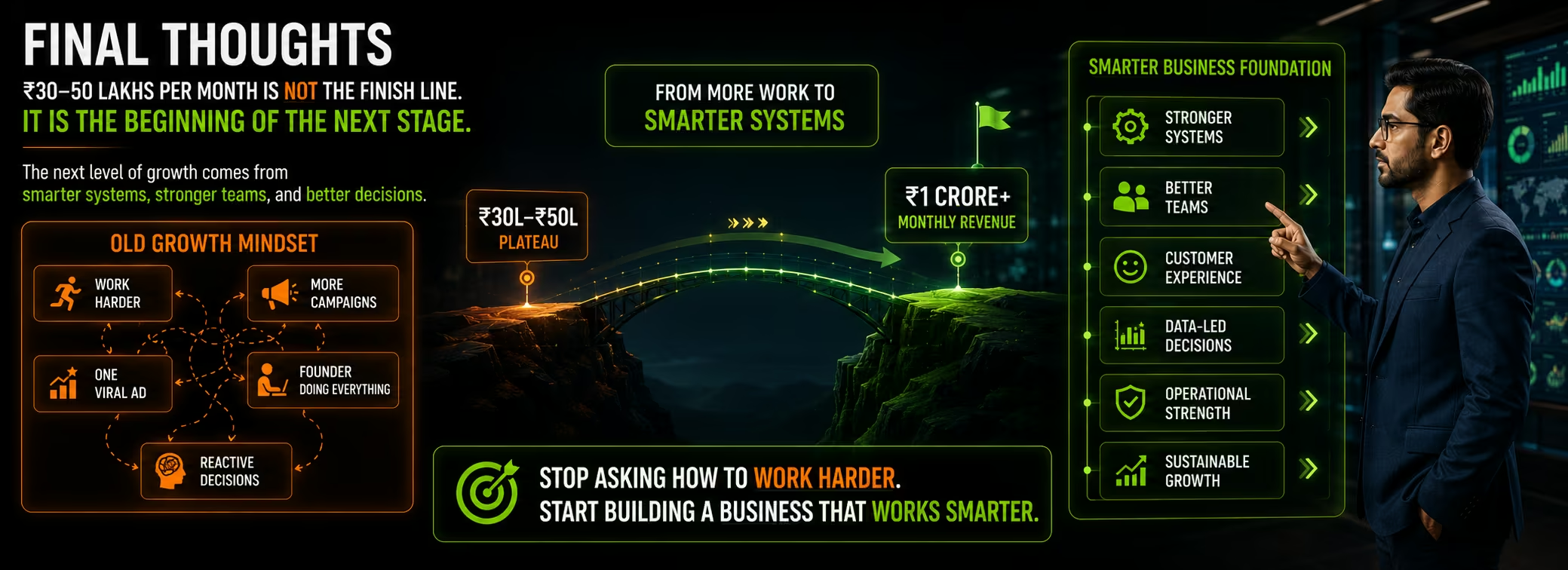
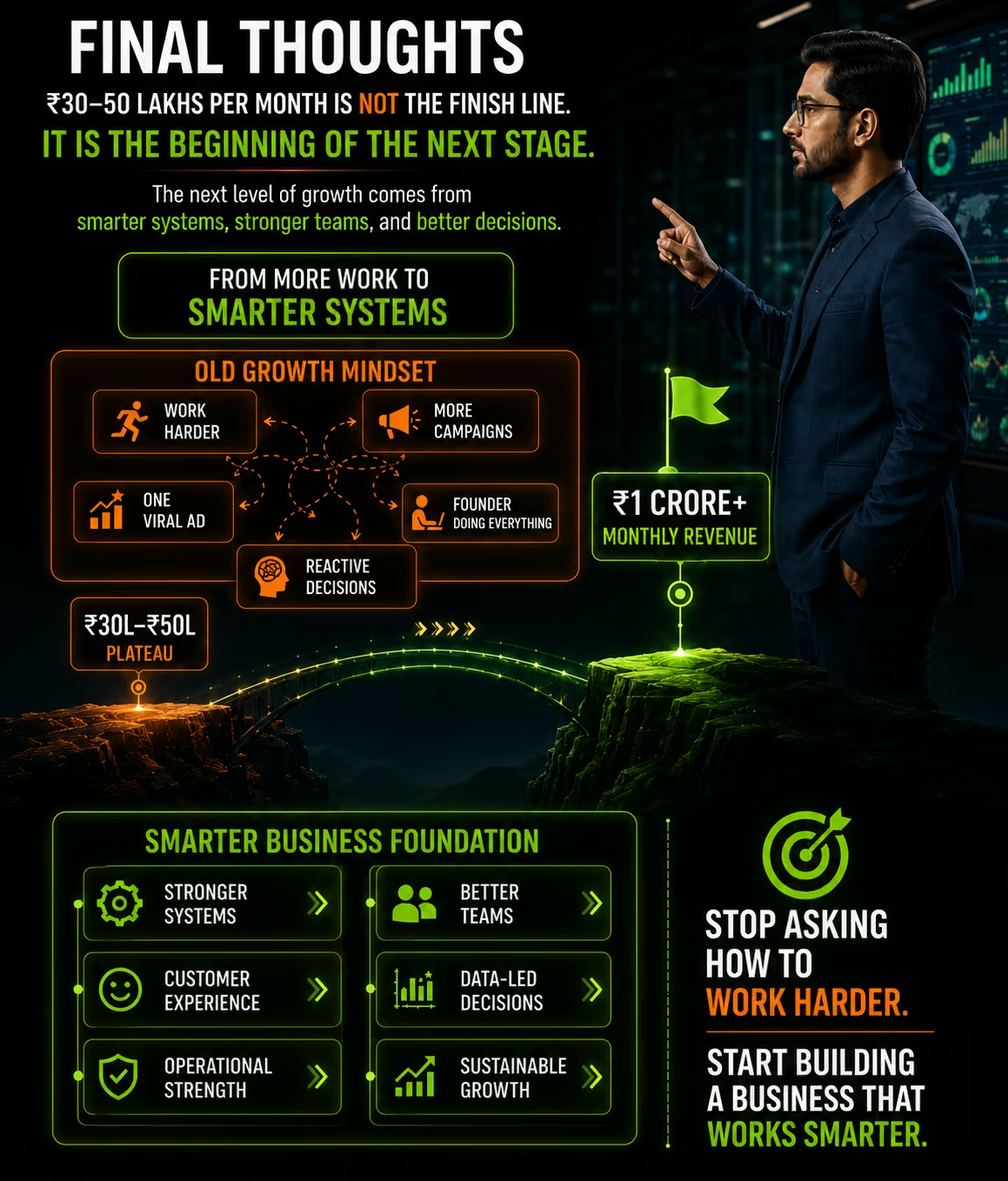
Reaching ₹30–50 lakhs per month is not the finish line. It is the beginning of a completely different stage of business. The skills, systems and leadership that brought you this far deserve recognition, but they may not be enough for the next stage.

Crossing ₹1 crore per month rarely happens because one advertisement goes viral or one campaign performs exceptionally well. It usually happens because the business gradually becomes stronger across every important function.

Build Systems Early

Invest in systems before they become emergencies.

Build Strong Teams

Create capable teams before becoming overwhelmed.

Improve Customer Experience

Solve customer problems before complaints increase.

Make Better Decisions

Use data instead of assumptions.

"How can my business work smarter?"

That single shift often becomes the foundation for long-term, profitable and sustainable growth.

Your Next Stage Begins Now

If your business is currently navigating the journey between ₹30 lakhs and ₹1 crore per month, remember that you are not facing an unusual problem. You are simply entering the stage where building better systems becomes more important than doing more work. Businesses that embrace this transition are usually the ones that continue growing for years to come.


Tatvagya Logo White

Cosmetics Infographics

[contact-form-7 id="1761" title="request a quote"]